Pays Basque français: Espelette, Sare and La Rhune
Best Season
Oceanic: frequent rain. Best April-October.
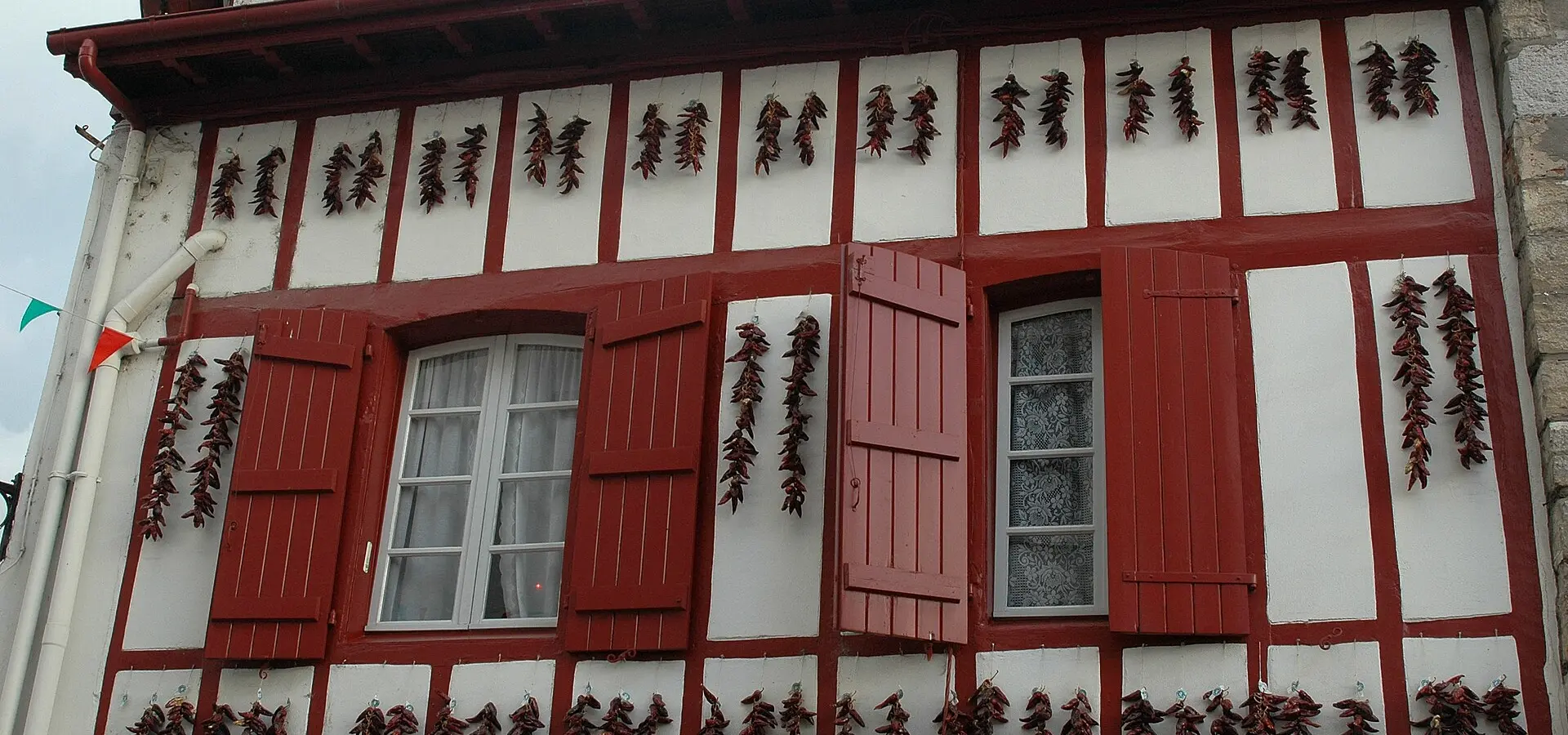
The French Basque Country with its white and red houses: Espelette (the capital of peppers), Sare (one of the most beautiful villages in France) and the La Rhune rack railway.
Highlights
- 1Espelette: the chilli capital, with strings of chillies hanging from the façades
- 2Sare: a listed Basque village + the La Rhune railway
- 3Saint-Jean-Pied-de-Port: gateway to the Way of St James
- 4Authentic Basque culture in France
About this route
The French Basque Country (Iparralde, the Northern Basque Country) is a world apart from both France and Spain. Here, Basque culture — the Basque language, the farmsteads, pelota, the shepherds, the sheep’s-milk cheese — is lived out with a naturalness that surprises Spanish visitors accustomed to the more urban version of the Basque Country on the Spanish mainland. The villages are charming: white houses with red beams and shutters (Basque red, a hallmark of the region), pelota courts in every square, churches with carved wooden galleries and a landscape of green hills where Manech sheep graze, providing the milk for the famous Ossau-Iraty cheese.
Espelette is world-famous for its chilli: the piment d’Espelette, a variety of sweet, dried chilli (not spicy, contrary to popular belief) that the Basques brought back from the Americas in the 17th century and which has become the signature condiment of French Basque cuisine. Every autumn, the façades of the houses in Espelette are covered with strings of chillies drying in the sun, creating an iconic postcard scene that is probably the most widely reproduced image of the French Basque Country. The Fête du Piment, a food festival that attracts thousands of visitors, is held on the last weekend of October.
Sare, officially recognised as one of the most beautiful villages in France, is a perfect example of a traditional Basque village: farmhouses scattered across the hills, a central pelota court, a church with a Basque cemetery featuring disc-shaped steles, and an absolute tranquillity that invites you to stay for days. From Sare, the La Rhune rack railway (905 m) sets off, a little wooden train built in 1924 that climbs in 35 minutes to the summit of the Basque Country’s most iconic mountain, offering panoramic views stretching from the Pyrenees to the Atlantic and from Biarritz to San Sebastián.
Saint-Jean-Pied-de-Port, a little to the east, is the other unmissable stop. It is the ‘Basque gateway’ to the French Way of St James: this is where pilgrims who cross the Pyrenees via Roncesvalles gather, and the medieval old town — with the Citadelle de Vauban, the pink-stone houses and the River Nive spanned by medieval bridges — is one of the most beautiful townscapes in the whole of south-western France.
Motorcycling tips: the roads in the Basque Country are smooth and well-maintained, perfect for a leisurely ride. The climate is oceanic (rain is possible all year round) but temperatures are pleasant. Fill up in Bayonne, Saint-Jean-Pied-de-Port or Cambo-les-Bains. For a bite to eat, in Espelette, the Euzkadi Restaurant serves traditional Basque cuisine with piment d’Espelette in every dish. And here’s a tip: cross the border into Navarre via the Col d’Ispéguy and combine this route with the Baztán Valley (Elizondo, Zugarramurdi) for a perfect two-day cross-border Basque cycle tour.
Route stops
Espelette
Village
Capital of the Basque pepper.
Sare
Village
Classified Basque village, La Rhune train.
Saint-Jean-Pied-de-Port
Monument
Gateway to the French Way of Saint James.
Practical information
Weather
Oceanic: frequent rain. Best April-October.
Traffic
Moderate traffic. More tourism in August and pepper festival (October).
Fuel stops
Petrol stations in Bayonne, Cambo-les-Bains and Saint-Jean-Pied-de-Port.
Where to stay on this route
The towns this route passes through — useful for splitting it into stages or sleeping near the start. Book ahead in high season.
- EspeletteSee places to stay
- SareSee places to stay
- Saint-Jean-Pied-de-PortSee places to stay
Affiliate links: if you book through them, Nomadiq earns a small commission at no extra cost to you.