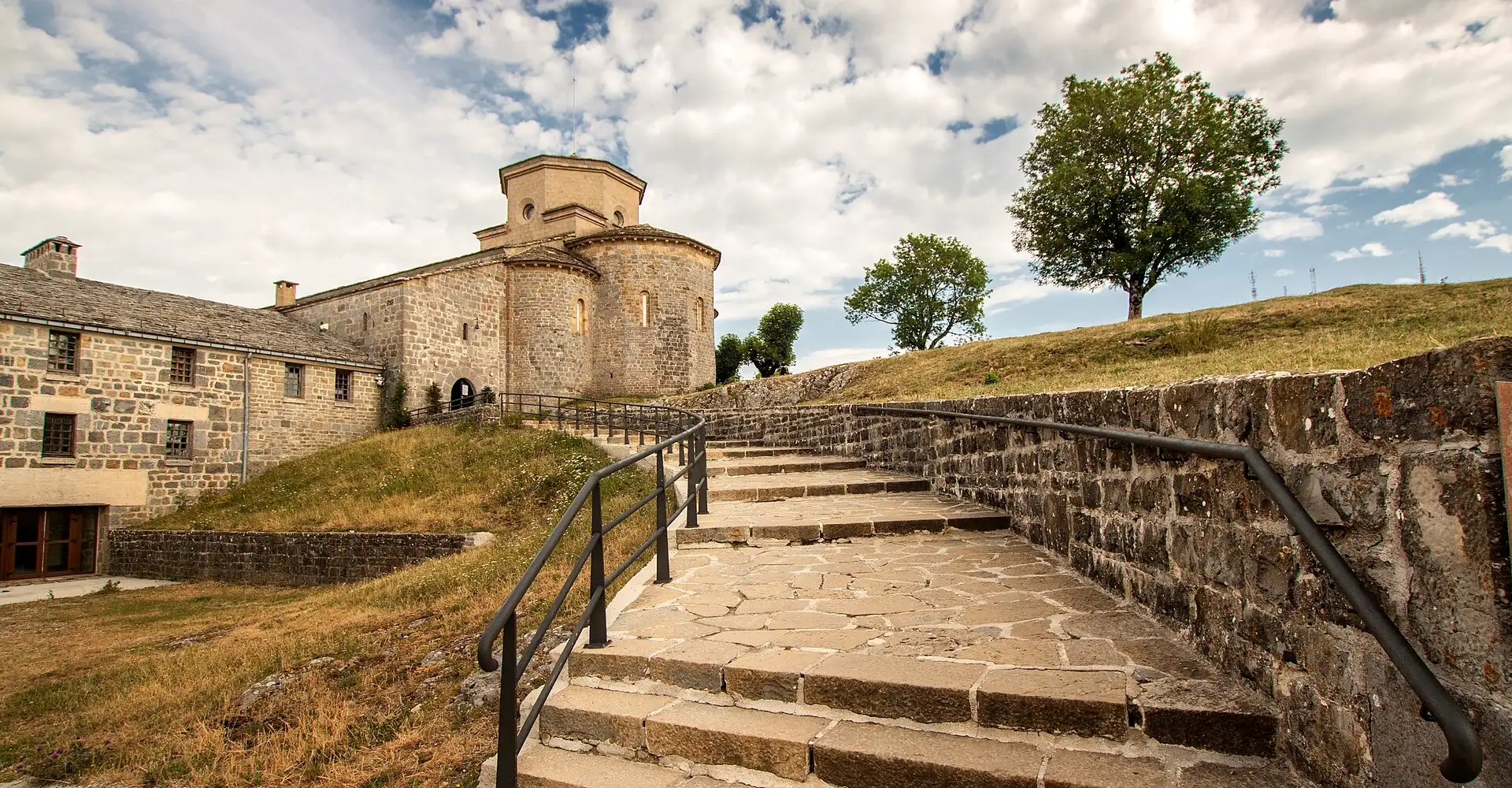
Sierra de Aralar and border Navarre
The Sierra de Aralar between Gipuzkoa and Navarre offers technical curves, centuries-old beech forests and the Sanctuary of San Miguel de Aralar, one of the oldest in the Basque Country.
Checking the route…
Roadbook
4 points- Start
Toulouse
Lekunberri
Navarrese village at the foot of Aralar.
VillageSantuario de San Miguel de Aralar
Pre-Romanesque high sanctuary.
Monument- Finish
Toulouse
Take the route to Google Maps
- Toulouse
- Lekunberri
- Santuario de San Miguel de Aralar
- Toulouse
We add waypoints from the GPX so Google Maps sticks to the route's roads (they show up as extra stops). To follow the exact track, use the GPX.
Highlights
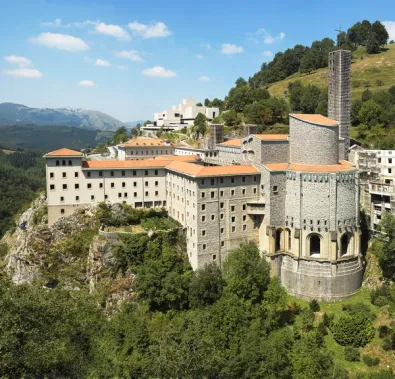
- 01San Miguel de Aralar Sanctuary
- 02GI-2133: technical curves
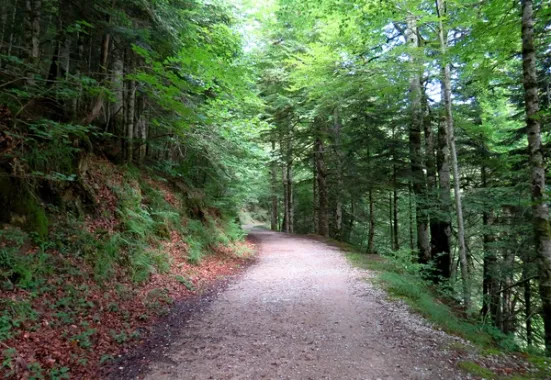
- 03The beech forests of Aralar
- 04Views of northern Navarre
About this route
The Sierra de Aralar is one of the most beautiful and, at the same time, most authentic corners of the inland Basque Country. It is a moderately sized limestone mountain range (around 200 km²) situated on the border between Gipuzkoa and Navarre, with peaks exceeding 1,400 m and a landscape dominated by centuries-old beech forests, alpine meadows and the famous ‘txabolas’ (shepherds’ huts). It is probably one of the best places in the whole of Spain to see the traditional Basque transhumance system still in operation: every summer, shepherds from the surrounding villages lead their flocks of Latxa sheep up to the high pastures of Aralar and remain there from June to October, living in the txabolas and making the famous Idiazabal cheese from the sheep’s fresh milk.
The Sanctuary of San Miguel de Aralar is one of the oldest and, at the same time, most mysterious religious complexes in the whole of Navarre. Perched at an altitude of 1,250 metres in a visually spectacular position overlooking the Sakana Valley, it is believed to date back to the 9th century, although the first documented reference to it dates from 1032, making it one of the oldest Christian places of worship still in use in the whole of Spain. The founding legend is fascinating: it is said that a local knight named Teodosio de Goñi, in the 8th century, mistakenly killed his parents out of unfounded jealousy, and as penance he made a pilgrimage to Rome, where the Pope imposed upon him the punishment of wandering through the Basque mountains in chains until Saint Michael set him free. After seven years, the saint appeared to him at this spot and broke his chains, founding the sanctuary here as a sign of the miracle.
The most impressive feature of the Sanctuary of San Miguel de Aralar is the famous High Altarpiece, a piece that is utterly unique in the history of European art. Dating from between the 9th and 12th centuries, it is a metal altarpiece (not carved from wood or stone like most) made of embossed gold, silver and copper plates, with inlaid enamels and precious stones, depicting scenes from the life of Christ and the saints in a Byzantine-Pre-Romanesque style reminiscent of the iconography of the Russian or Greek Orthodox Church. It is probably the oldest and best-preserved piece of medieval goldsmith’s work in the whole of Spain, and its historical and artistic value is incalculable. Seeing it in person in its original setting (still on the sanctuary’s high altar, still in liturgical use) is an experience that no museum can replicate.
The Sierra de Aralar also boasts a fascinating archaeological feature: it is one of the areas with the highest concentration of dolmens and prehistoric megalithic monuments in the whole of the Basque Country. More than 40 dolmens, cromlechs and burial mounds, dating from 4000 BC and 1500 BC, built by Neolithic and Bronze Age inhabitants who grazed their livestock on these very lands 6,000 years ago. Some dolmens are easily accessible from the tracks that criss-cross the mountain range, and seeing them in their original setting (amidst alpine meadows with cows grazing all around, overlooking the Basque valleys in the distance) is an experience of cultural continuity that few other areas can offer.
Motorcycling tips: The Sierra de Aralar has a long motorcycling season (from April to October), but rain is common all year round. The roads crossing the mountain range (GI-2133, NA-7510) are technical, with continuous bends and generally good road surfaces. Fill up in Tolosa, Lekunberri or Etxarri-Aranatz. For a bite to eat, in Lekunberri, the Ayestaran Restaurant serves traditional Basque-Navarrese cuisine featuring local produce from the mountains (lamb, Idiazabal cheese, talo with chistorra) at reasonable prices. And a tip: if you visit the Sanctuary of San Miguel de Aralar, try to go on a clear day in May or June, when the alpine meadows are in full bloom with thousands of wildflowers and the shepherds have already taken their flocks up to the mountain pastures. The combination of the thousand-year-old sanctuary, the gilded altarpiece, the flocks of Latxa sheep and the limestone peaks in the background is one of the most complete images of the traditional rural Basque Country.
Practical information
Weather
Frequent rain. Spectacular autumn.
Traffic
Low traffic.
Fuel stops
Petrol stations in Tolosa and Lekunberri.
Where to stay on this route
The towns this route passes through — useful for splitting it into stages or sleeping near the start. Book ahead in high season.
- LekunberriSee places to stay
- Santuario de San Miguel de AralarSee places to stay
- ToulouseSee places to stay
Affiliate links: if you book through them, Nomadiq earns a small commission at no extra cost to you.
Published on