Lumbier Gorge and Leyre Mountains
Best Season
Hot summer. Better in spring and autumn.
The Foz de Lumbier (river canyon), the Monastery of Leyre perched in the mountains, and lonely roads through the Navarrese pre-Pyrenees.
Highlights
- 1Foz de Lumbier (river canyon)
- 2Monasterio de Leyre
- 3Yesa reservoir
- 4Romanesque Sangüesa
About this route
The Foz de Lumbier is one of the most impressive and, at the same time, most accessible geological corners of the Navarrese pre-Pyrenees. It's a relatively short but absolutely spectacular river canyon: in barely 1.3 km, the Irati river has spent millions of years carving out a limestone gorge with vertical walls up to 150 meters high, creating an extremely narrow defile where sunlight barely reaches the bottom. What makes it so singular is its accessibility: an old railway line (the Irati, closed in 1955) has been converted into a footpath that runs the entire length of the canyon, passing through two former railway tunnels you can walk through. The full visit takes barely 90 minutes and is absolutely worth it for any curious rider passing through the area.
The wildlife at the Foz de Lumbier is exceptional for such an accessible spot. More than 200 pairs of griffon vultures nest here, one of the densest concentrations in all of Spain. Watching them glide above the canyon, especially around midday when they ride the thermal currents rising between the hot gorge walls, is a top-tier birdwatching experience. There are also pairs of Egyptian vultures, peregrine falcons, golden eagles and, occasionally, even the extremely rare bearded vulture during migration. For bird lovers, binoculars are essential: at any moment you can spot dozens of raptors cutting through the canyon simultaneously.
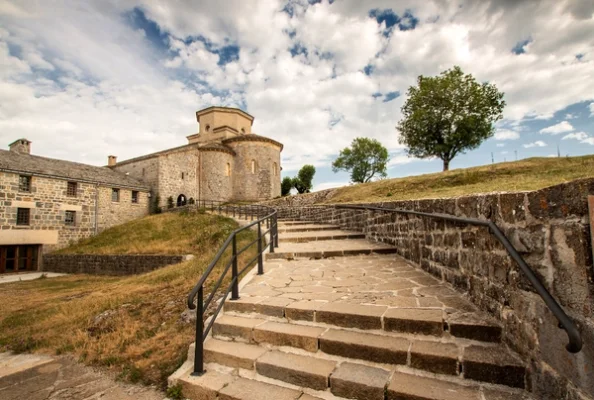
The Monasterio de Leyre, perched high on a hillside with immense views over the Yesa reservoir and the Pyrenees, is one of the most important and best-preserved monastic complexes in all of Navarre. Founded possibly in the 9th century (historical sources are uncertain, but it first appears in documents in 848), it was throughout the Middle Ages one of the most important cultural centers of the kingdom of Pamplona and, later, the kingdom of Navarre. The abbey church is a jewel of 11th-century Romanesque architecture, with Visigothic pre-Romanesque elements in its lower crypt (dated to the 9th century), and one of the most powerful spiritual atmospheres you can find in any Spanish monastery. The tombs of the first kings of Navarre (Iñigo Arista, García Iñiguez, Sancho Garcés) and several important bishops rest here.
But the most fascinating thing about the Monasterio de Leyre is that it remains an active monastery, inhabited by a small community of Benedictine monks who still follow the monastic rule strictly: rising at 5:30 in the morning, sung prayers throughout the day, silence during meals, and a spiritual life structured according to the constitutions St. Benedict wrote in the 6th century. The monks offer guided tours of the monastery (with restricted hours) and, most impressively, visitors can attend the services sung in Gregorian chant: the Liturgy of the Hours in the abbey church, especially Vespers (at dusk) and Lauds (at dawn), is one of the most complete acoustic-spiritual experiences you can have anywhere in religious Spain.
Rider's notes: the route is relaxed (160 km, no major mountain passes, good tarmac) and perfect for a laid-back day out with two or three cultural stops. The best season runs from March to November. Fuel up in Pamplona, Lumbier or Sangüesa. For food, in Sangüesa the Restaurante Oblatas serves traditional Navarrese cuisine with local produce in an old manor house; on the more casual side, any tavern in Lumbier offers roast lamb and migas at affordable prices. One tip: if you visit the Monasterio de Leyre, try to coincide with the evening services (typically at 19:00). Listening to monks chant Gregorian in a thousand-year-old Romanesque church is a spiritual experience almost nobody expected to find on a motorbike route.
Route stops
Foz de Lumbier
Viewpoint
Canyon excavated by the river Irati.
Monasterio de Leyre
Monument
Romanesque jewel overlooking the reservoir.
Practical information
Weather
Hot summer. Better in spring and autumn.
Traffic
Low traffic.
Fuel stops
Petrol stations in Pamplona, Lumbier and Sangüesa.
Where to stay on this route
The towns this route passes through — useful for splitting it into stages or sleeping near the start. Book ahead in high season.
- Monasterio de LeyreSee places to stay
- PamplonaSee places to stay
Affiliate links: if you book through them, Nomadiq earns a small commission at no extra cost to you.