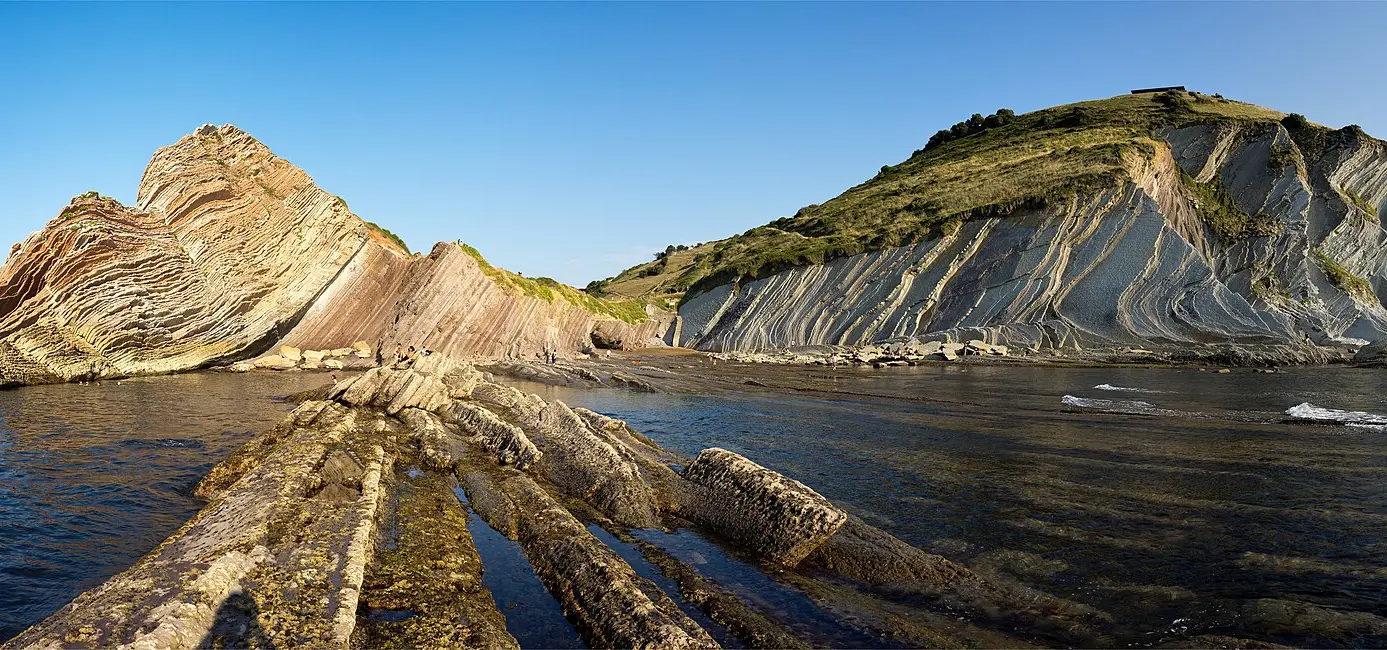
Basque Coast: Zumaia, Getaria and San Sebastian
Best Season
Frequent rain. Best May-September.
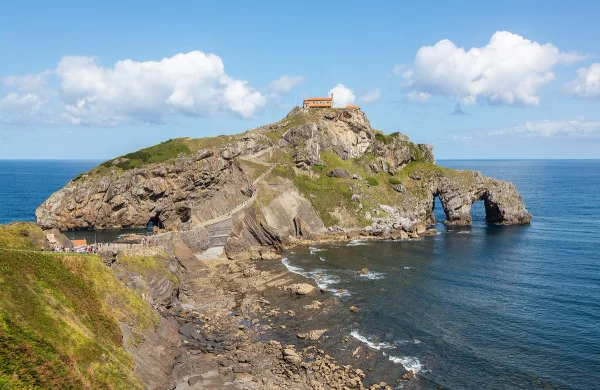
The Basque Coast with the flysch of Zumaia, the txakoli of Getaria, San Sebastian and a route of continuous curves following the cliffs of the Bay of Biscay.
Highlights
- 1Flysch of Zumaia (UNESCO Geopark)
- 2Getaria and the Ratón
- 3San Sebastián and La Concha
- 4N-634 with curves and sea views
About this route
The flysch of Zumaia is one of the most important and at the same time most beautiful geological formations in all of Western Europe. A "flysch" is a sedimentary rock formation composed of alternating layers of sandstone and clay (or limestone and marl) deposited on the seafloor over millions of years, which are later exposed and form cliffs with a characteristic "layered" or "book-like" appearance. The Zumaia flysch is exceptional for two reasons: first, it chronologically records more than 50 million years of geological history (from the Cretaceous to the middle Eocene) in a single continuous and perfectly legible section; second, its layers contain some of the most important geological records in the world of catastrophic events.
Here, in a specific layer of the flysch called "the K-Pg boundary" (Cretaceous-Paleogene), the geological trace of the Chicxulub meteorite impact that caused the mass extinction of the dinosaurs 66 million years ago is recorded. The layer, identifiable to the naked eye as a reddish-blackish band about 2 cm thick, contains very high concentrations of iridium (a rare element in the Earth's crust but abundant in meteorites), tektite remains, and other physical markers of the impact. It is one of the few places in the world where a visitor can literally touch with their own hand the geological boundary between the age of the dinosaurs and the age of mammals. The Basque Coast Geopark, which protects the entire flysch from Zumaia to Mutriku, is a UNESCO World Geological Heritage Site.
Getaria, just east of Zumaia, is famous for two completely different things: its historic fishing navigation and an extraordinary historical figure. Here Juan Sebastián Elcano was born, the navigator who in 1522 completed the first circumnavigation of the world after Magellan died during the voyage. Elcano, captain of the ship Victoria, arrived in Seville with barely 17 survivors out of the 247 who had set sail three years earlier, completing a feat that definitively changed the geographical conception of the world. In Getaria there is a monument dedicated to Elcano and an ethnographic museum that tells the history of Basque navigation through the centuries. The Church of San Salvador, planted at the top of the village, offers from its atrium panoramic views that include the famous "Ratón de Getaria" (the silhouette of Mount San Antón seen from the sea, which resembles a giant mouse).
But the most important reason to stop in Getaria is gastronomic. The town is considered by many culinary critics to be the world capital of grilled fish. Here the technique of grilling large fish (turbot, sea bream, sea bass, gilthead) over wood embers on vertical grills was invented, a technique that has since spread throughout Spain and the world of high-level gastronomy. Getaria's specialized restaurants —Elkano (with two Michelin stars), Kaia Kaipe, Astillero— are obligatory pilgrimages for any serious fish lover. The price is high (a grilled turbot at Elkano can cost 100 euros per person) but the gastronomic experience is absolutely unique.
Rider's practical tips: the Basque Coast has a relatively long riding season (from March to November) but rain is frequent even in midsummer. The optimal season is May-June and September-October. Traffic is moderate in summer, especially on weekends. Refuel in Zarautz or Zumaia. For food, besides Elkano (high end) and Kaia (mid-range), try one of the small restaurants in Getaria's fishing port that serve fresh seafood pinchos by weight. And one piece of advice: if you visit Zumaia, try to take the guided walk along the flysch organized by the Geopark (reservation required). Knowing what you are looking at (specific geological layers, ages, recorded catastrophic events) completely transforms the visual experience: you go from seeing "layered rocks" to seeing "the open book of 50 million years of Earth's history."
Route stops
Getaria
Village
Fishing village with the Mouse.
Zumaia
Viewpoint
Flysch declared a UNESCO Geopark.
San Sebastián
Village
Capital of Gipuzkoa with the Concha.
Practical information
Weather
Frequent rain. Best May-September.
Traffic
High traffic in summer.
Fuel stops
Frequent petrol stations.
Where to stay on this route
The towns this route passes through — useful for splitting it into stages or sleeping near the start. Book ahead in high season.
- GetariaSee places to stay
- San SebastiánSee places to stay
- ZarautzSee places to stay
Affiliate links: if you book through them, Nomadiq earns a small commission at no extra cost to you.
Related routes
Sierra de Aralar and border Navarre
Basque Country
Oñati, Arantzazu and the Heart of Gipuzkoa
Basque Country
Pays Basque français: Espelette, Sare and La Rhune
Dordogne and the Southwest
Urdaibai and Gernika Reserve
Basque Country