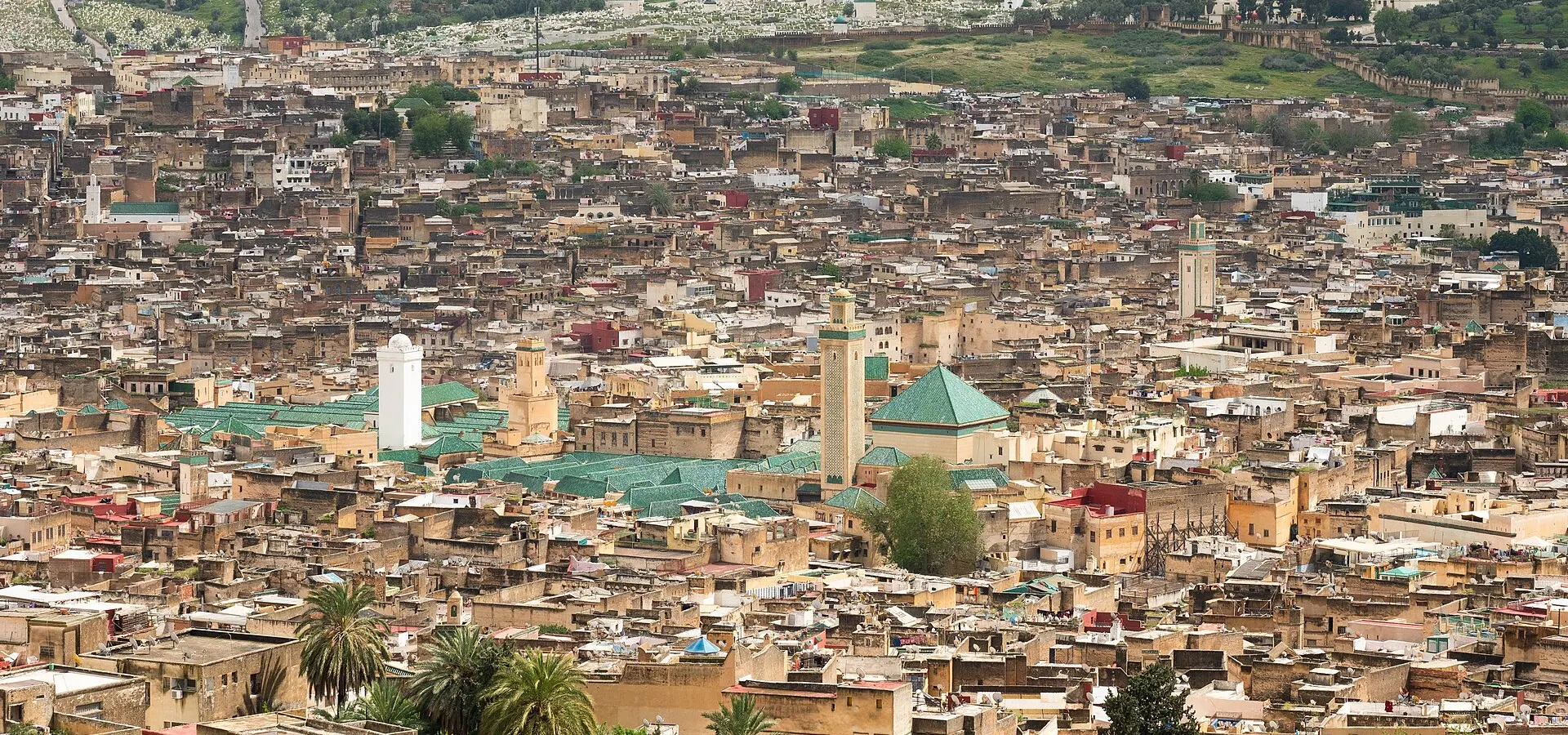
Fez, Meknes and the imperial route
Best Season
Extreme heat in summer (40°C+). Rain in winter. Best in spring and autumn.
The two most impressive imperial cities of Morocco: Fez (the largest medieval medina in the world) and Meknès (the "Moroccan Versailles"). Roman ruins of Volubilis as a gift.
Highlights
- 1Fez el-Bali: the world’s largest medieval medina (UNESCO)
- 2Meknès: ‘The Moroccan Versailles’, Bab el-Mansour
- 3Volubilis: a Roman city with exceptional mosaics
- 4Ifrane and the cedars of the Middle Atlas (detour)
About this route
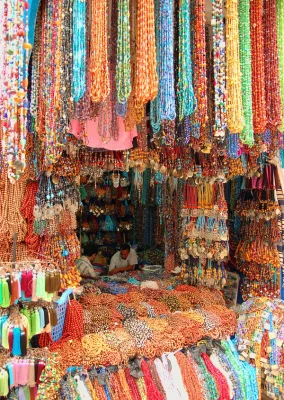
Fez is probably the most intense urban experience a European motorcyclist can have without leaving the Mediterranean cultural sphere. Its medina —Fez el-Bali, a UNESCO World Heritage Site— is the world’s largest pedestrianised urban area: over 9,000 narrow streets where 150,000 people live and work, without a single car or motorbike (people get about on foot, by donkey or by handcart). It is a medieval city dating from the 9th century that functions exactly as it did a thousand years ago: tanners, dyers, blacksmiths, carpenters and bakers, all working in the streets using techniques that have remained unchanged since the Middle Ages. The first time you enter the medina of Fez, it’s a total sensory experience: smells, colours, sounds, textures, heat, crowds, disorientation.
Meknès, just 60 km away, is the imperial counterpart. Known as the ‘Moroccan Versailles’ due to the architectural megalomania of Sultan Moulay Ismaïl (a contemporary of Louis XIV with similar ambitions), it boasts the longest city walls in Morocco (40 km in circumference), the Bab el-Mansour Gate (the most spectacular monumental gate in North Africa), the royal granaries (Heri es-Souani, capable of storing grain for an army of 12,000 horses) and the sultan’s mausoleum, which is one of the few Moroccan shrines open to non-Muslims.
Volubilis, 30 km from Meknès, is the archaeological highlight of the route: a complete Roman city dating from the 3rd century AD, featuring mosaics in situ of exceptional quality, triumphal arches, thermal baths, a basilica and a capitolium that overlooked the entire Khoumane river valley. It is the most important Roman site in the whole of Morocco and one of the best-preserved in North Africa, comparable to Djemila or Timgad in Algeria. The mosaics at Volubilis —particularly those depicting the Labours of Hercules and Diana and the Nymphs— are among the best-preserved in the Mediterranean.
The road between Fez, Meknès and Volubilis is comfortable and well-surfaced, but the real highlights for motorcyclists in the area are the side roads: the N8 towards Ifrane (the ‘Moroccan Switzerland’, a mountain resort at 1,650 m with centuries-old cedar trees, where the last wild Barbary macaques take refuge) and the Middle Atlas road towards Azrou, with bends winding through cedar forests reminiscent of the Pyrenees.
Motorcycling tips: the Fez-Meknès area is well connected by motorways and national roads. You’ll need to be extra careful in the cities due to the traffic. It’s impossible to park your motorbike in the medinas: use the secure car parks (gardiennage) outside the city walls (10–20 dirhams per day). For accommodation, the riads of Fez el-Bali are an experience in themselves: 18th-century palace-houses with courtyards featuring fountains, zellij tiles and terraces overlooking the medina. Riad Fès is one of the most spectacular. When it comes to eating in Fez, pastilla (a puff pastry pie with pigeon and almonds) and tanjia (a slow-cooked dish in an earthenware pot) are the signature dishes.
Route stops
Fez el-Bali (medina)
Monument
Largest medieval medina in the world.
Volubilis
Monument
Roman city with exceptional mosaics.
Meknès
Monument
"Moroccan Versailles", Bab el-Mansour.
Practical information
Weather
Extreme heat in summer (40°C+). Rain in winter. Best in spring and autumn.
Traffic
Very heavy urban traffic in Fez and Meknès. Comfortable national roads.
Fuel stops
Frequent petrol stations.
Where to stay on this route
The towns this route passes through — useful for splitting it into stages or sleeping near the start. Book ahead in high season.
- Fez el-Bali (medina)See places to stay
- VolubilisSee places to stay
- MeknèsSee places to stay
Affiliate links: if you book through them, Nomadiq earns a small commission at no extra cost to you.
Related routes
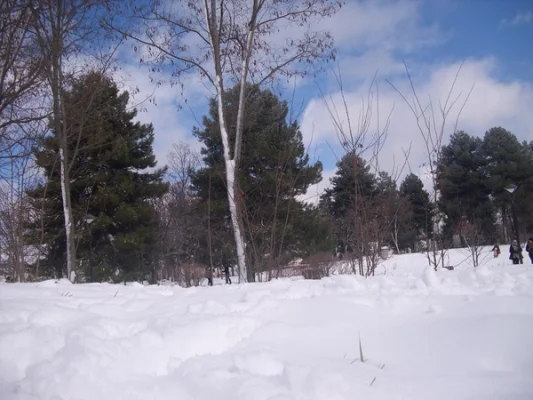
Middle Atlas: Ifrane, Azrou and the Cedars
Morocco
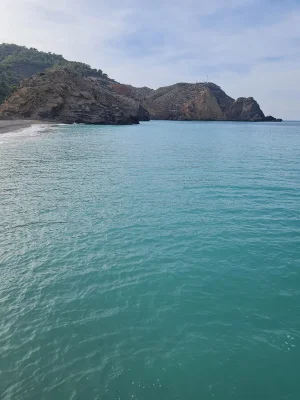
Mediterranean Coast: Al Hoceima and Eastern Rif
Morocco
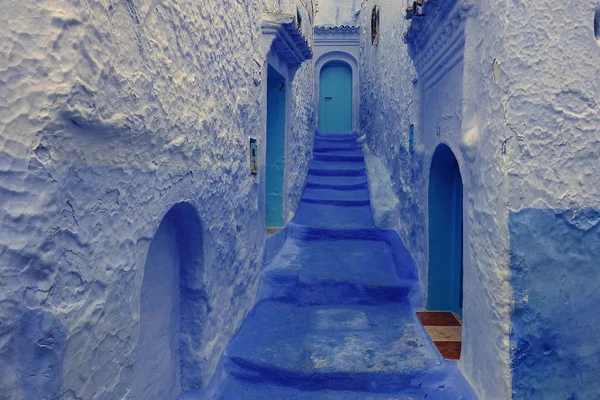
Rif: Chefchaouen and the route of the blue mountains
Morocco
Tangier to Essaouira: the Atlantic route
Morocco