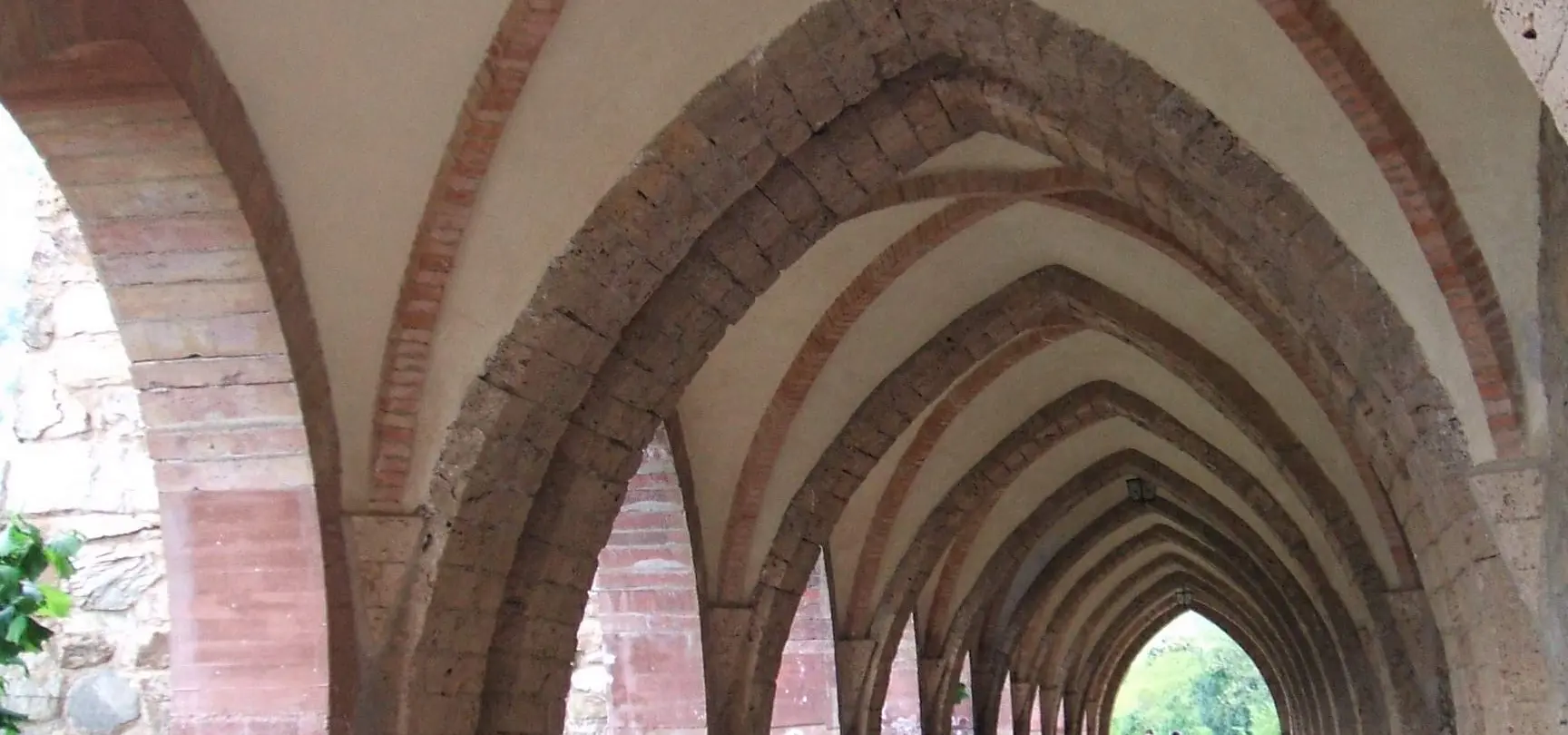
Valvanera, Monasteries and La Rioja's Sierra de la Demanda
Best Season
Mountains: snow possible November-April. Pleasant rest of year. Spectacular autumn.
Valvanera Monastery (cradle of Rioja), Yuso and Suso monasteries (UNESCO, birthplace of Spanish), and the Sierra de la Demanda with beech forests and medieval villages. Deep La Rioja.
Highlights
- 1Yuso and Suso monasteries (UNESCO): cradle of Castilian
- 2Valvanera: the Riojan sanctuary among beech woods
- 3Nájera: pantheon of the kings of Navarre
- 4Lamb chops over vine cuttings with a Rioja reserva
About this route
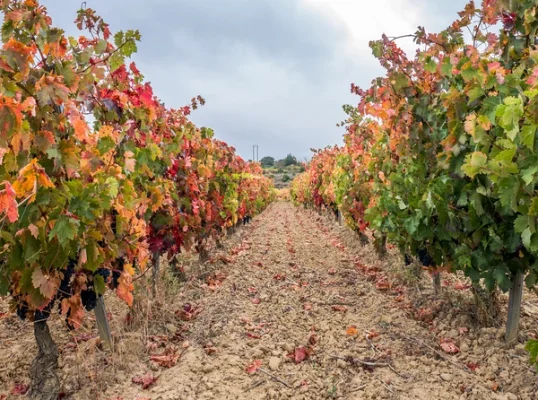
The Monastery of Valvanera is the most important sanctuary in La Rioja and the region's spiritual heart. Set at 1,000 metres in the Sierra de la Demanda, surrounded by centuries-old beech and oak woods, this 11th-century Benedictine monastery houses the Virgin of Valvanera, patron saint of La Rioja. The road climbing from Anguiano (LR-435) is one of the finest in the region: 15 km of constant bends through forest that in autumn puts on a chromatic show of reds, yellows and oranges.
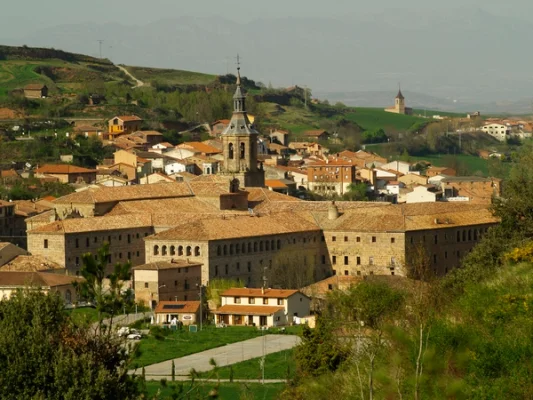
The monasteries of Yuso and Suso at San Millán de la Cogolla are a UNESCO World Heritage Site and one of the most important places in the history of the Spanish language. Here, in the 10th century, an anonymous monk wrote the Glosas Emilianenses — the first documented words in Castilian and in Basque — in the margins of a Latin codex. Suso (Visigothic-Mozarabic, 6th-11th century) is the older and more austere; Yuso (Renaissance-Baroque, 16th-18th century) is the more monumental, with a library holding medieval codices of incalculable value.
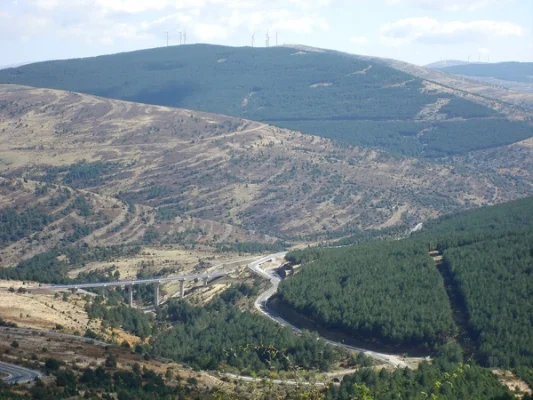
The Riojan Sierra de la Demanda is the southern flank of the range dividing La Rioja from Burgos, a country of dense forest, medieval villages and mountain roads that contrasts sharply with the wine-country image most people attach to La Rioja. Anguiano, at the foot of the sierra, is famous for its stilt dance — dancers descend a steep slope on wooden stilts in time to the music, a tradition dating from the 18th century — and is the starting point for the climb to Valvanera.
Nájera, in the Rioja Baja, completes the route with extraordinary monumental heritage: the Monastery of Santa María la Real, pantheon of the kings of Navarre, with Romanesque sarcophagi and a flamboyant cloister of extreme elegance, and the cave where tradition holds the Virgin appeared to King García Sánchez III during a hunt. The road linking Nájera to San Millán through the Cárdenas valley is a winding minor road through vineyards and pure riding pleasure.
Practical notes: the Sierra de la Demanda can hold snow from November to April. The roads are technical but well surfaced. Fuel in Nájera, Santo Domingo de la Calzada and Ezcaray. For food, lamb chops grilled over vine cuttings are the king of Riojan cooking, obligatorily accompanied by a Rioja reserva. Peppers stuffed with cod and patatas a la riojana round out the offering.
Route stops
San Millán de la Cogolla
Monument
UNESCO monasteries, birthplace of the Spanish language.
Monasterio de Valvanera
Monument
La Rioja's sanctuary, patron Virgin among beech forests.
Santa María la Real de Nájera
Monument
Pantheon of the Kings of Navarra, flamboyant cloister.
Practical information
Weather
Mountains: snow possible November-April. Pleasant rest of year. Spectacular autumn.
Traffic
Low traffic. Slightly more in San Millán (cultural tourism).
Fuel stops
Petrol stations in Nájera, Santo Domingo de la Calzada and Ezcaray.
Where to stay on this route
The towns this route passes through — useful for splitting it into stages or sleeping near the start. Book ahead in high season.
- San Millán de la CogollaSee places to stay
- Monasterio de ValvaneraSee places to stay
- Santa María la Real de NájeraSee places to stay
Affiliate links: if you book through them, Nomadiq earns a small commission at no extra cost to you.