Sierra de la Demanda and San Millán
Best Season
Snow in winter. Best May-October.
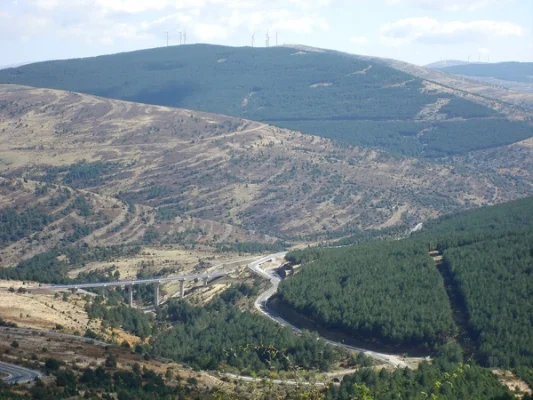
The Sierra de la Demanda mountain range in La Rioja hides the Monasteries of San Millán (UNESCO World Heritage Site), Ezcaray and technical roads up to the Puerto de Pradilla with immense views.
Highlights
- 1San Millán de la Cogolla (UNESCO)
- 2Ezcaray and Valdezcaray
- 3Port of Pradilla
- 4The cradle of the Spanish language
About this route
The Sierra de la Demanda in La Rioja is probably the least well-known yet most surprising corner of the whole of La Rioja. It is a substantial mountain range (with peaks exceeding 2,200 m), part of the Iberian System, its slopes covered in dense beech and oak forests and its peaks crowned by alpine meadows where transhumant herds still graze in summer. For motorcyclists from the north of the Iberian Peninsula, it comes as a surprise: no one expects to find such distinctly alpine landscapes in a region known almost exclusively for its vineyards. The motorcycling season runs strictly from May to October, as the mountain passes can experience heavy snowfall in winter.
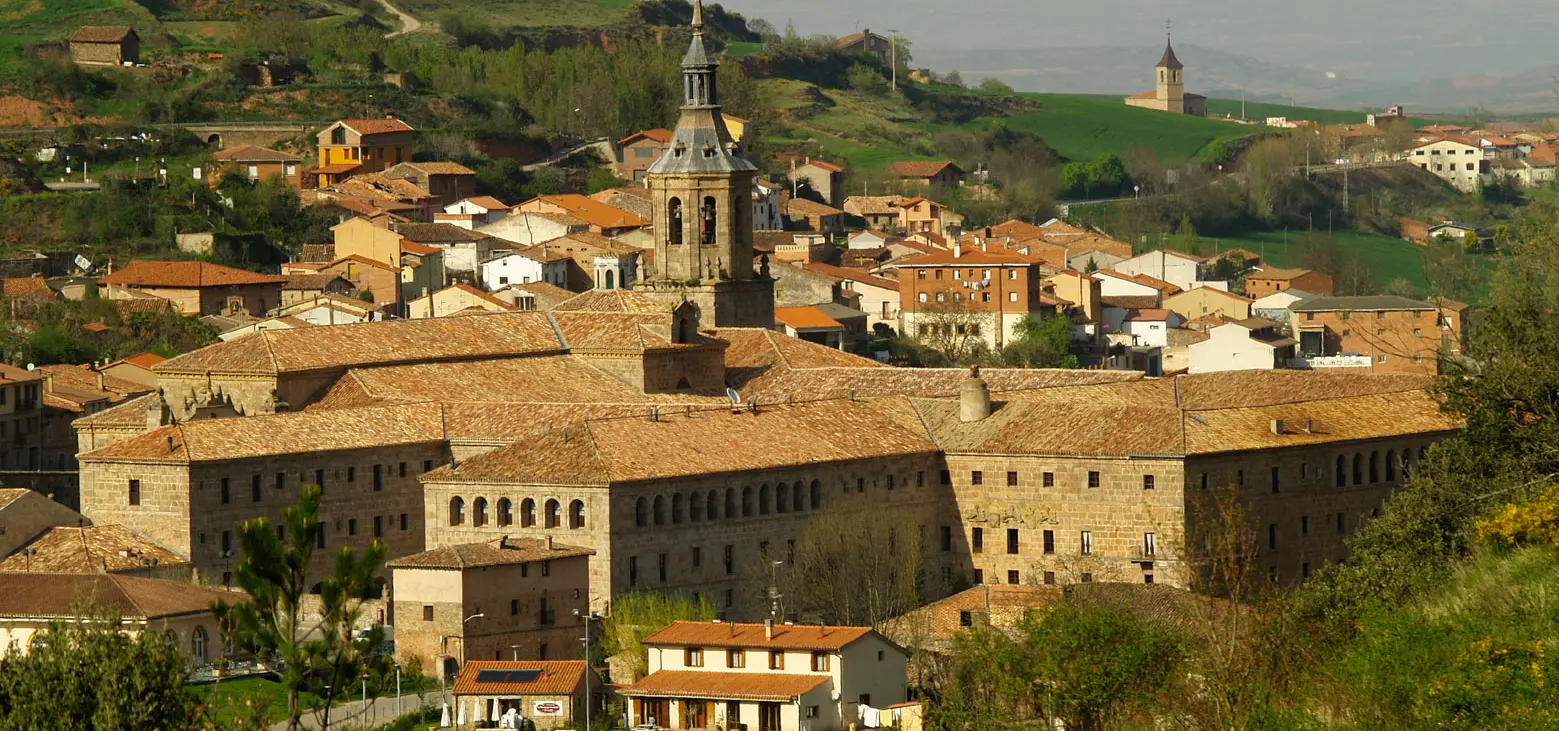
San Millán de la Cogolla is one of the places steeped in cultural symbolism throughout Spain. It was here, in the 6th–7th centuries, that Saint Millán lived and died; a shepherd turned hermit who founded a small monastic community on the slopes of the Demanda. The monastery that grew up after his death (Suso, ‘the upper one’) and, in particular, the second monastery built centuries later (Yuso, ‘the lower one’) were, throughout the Middle Ages, among the most important cultural centres of the Christian north. A handwritten page from an 11th-century Latin codex is preserved here, on which an anonymous monk wrote explanatory notes in the Romance language in the margin: the famous ‘Glosas Emilianenses’, officially recognised as the first text written in Old Castilian. They were declared a UNESCO World Heritage Site in 1997 precisely for this reason: this is, quite literally, the birthplace of the Spanish language.
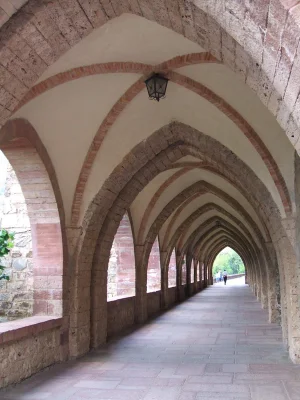
The two monasteries of San Millán are architecturally fascinating. Suso, the older of the two, is partly carved into the rock face of the hillside and preserves overlapping Visigothic, Mozarabic and Romanesque elements, bearing witness to eight centuries of uninterrupted Christian development. Yuso, the ‘new’ monastery (11th–17th centuries), is an imposing Baroque complex with a Renaissance cloister, a historic library of immense value and the Main Church, where the saint’s relics are kept. Visiting both monasteries on the same day (with a guided tour compulsory, and advance booking required for Suso) is a deeply immersive historical experience that is hard to match anywhere else in Spain.
Ezcaray, the most important mountain village in the area, is the obvious starting point for any motorbike route through La Demanda. It is a village in La Rioja with stone and timber houses, a main square lined with arcades and a well-preserved medieval old town, dominated by the 13th-century Church of Santa María de la Asunción (one of the few purely Gothic churches in the whole of La Rioja). But Ezcaray is famous above all for two things: as the home of the Valdezcaray ski resort (the only winter resort in the entire region), and for its exceptional cuisine. Here you’ll find the Echaurren restaurant, one of the most prestigious in northern Spain, run by the Paniego family (Marisa Sánchez, winner of the National Gastronomy Award, and her son Francis Paniego, holder of two Michelin stars) and regarded as one of the absolute benchmarks of modern Riojan cuisine.
Motorcycling tip: the Sierra de la Demanda is high and cold in winter, with snowfall that can close the mountain passes for weeks. The season runs from May to October. Fill up in Logroño or Nájera at the start. The LR-415 road leading up to the Puerto de Pradilla is one of the best motorcycling routes in the whole of La Rioja: continuous bends, excellent tarmac, and no traffic outside the ski season. For lunch in Ezcaray, the Echaurren is beyond the budget of many, but the ‘Tradicional Echaurren’ (the Paniego family’s more casual restaurant) offers exceptional Riojan cuisine at affordable prices. And a word of advice: you absolutely must combine your motorbike ride with a visit to the two monasteries of San Millán; without that cultural stop, the route loses half its appeal.
Route stops
San Millán de la Cogolla
Monument
UNESCO monasteries, cradle of Castilian.
Ezcaray
Village
Mountain village with ski resort.
Practical information
Weather
Snow in winter. Best May-October.
Traffic
Low traffic.
Fuel stops
Petrol stations in Logroño, Nájera and Ezcaray.
Where to stay on this route
The towns this route passes through — useful for splitting it into stages or sleeping near the start. Book ahead in high season.
- San Millán de la CogollaSee places to stay
- EzcaraySee places to stay
- LogroñoSee places to stay
Affiliate links: if you book through them, Nomadiq earns a small commission at no extra cost to you.