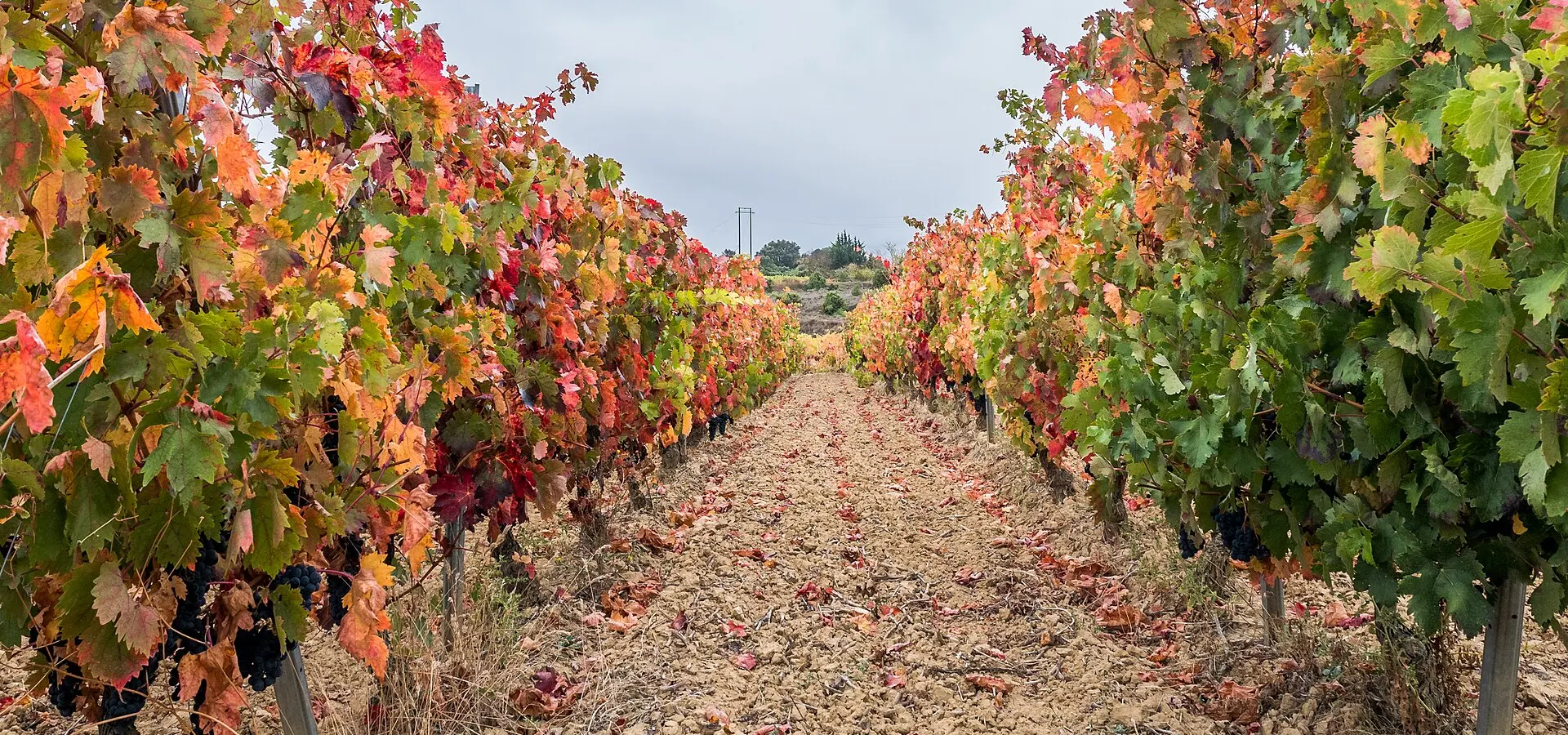
Rioja Alavesa: vineyards and Laguardia
Best Season
Good route all year round. Spectacular in September during the grape harvest.
The Rioja Alavesa with Laguardia, a medieval walled village, the avant-garde wineries (Marqués de Riscal by Gehry) and the Sierra de Cantabria as a backdrop.
Highlights
- 1Laguardia: walled medieval village
- 2Marqués de Riscal winery (Gehry)
- 3Sierra de Cantabria
- 4Haro and the Barrio de la Estación
About this route
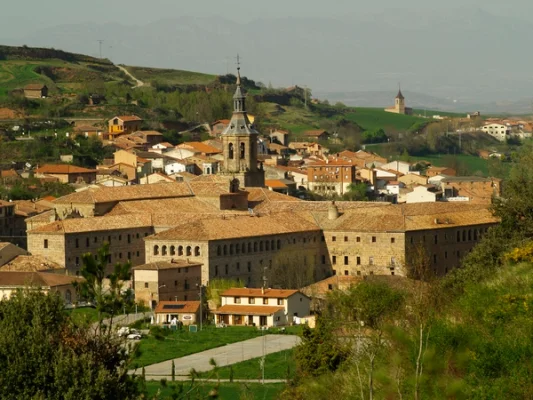
Laguardia is probably the most photogenic and best-preserved village in all of Rioja Alavesa, and one of the most complete medieval ensembles in the entire northern Iberian Peninsula. Set on a mound in the very heart of the wine region, completely walled with 13th-century ramparts that remain intact, it preserves a medieval historic center where cars are banned and where cobbled streets, heraldic houses and the Gothic church of Santa María de los Reyes (with its 14th-century polychrome portal, one of the five most important medieval portals in Spain) create an almost timeless atmosphere. Strolling through its streets first thing in the morning, before the tourist buses arrive, is like stepping into a perfectly calibrated time machine.
But the real architectural peculiarity of Laguardia, completely invisible from the surface, lies underground: the village's subsoil is riddled with more than 250 cellar-caves dug during the 16th-18th centuries, each belonging to a specific local family and still used today to age wine. These underground cellars maintain a constant temperature of 12-14°C year-round, creating ideal conditions for wine aging without any need for refrigeration. Laguardia is probably the village in the world with the highest density of family underground wineries per square meter, and many of them can be visited by arrangement with their owners.
A few kilometers from Laguardia, in the village of Elciego, stands one of the most spectacular and controversial contemporary buildings in the entire region: the Hotel Marqués de Riscal, designed by Frank Gehry and opened in 2006. It's a sculptural building of pink and silver titanium that looks as if it were literally lifted from another planet, planted in the heart of the century-old vineyards of the historic Marqués de Riscal winery (founded in 1858, one of the oldest and most prestigious of the entire D.O.Ca. Rioja). The contrast between the hotel's avant-garde architecture and the traditional sloping vineyards with the Sierra de Cantabria in the background is one of the most striking visual clashes you can find in contemporary Spain.
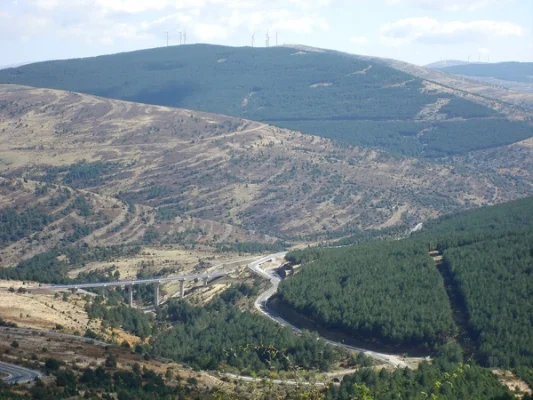
The Sierra de Cantabria, which closes off Rioja Alavesa to the north, is an important geographical oddity: it's one of the few Spanish mountain ranges with a clear climate-separating function. Its modest but abrupt peaks (not exceeding 1,400 m, but the northern face is practically vertical) block the Atlantic winds from the Cantabrian Sea and create a unique microclimate in Rioja Alavesa: sheltered from Atlantic rains, sunny in autumn, with wide day-night temperature swings. These conditions are what have made the area's extremely high-quality viticulture possible, and what give Rioja Alavesa wines their distinctive profile (more mineral, more structured, with greater aging capacity than those of Rioja Alta or Rioja Oriental).
Rider's notes: the route is relaxed (barely 130 km, no major mountain passes, good tarmac) and perfect as a weekend getaway. The best season runs from March to November, with the grape harvest (September-October) as the best moment if you want to see the wineries in full swing. Fuel up in Logroño. For food, in Laguardia the Restaurante Amelibia (right on the Plaza Mayor of the village) serves exceptional Basque-Riojan cuisine at reasonable prices; on a more ambitious note, the restaurant at the Hotel Marqués de Riscal (Marqués de Riscal Restaurante, one Michelin star) is one of the most complete gastronomic experiences in all of La Rioja. One tip: visit a traditional winery with cellar-caves (I recommend Bodegas Casa Primicia or Bodega Mayor de Migueloa, both in Laguardia), not just the large industrial ones. The difference between viewing a historic vineyard from a room hung with old paintings and walking into a modern stainless-steel winery is enormous.
Route stops
Laguardia
Monument
Medieval walled town.
Elciego - Marqués de Riscal
Monument
Gehry's avant-garde winery.
Haro
Village
Capital of Rioja wine.
Practical information
Weather
Good route all year round. Spectacular in September during the grape harvest.
Traffic
Moderate traffic.
Fuel stops
Petrol stations in Logroño, Laguardia and Haro.
Where to stay on this route
The towns this route passes through — useful for splitting it into stages or sleeping near the start. Book ahead in high season.
- LaguardiaSee places to stay
- Elciego - Marqués de RiscalSee places to stay
- HaroSee places to stay
Affiliate links: if you book through them, Nomadiq earns a small commission at no extra cost to you.