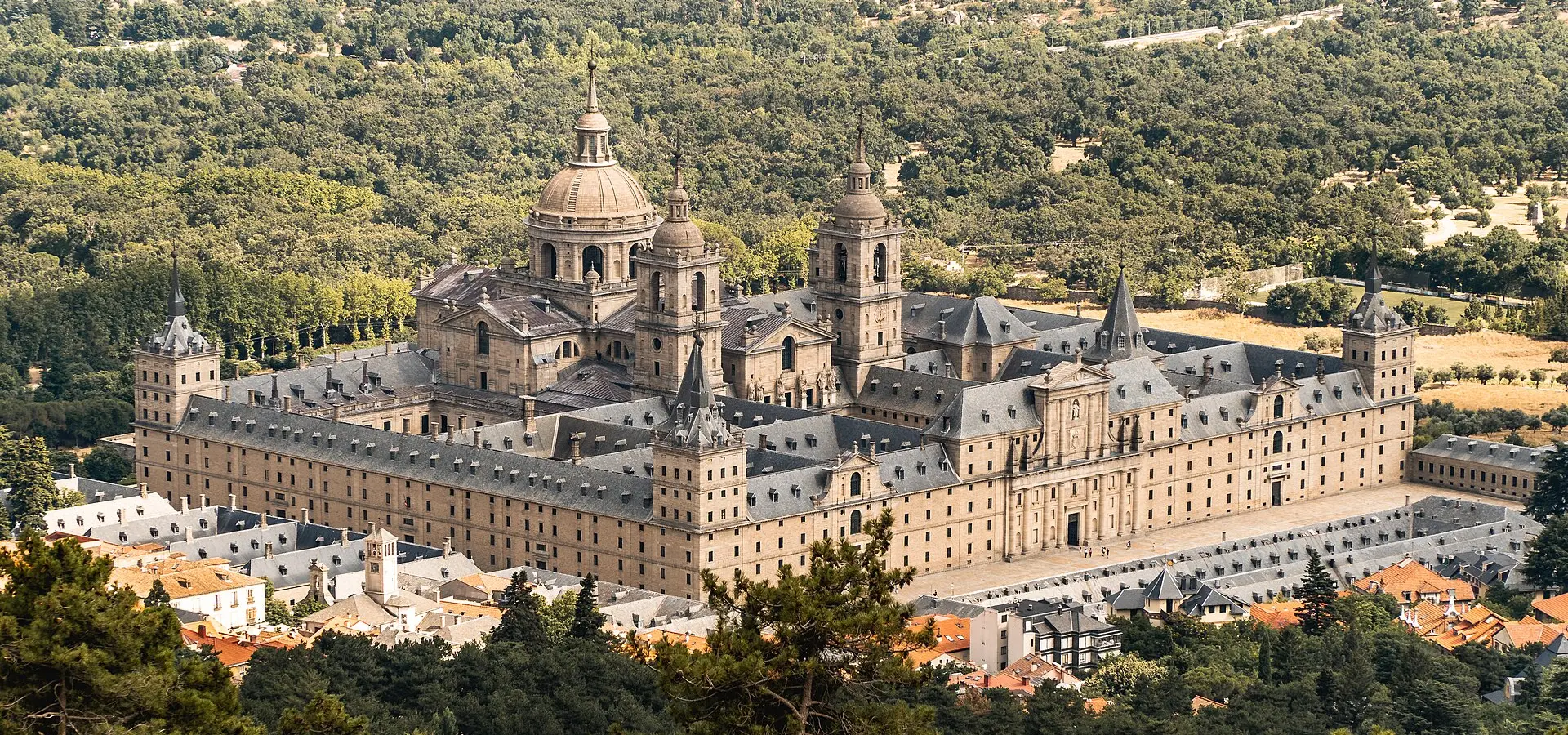
Sierra Oeste: San Lorenzo and Robledo
Best Season
Good route all year round.
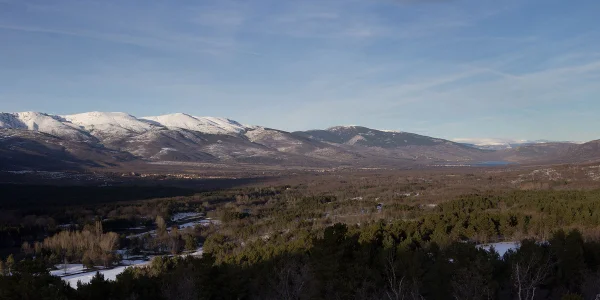
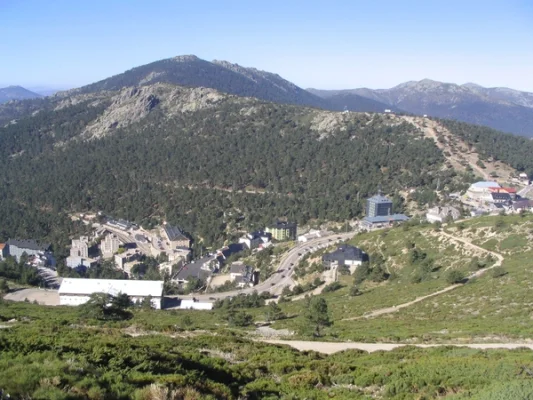
Madrid's Sierra Oeste with San Lorenzo de El Escorial, the Tiétar reservoirs and the villages of western Madrid. Quiet roads just a stone's throw from the capital.
Highlights
- 1El Escorial Monastery (UNESCO)
- 2San Juan Reservoir
- 3Robledo de Chavela
- 4Pine forests of the Sierra Oeste
About this route
San Lorenzo de El Escorial is probably the most symbolic and architecturally significant building of the Spanish Renaissance, and one of the most impressive monumental complexes in the whole of Europe. The Royal Site of San Lorenzo de El Escorial, commissioned by Philip II from the architect Juan de Herrera and built between 1563 and 1584, is an utterly grandiose project: 32,000 square metres, 16 courtyards, 12 cloisters, 88 fountains, 73 sculptures, 1,250 doors, 2,673 windows and a church of cathedral-like proportions. Philip II wanted to create, all at once, a monastery (of the Hieronymite Order), a royal palace, a basilica, a royal library, a university, a pantheon for the Spanish monarchs and a symbol of the militant Catholicism of the Counter-Reformation. And he succeeded, in one of the most ambitious architectural projects in the entire history of Europe.
What many visitors do not realise is that choosing the exact site on which to build El Escorial was as complex and controversial as the construction itself. Philip II sent teams of cosmographers, doctors and architects to assess various sites in the Sierra de Guadarrama and the surrounding areas of Madrid, seeking a location that met very specific criteria: high altitude (over 1,000 m to avoid the diseases of the lowlands), isolation from the centre of Madrid (so that the monastery would not be affected by the noise and corruption of the capital), an abundance of water, the presence of high-quality local granite (for construction) and a favourable orientation towards the stars. The final decision on the current site was made by the king himself after months of deliberation.
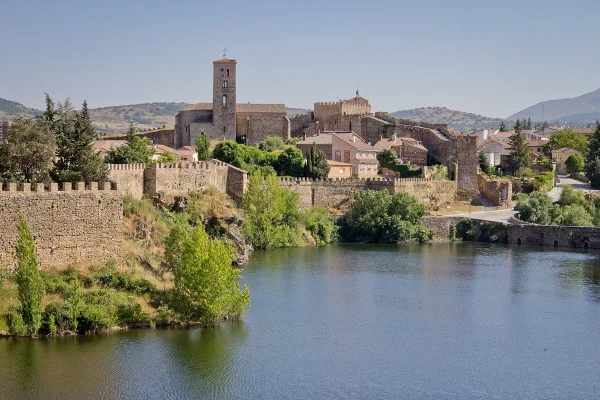
But Madrid’s Sierra Oeste has much more to offer than just El Escorial. The M-505 road, which climbs from Madrid towards the monastery, then continues through authentic mountain villages such as Robledo de Chavela (with its 15th-century Mudejar parish church, one of the few Mudejar gems in the Sierra Oeste), Valdemorillo (home to one of the most interesting Baroque theatres in the whole region, which is still in use) and Cebreros (on the border with Ávila, the birthplace of Adolfo Suárez). These local roads are quiet, perfect for a leisurely weekend ride without the tourist crowds found on the mountain passes.
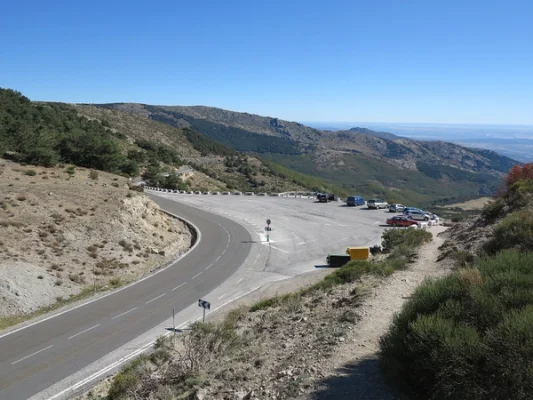
The San Juan reservoir, in the heart of the Sierra Oeste, is one of the few significant bodies of water in the whole of the Community of Madrid and, for decades, the ‘sea of the people of Madrid’: in the 1960s and 1970s, before the development of coastal tourism made the Mediterranean beaches accessible to all Madrileños, people would come here in the summer to swim and take part in water sports. Today, it remains a popular destination for windsurfers, sailors and rowers, and the combination of the blue water against the backdrop of the mountains creates a surprisingly ‘lacustrine’ landscape right in the heart of Castile. The M-501 road that runs alongside the reservoir offers several natural viewpoints and car parks where you can stop to take photographs.
Motorcycling tips: this route is comfortable and accessible all year round. Moderate traffic at weekends in summer (especially in El Escorial). Fill up with petrol in El Escorial or San Lorenzo. For lunch in San Lorenzo de El Escorial, avoid the tourist restaurants within the Royal Site itself (expensive and overcrowded) and head up to the Restaurante Charolés, on a parallel street, where they serve traditional Madrid-style stew and meat from the Sierra de Guadarrama at reasonable prices. And a tip: combine your motorbike ride with a guided tour of the Monastery (allow at least 2–3 hours). Without understanding the scale and historical context of El Escorial, the route is just a motorbike ride; with that visit, it becomes a full cultural day out – the sort that fully justifies taking the motorbike out on a Saturday.
Route stops
San Lorenzo de El Escorial
Monument
UNESCO World Heritage monastery.
Robledo de Chavela
Village
Mountain village in western Madrid.
Embalse de San Juan
Viewpoint
Reservoir with inland beach.
Practical information
Weather
Good route all year round.
Traffic
Heavy traffic in El Escorial at weekends.
Fuel stops
Frequent fuel stations.
Where to stay on this route
The towns this route passes through — useful for splitting it into stages or sleeping near the start. Book ahead in high season.
- San Lorenzo de El EscorialSee places to stay
- Robledo de ChavelaSee places to stay
- MadridSee places to stay
Affiliate links: if you book through them, Nomadiq earns a small commission at no extra cost to you.