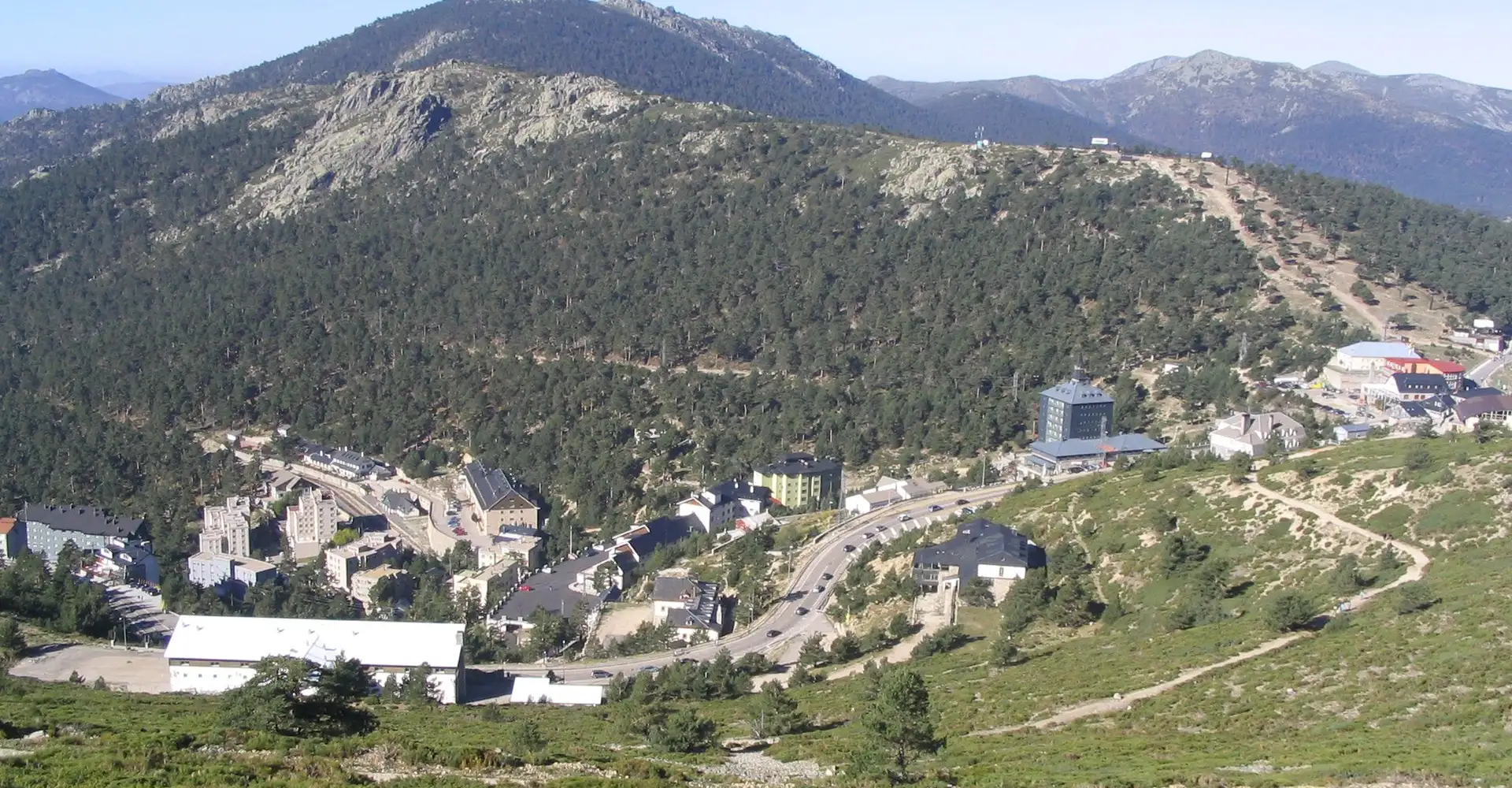
Puerto de Navacerrada and Cotos
The classic mountain passes of the Sierra de Guadarrama: Navacerrada (1,860 m) and Cotos (1,830 m) – the routes closest to Madrid and a must for any motorcyclist from Madrid.
Checking the route…
Roadbook
5 points- Start
Madrid
Puerto de Navacerrada
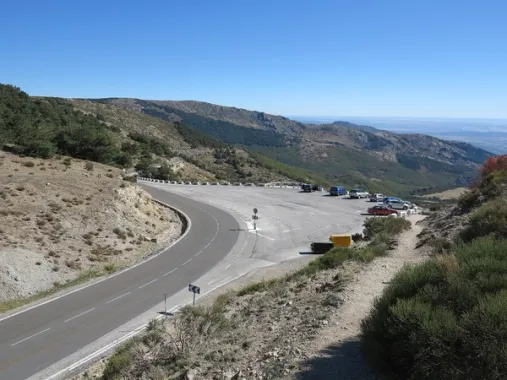
A mountain pass at 1,860 m, a Madrid classic.
ViewpointPuerto de Cotos
Mountain pass at 1,830 m towards Rascafría.
ViewpointRascafría - Monasterio de El Paular
A 14th-century Carthusian monastery.
Monument- Finish
Madrid
Take the route to Google Maps
- Madrid
- Puerto de Navacerrada
- Puerto de Cotos
- Rascafría - Monasterio de El Paular
- Madrid
We add waypoints from the GPX so Google Maps sticks to the route's roads (they show up as extra stops). To follow the exact track, use the GPX.
Highlights
- 01Navacerrada Pass (1,860 m)
- 02Cotos Pass (1,830 m)
- 03Globe
- 04El Paular Monastery in Rascafría
About this route
The Navacerrada Pass (1,860 m) is probably the most iconic and beloved mountain pass in the whole of the Community of Madrid. Just 60 km from the centre of the capital and linked by reasonably good roads, it has been the quintessential mountain getaway for the people of Madrid for over a century, first as a ski resort (the Cercedilla–Puerto de Navacerrada railway, the seed of this winter destination, was inaugurated in 1923, although the ski resort as such would not be founded until the late 1940s) and later as a destination for motorcyclists, cyclists and hikers. For motorcyclists from the capital, tackling ‘the climb up to Navacerrada’ is practically a rite of passage: the first ride on a new motorbike, a test of one’s nerves after a fall, or a quick getaway when you’ve got three hours to spare on a Saturday morning.
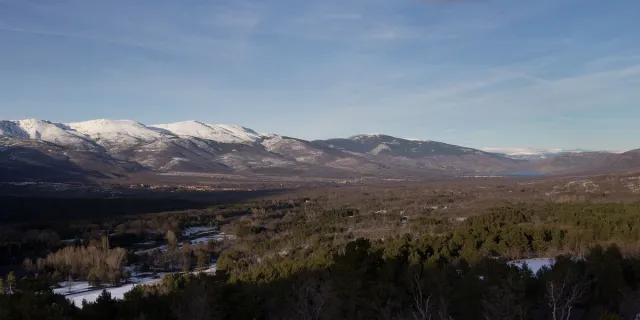
The Sierra de Guadarrama, where Navacerrada is situated, was designated a National Park in 2013, becoming Spain’s fifteenth National Park. This designation officially protected a vast granite massif (covering more than 33,000 hectares) which combines Mediterranean ecosystems at lower altitudes with Scots pine forests and alpine meadows on the peaks. What surprises many visitors most is the biodiversity of the wildlife: roe deer, wild boar, genet and pine martens still live here, and in higher, more isolated areas, even the extremely rare Iberian desman, a semi-aquatic endemic mammal that survives only in a few watercourses in central and northern Spain. The peaks of the Sierra de Guadarrama are also one of the few places in the whole of Spain where you can see the majestic black vulture, a bird of prey that was on the brink of extinction in the mid-20th century and which has maintained a small, stable population here.
The Puerto de Cotos (1,830 m), some 7 km north of Navacerrada along the M-604 road, is the other unmissable stop on the route. It is the traditional starting point for climbs up to Peñalara (2,428 m, the highest peak in the Central Mountain Range) and to the glacial lakes situated in its cirque, considered to be the only naturally formed glacial lakes in the whole of the Community of Madrid. The road between Navacerrada and Cotos is one of the best in the Sistema Central for motorcycling: wide bends, perfect tarmac, constant views of the Cuerda Larga and La Maliciosa, and long enough to enjoy several kilometres without interruption.
The Monastery of El Paular, in Rascafría, is the route’s unexpected cultural highlight. Founded in 1390 by order of John I of Castile as the first Carthusian monastery of the Castilian Crown, for centuries it was one of the wealthiest and most powerful monastic complexes in central Spain. The church houses one of the most important Gothic altarpieces in the whole of Spain: a 15th-century masterpiece featuring scenes from the life of Christ carved in polychrome alabaster. Although the monastery was confiscated in the 19th century and partially abandoned, it has now been partly restored and is home to an exceptional Parador Nacional, where you can stay in medieval cells converted into luxury rooms.
Motorcycling tips: the best time of year is from April to October. In winter, snow is common and mountain passes may be closed for days at a time. Traffic is heavy at weekends during the summer and every weekend during the ski season; it is very light on weekdays. Fill up with petrol in Cercedilla, Navacerrada village or Rascafría. For a bite to eat, avoid the tourist restaurants at the mountain pass itself and head down to Rascafría: the Restaurante Los Calizos serves roast lamb and ‘judiones del Barco’ beans like few other places, on a terrace overlooking the monastery. And a tip: if you’re going on a Saturday in May, leave Madrid before 8 am. The mountains are spectacular in late spring, with the peaks still bearing a touch of snow, the oak trees sprouting at lower altitudes, and the golden light of dawn creating the best possible conditions for photography.
Practical information
Weather
Snow in winter. Best time to visit: May–October.
Traffic
Heavy traffic at weekends.
Fuel stops
Petrol stations in Cercedilla and Rascafría.
Where to stay on this route
The towns this route passes through — useful for splitting it into stages or sleeping near the start. Book ahead in high season.
- Rascafría - Monasterio de El PaularSee places to stay
- MadridSee places to stay
Affiliate links: if you book through them, Nomadiq earns a small commission at no extra cost to you.
Published on