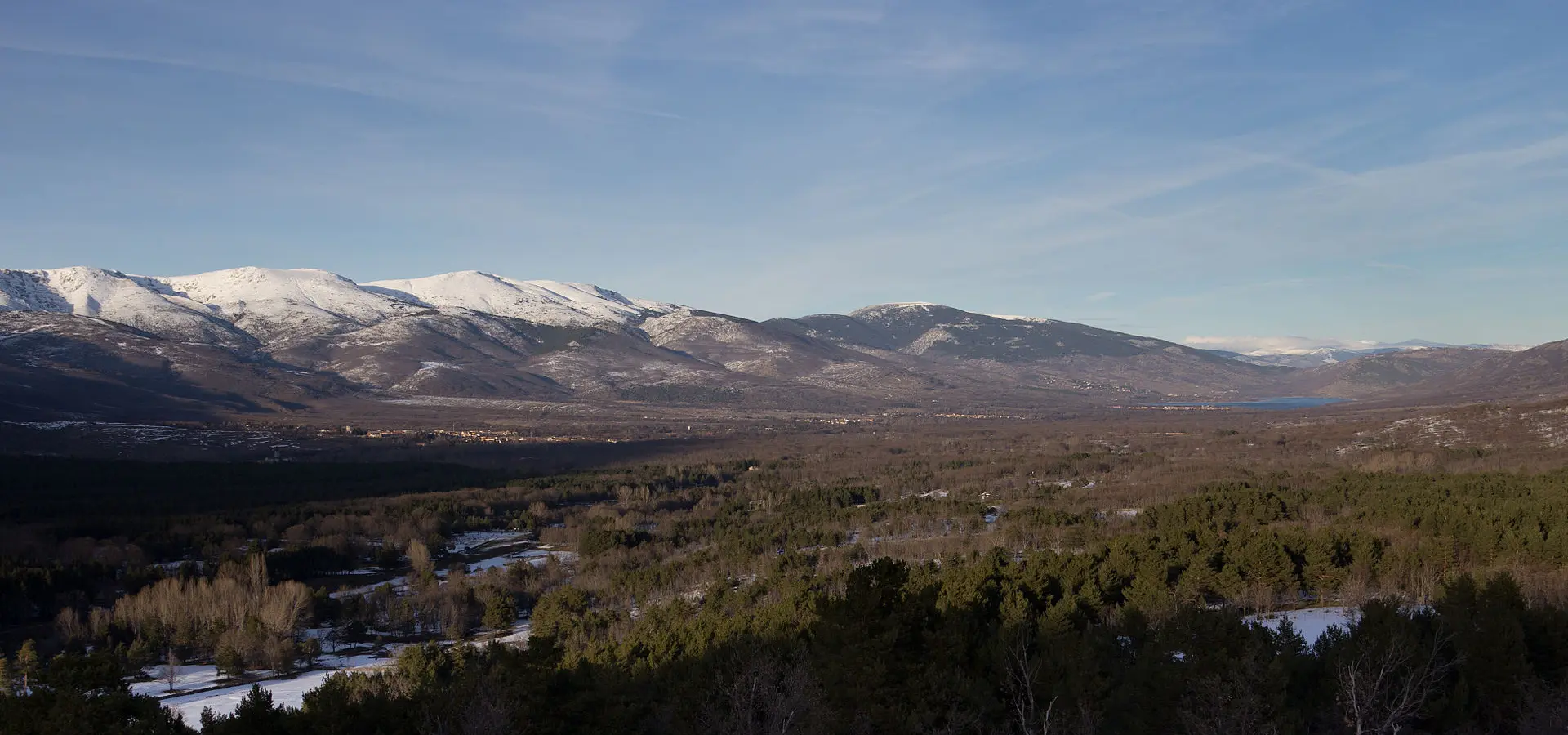
Puerto de Canencia and Lozoya
Best Season
Possible snow in winter.
The Puerto de Canencia and the Lozoya Valley, a quiet getaway through the Sierra Norte of Madrid with reservoirs, mountain villages and technical bends.
Highlights
- 1Puerto de Canencia (1,530 m)
- 2Valle del Lozoya
- 3Embalse de Pinilla
- 4Miraflores de la Sierra
About this route
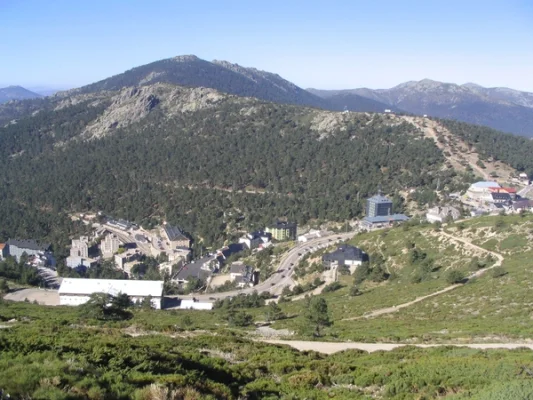
The Valle del Lozoya is one of the most beautiful and at the same time least-known corners of the entire Community of Madrid. It is a river valley carved deep into the heart of the Sierra de Guadarrama, where the río Lozoya (one of the main tributaries of the Tagus) has spent millions of years excavating a long, narrow valley of green meadows, centuries-old oak groves and perfectly preserved mountain villages. The population density is absurdly low for somewhere within the Community of Madrid, creating a surprising sense of isolation when you consider that the M-30 ring road is barely an hour away.
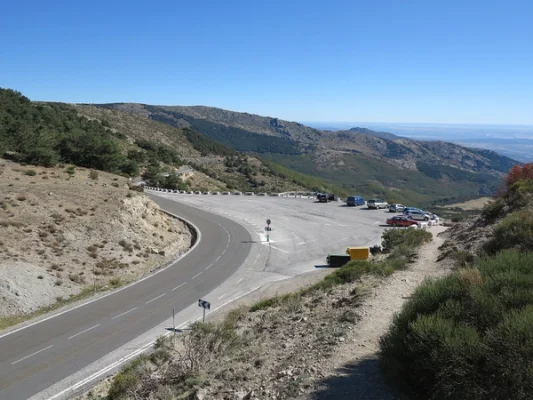
The Puerto de Canencia (1,530 m), where the M-629 climbs from Bustarviejo towards the Valle del Lozoya, is one of the most scenic yet least-known paved mountain passes in the entire Sierra de Guadarrama. The road winds for over 8 km of continuous climbing through ancient pine and oak forests, with technical bends and reasonable gradients, and virtually no traffic outside peak days. Madrid's bikers know it as "el Canencia" and regard it as their secret escape when the more famous passes (Navacerrada, Cotos, Morcuera) are too crowded with cars and cyclists. The views from the top, especially in autumn when the oak forests turn golden, are unforgettable.
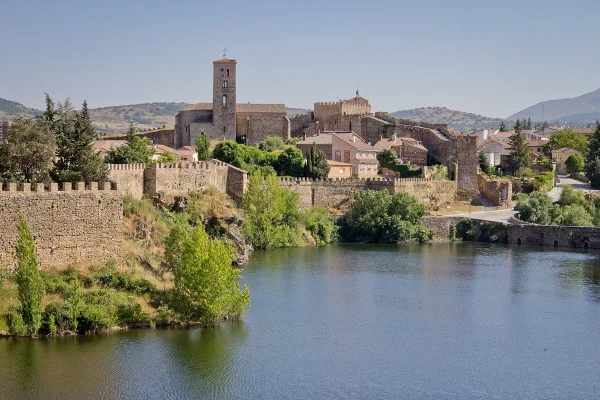
Lozoya, the village that gives the valley its name, is a modest municipality with a strong personality. It retains a small but authentic medieval old quarter, with stone-and-slate houses, a 16th-century parish church and a rural atmosphere that seems plucked from another century. But the most fascinating thing about Lozoya is its historical context: throughout the Middle Ages this valley was a frontier zone between the Christian kingdoms (Castile and Leon) and the Muslim al-Andalus, and countless armies, merchants and pilgrims passed through here. The defensive watchtowers still visible on some surrounding summits (such as the Atalaya de Arrebatacapas) are witnesses to that turbulent era.
Miraflores de la Sierra, another must-stop village on the route, has a surprising cultural twist: during the 19th and early 20th centuries it was one of the favourite summer retreats of the Madrid bourgeoisie, who built dozens of Art Nouveau-style "little hotels" here, giving the town a unique architectural imprint. The Calle Real in Miraflores still preserves some of these Belle Epoque chalets, with their gardens, turrets and wrought-iron details. The combination of urban Art Nouveau architecture set against a mountain landscape of pine and oak creates a very distinctive aesthetic contrast.
Practical riding tips: the Puerto de Canencia can have snow and ice in the depths of winter, so check conditions first. The optimal season runs from April to October. Traffic is light year-round except on autumn weekends (when many Madrileños head up to see the colours). Fill up in Soto del Real or Miraflores. For a meal, in Miraflores the Restaurante Asador Las Cuevas serves wood-oven roast lamb in a 17th-century cellar; for something more casual, any mesón in Lozoya village itself offers judiones (giant white beans) and mountain meat at affordable prices. And a tip: if you go in mid-October, do not miss the Mirador de los Robledos at the top of the Puerto de Canencia — it is one of the best spots in the entire Community of Madrid for photographing centuries-old oaks in full autumn colour.
Route stops
Puerto de Canencia
Viewpoint
Pass at 1,530 m.
Lozoya
Village
Village in the Lozoya Valley.
Miraflores de la Sierra
Village
Classic mountain village in Madrid.
Practical information
Weather
Possible snow in winter.
Traffic
Moderate traffic on weekends.
Fuel stops
Petrol stations in Miraflores and Soto del Real.
Where to stay on this route
The towns this route passes through — useful for splitting it into stages or sleeping near the start. Book ahead in high season.
- LozoyaSee places to stay
- Miraflores de la SierraSee places to stay
- MadridSee places to stay
Affiliate links: if you book through them, Nomadiq earns a small commission at no extra cost to you.