Sierra Norte: Buitrago and Patones
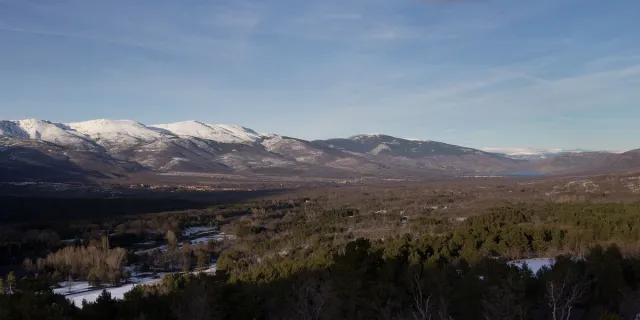
The Sierra Norte in Madrid, featuring Buitrago de Lozoya (a walled village), the Montejo beech forest, Patones de Arriba and very quiet country roads.
Checking the route…
Roadbook
5 points- km 0Start
Madrid
647 m - km 92.6
Buitrago de Lozoya
988 mA walled town with a Picasso museum.
Monument - km 116
Hayedo de Montejo
1,262 mEurope’s southernmost beech forest (UNESCO).
Viewpoint - km 167
Patones de Arriba
818 mA village with ‘black architecture’ made of slate.
Village - km 234.1Finish
Madrid
647 m
Take the route to Google Maps
- Madrid
- Buitrago de Lozoya
- Hayedo de Montejo
- Patones de Arriba
- Madrid
We add waypoints from the GPX so Google Maps sticks to the route's roads (they show up as extra stops). To follow the exact track, use the GPX.
Profile
572 → 1,354 mRoadbook distances and heights come from the route GPX.
Highlights
- 01Buitrago de Lozoya: a walled town
- 02Montejo Beech Forest (UNESCO)
- 03Patones de Arriba: a slate-roofed village
- 04Black communities in Madrid
About this route
The Sierra Norte of Madrid is probably the least known yet most surprising area of the entire Community of Madrid. Situated at the far northeastern edge of the region, on the border with Segovia and Guadalajara, it is a world apart: tiny villages lost in solitary valleys, secondary roads that are nearly empty, landscapes alternating between oak groves, rockrose scrublands and meadows, and a population density so low (barely 6 inhabitants per km² across most of the area) that many villages have lost over 80% of their residents in the past hundred years. For bikers from Madrid, it is the perfect escape when the Sierra de Guadarrama is overrun with tourists or when you crave a day of solitude.
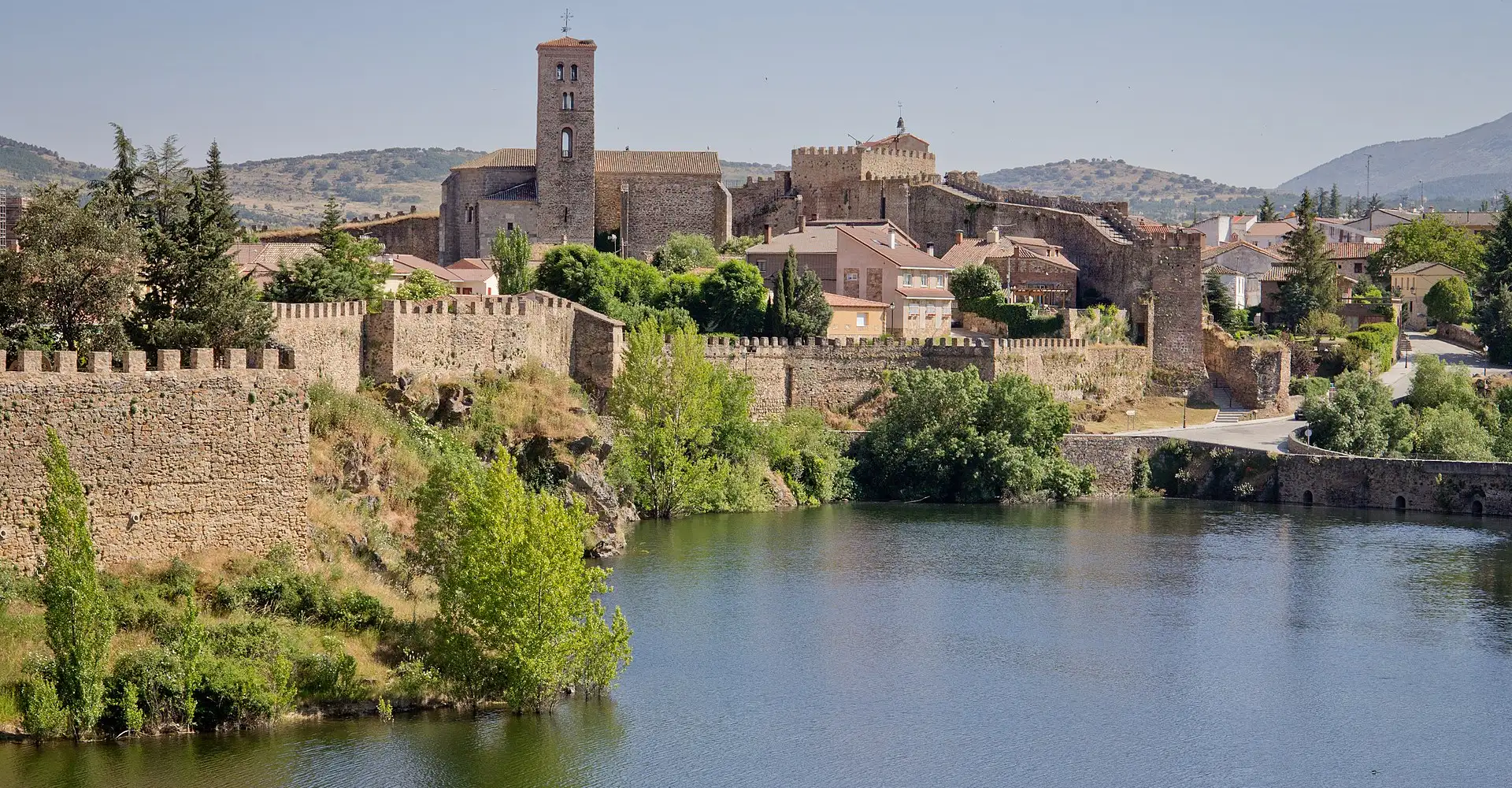
Buitrago de Lozoya is probably the most surprising village in the whole of the Community of Madrid. It is the only village in the region to retain a complete and virtually intact medieval wall, with over 800 metres of 11th-century walls still standing, along with its defensive towers, the Mendoza Castle and its Romanesque bridge over the River Lozoya. Throughout the Middle Ages, it was one of the most important defensive strongholds in the Central System, controlling the natural passage between Castile and the Madrid area (which was then a modest village). And here lies an unexpected cultural surprise: the small Picasso Museum in Buitrago, founded in 1985 thanks to a donation of works from Picasso’s personal barber (Eugenio Arias, a native of the village), which the painter had given him over the years of their friendship. It is one of the strangest and most moving museums in the whole of Spain.
The Hayedo de Montejo, just 15 km from Buitrago, is another great secret of the Sierra Norte. It is a relict beech forest — the southernmost beech woodland in all of continental Europe — a fascinating biogeographical rarity that survives here thanks to an exceptionally humid microclimate created by the combination of altitude (over 1,250 m), north-facing orientation and the constant presence of morning fog. Beech trees, normally associated with the Atlantic climates of northern Iberia, find here, in the semi-arid centre of Spain, a last refuge of survival. The Hayedo was declared a UNESCO Natural Heritage Site in 2017 as part of the Ancient and Primeval Beech Forests programme. Visits are made on foot along guided trails, with limited visitor numbers (advance booking required) to protect the fragile ecosystem.
Patones de Arriba is the other hidden gem of the Sierra Norte. It is a village built entirely from local black slate, which was abandoned for decades during the 20th century and has been restored since the 1980s as a destination for rural tourism and weekend breaks. Its architecture is utterly unique: the houses are rectangular, low-rise, with black slate roofs and black slate walls, without a single element made of any other material. Walking through its cobbled alleyways (cars are banned from the historic centre) is like stepping into an unspoilt medieval village. Local legend has it that Patones was a small independent kingdom, that of the ‘Kings of Patones’: Christian refugees who hid in caves in the area during the medieval Muslim invasion and maintained a hereditary line that lasted until the mid-18th century.
Motorcycling tips: The Sierra Norte has a long motorcycling season (from March to November), but it can get hot at midday in summer. The best time to visit is October–November, when the beech and oak woods turn golden. Traffic is light all year round, except on autumn weekends when many people from Madrid head up to see the colours. Fill up with petrol in Buitrago or Torrelaguna. And a tip: combine your visit to the Sierra Norte with a detour to the village of Montejo de la Sierra to see the slate-roofed houses and, if you’re lucky enough to have booked a place, take the guided tour of the beech forest. It’s one of the most comprehensive and surprising motorbike trips you can take near Madrid.
Practical information
Weather
A lovely walk almost all year round. The beech forest is spectacular in autumn.
Traffic
Moderate traffic at weekends.
Fuel stops
Petrol stations in Buitrago and Torrelaguna.
Where to stay on this route
The towns this route passes through — useful for splitting it into stages or sleeping near the start. Book ahead in high season.
- Buitrago de LozoyaSee places to stay
- Patones de ArribaSee places to stay
- MadridSee places to stay
Affiliate links: if you book through them, Nomadiq earns a small commission at no extra cost to you.
Published on