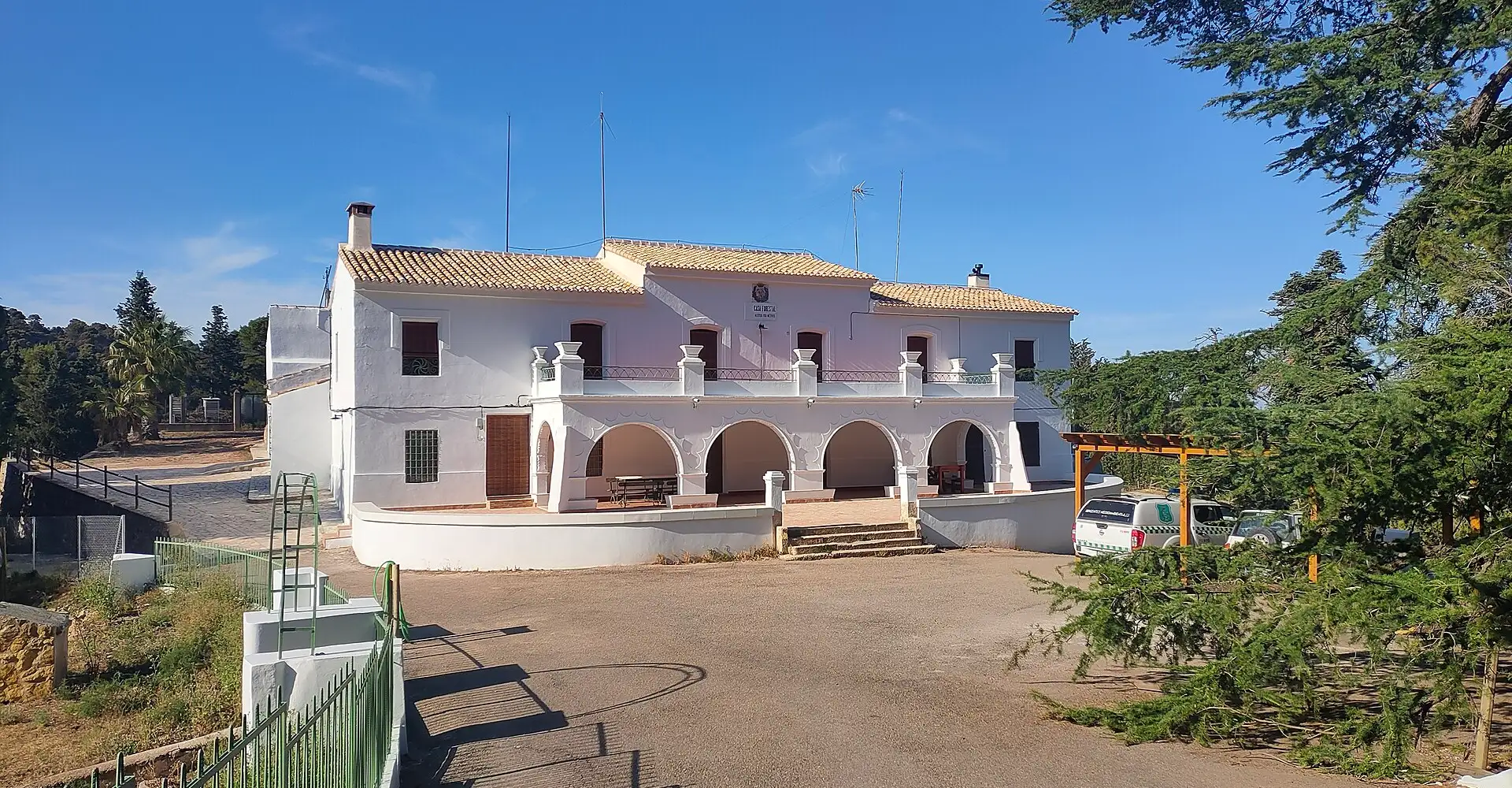
Sierra Espuña and the olive trees
The Sierra Espuña Regional Park, with its endless pine forests, snow pits and challenging roads that wind through Murcia’s most beautiful mountain range.
Checking the route…
Roadbook
4 points- km 0Start
Alhama de Murcia
156 m - km 29.2
Pozos de la nieve
1,364 mOld snow storage pits.
Monument - km 42.6
Aledo
610 mA village perched in the mountains.
Village - km 70.2Finish
Alhama de Murcia
156 m
Take the route to Google Maps
- Alhama de Murcia
- Pozos de la nieve
- Aledo
- Alhama de Murcia
We add waypoints from the GPX so Google Maps sticks to the route's roads (they show up as extra stops). To follow the exact track, use the GPX.
Profile
148 → 1,364 mRoadbook distances and heights come from the route GPX.
Highlights
- 01Sierra Espuña Regional Park
- 02Snow pits
- 03Aledo: a village perched high up
- 04Collado Bermejo
About this route
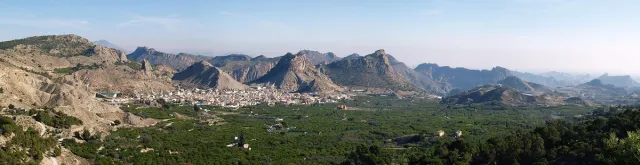
Sierra Espuña is probably the most surprising and at the same time least-known corner of the entire Region of Murcia. In a region that is predominantly dry, arid and almost desert-like in many areas, Espuña is a miraculous exception: a mountain massif (with peaks above 1,500 m) covered by one of the densest and best-preserved pine forests in all of southeastern Spain. The reason is historical: in the late 19th century, the forestry engineer Ricardo Codorníu undertook here one of the most ambitious and successful reforestation projects in all of Spain, planting millions of pines on what was then a completely eroded and barren sierra. A hundred years later, the result is a Mediterranean forest that looks millennia-old, cloaking the entire range and protected as a Regional Park since 1992.
The famous ‘Pozos de la Nieve’ are one of the park’s most interesting historical features. They are a series of semi-underground circular structures, situated on the southern slope of the Morrón de Espuña, at an altitude of around 1,300 metres, where, during the 16th to 19th centuries, compacted winter snow was stored to be sold during the summer as ‘natural ice’ in the cities of Murcia, Cartagena and Lorca. The snow was transported in esparto grass baskets on the backs of mules throughout the night to reach the cities before dawn (when it began to melt). The wells are perfectly preserved and can be visited by following a signposted trail: it is one of the most fascinating industrial archaeological experiences in Murcia, and demonstrates the technical complexity of the ice trade before the invention of modern refrigerators.
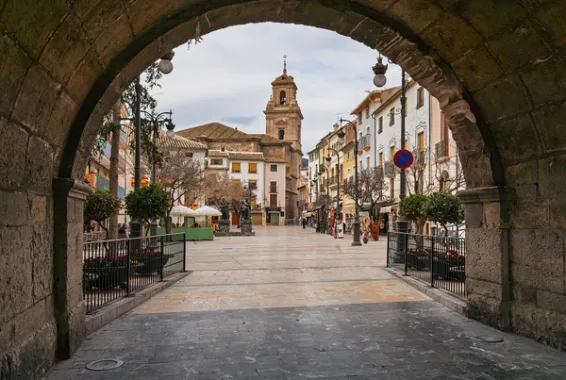
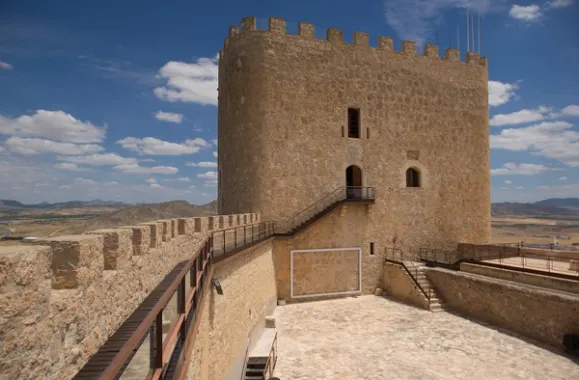
Aledo, the village perched on the southern slope of Espuña, is one of the most photogenic spots in the whole of the Murcia region. Situated at an altitude of 600 metres on a vertical cliff face, it boasts a medieval castle, captured by Christian troops in 1086 and peacefully reintegrated into the Crown of Castile in 1243 under the Treaty of Alcaraz, as well as a medieval old town where the terraced white houses create an almost Andalusian scene. The castle tower, still standing although partially restored, offers panoramic views from the top that take in the entire Sierra Espuña to the north, the Guadalentín valley to the west and, on clear days, the Mediterranean to the south-east. It is a natural viewpoint that is virtually unknown outside Murcia.
The RM-503 road climbing from Alhama de Murcia into the heart of Sierra Espuña is a little biking gem virtually unknown outside local circles. Over 20 km of continuous ascent through the pine forest, with technical bends and generally good tarmac, and no traffic outside the big summer weekends. The views during the climb are spectacular: the contrast between the intense green of the pines and the dry ochre of the Guadalentín valley at your feet is more reminiscent of Provence than southeastern Spain. In spring, the mountain slopes are carpeted with wildflowers and aromatic herbs that fill the air with the unmistakable scent of the Mediterranean scrubland.
Motorcycling tips: the best time of year is from October to May; in summer it gets very hot in the low-lying areas (temperatures of 40°C are common). Traffic is light all year round. Fill up in Alhama de Murcia or Totana. And here’s a tip: if you go in February, the almond trees on the slopes of the Guadalentín Valley are in full bloom, creating one of the most spectacular displays of colour in south-eastern Spain. Combining a motorbike ride, almond trees in bloom and the climb up to the Espuña pine forest is one of the most well-rounded motorcycling experiences you can have during the low season in Murcia.
Practical information
Weather
Extreme heat in summer. Best from October to May.
Traffic
Low traffic.
Fuel stops
Petrol stations in Alhama and Totana.
Where to stay on this route
The towns this route passes through — useful for splitting it into stages or sleeping near the start. Book ahead in high season.
- Pozos de la nieveSee places to stay
- AledoSee places to stay
- Alhama de MurciaSee places to stay
Affiliate links: if you book through them, Nomadiq earns a small commission at no extra cost to you.
Published on