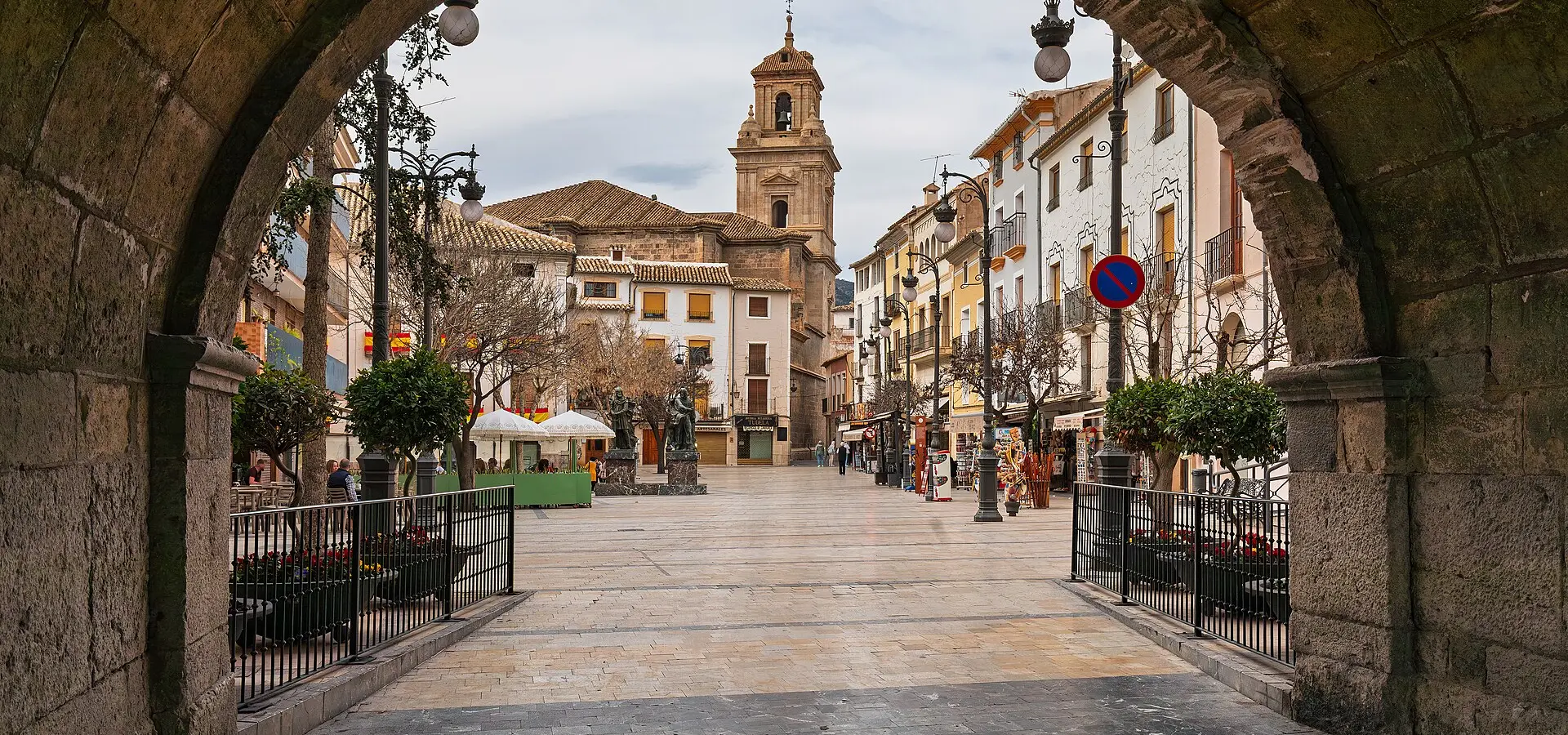
Caravaca de la Cruz and Northwest Murcia
Best Season
Continental Mediterranean: hot summers but bearable due to altitude. Cool winters.
Caravaca de la Cruz, the fifth holy city of the Christian world (alongside Rome, Jerusalem, Santiago and Santo Toribio); Moratalla with its UNESCO rock art; and the northwest Murcia highlands, green and unknown Murcia.
Highlights
- 1Caravaca: fifth holy city of the Christian world
- 2Moratalla: UNESCO rock art and a Moorish castle
- 3The north-western sierras: green, unknown Murcia
- 4Calasparra rice: the best rice in Spain
About this route
Caravaca de la Cruz is one of the most singular towns in Spain: in 1998 Pope John Paul II granted it the privilege of celebrating a Jubilee Year in perpetuity every seven years, making it the fifth holy city of the Christian world alongside Rome, Jerusalem, Santiago de Compostela and Santo Toribio de Liébana. That privilege, unique in the Church's recent history, rests on the relic of the Vera Cruz — a fragment of the True Cross — kept in the Sanctuary of the Vera Cruz since the 13th century.
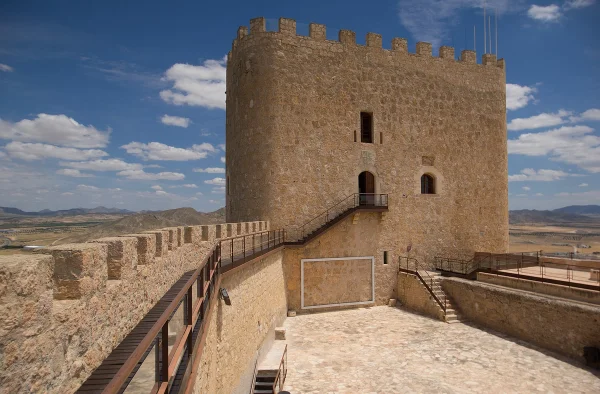
The Castle-Sanctuary of the Vera Cruz dominates Caravaca from its hill and is one of the most impressive monumental complexes in the whole Region of Murcia: a 12th-13th century Templar fortress housing the Basilica of the Vera Cruz (Baroque, 18th century), where the relic is held. The views from the walls take in the entire north-western district, with the sierras of Revolcadores, Mojantes and El Gavilán as a backdrop.
Moratalla, 30 km from Caravaca, is a walled medieval town holding one of the most important groups of rock art in the Mediterranean Arc (a UNESCO World Heritage listing). The Moratalla shelters, in the ravines of the sierra, contain paintings more than 5,000 years old depicting hunting, dance and the daily life of these mountains' Neolithic inhabitants. Moratalla's old quarter, crowned by a Moorish castle, keeps steep streets and whitewashed houses.
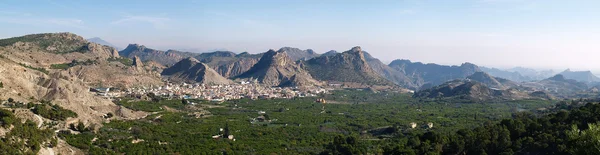
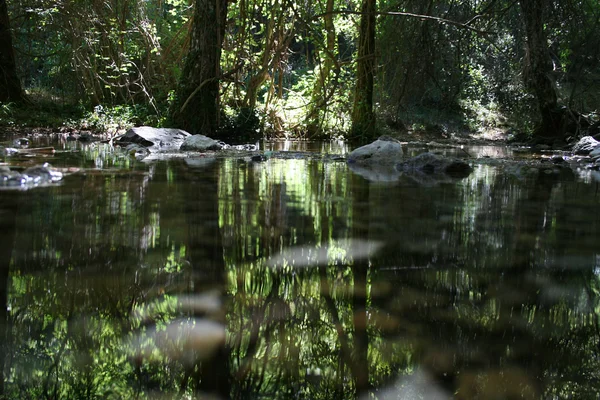
North-western Murcia is the antithesis of the market-garden-and-coast image most people attach to the region: this is a land of sierras above 2,000 metres — Revolcadores is Murcia's summit at 2,027 m — of pine, holm oak and juniper forest, rivers with natural pools, and very low population density. The roads linking Caravaca, Moratalla, Calasparra and Cehegín are winding, well surfaced and so lightly trafficked that they are ideal for a rider after peace and quiet.
Practical notes: north-western Murcia is rideable year-round in a continental Mediterranean climate — cool in winter, hot but bearable in summer thanks to the altitude. The roads are good but full of bends. Fuel in Caravaca, Moratalla and Calasparra. For food, Calasparra rice — the best in Spain, with its own designation of origin, grown on the banks of the Segura — and segureño lamb, raised in the north-western sierras, are the star products. The young, fruity wine of the Bullas DO is a perfect match for the local cooking.
Route stops
Castillo-Santuario de la Vera Cruz
Monument
Templar fortress with the True Cross relic.
Moratalla
Monument
Walled town with UNESCO rock art.
Calasparra
Village
Capital of DO rice, paddies along the Segura river.
Practical information
Weather
Continental Mediterranean: hot summers but bearable due to altitude. Cool winters.
Traffic
Low traffic on all roads. Slightly more in Caravaca during Jubilee Year.
Fuel stops
Petrol stations in Caravaca, Moratalla and Calasparra.
Where to stay on this route
The towns this route passes through — useful for splitting it into stages or sleeping near the start. Book ahead in high season.
- Castillo-Santuario de la Vera CruzSee places to stay
- MoratallaSee places to stay
- CalasparraSee places to stay
Affiliate links: if you book through them, Nomadiq earns a small commission at no extra cost to you.