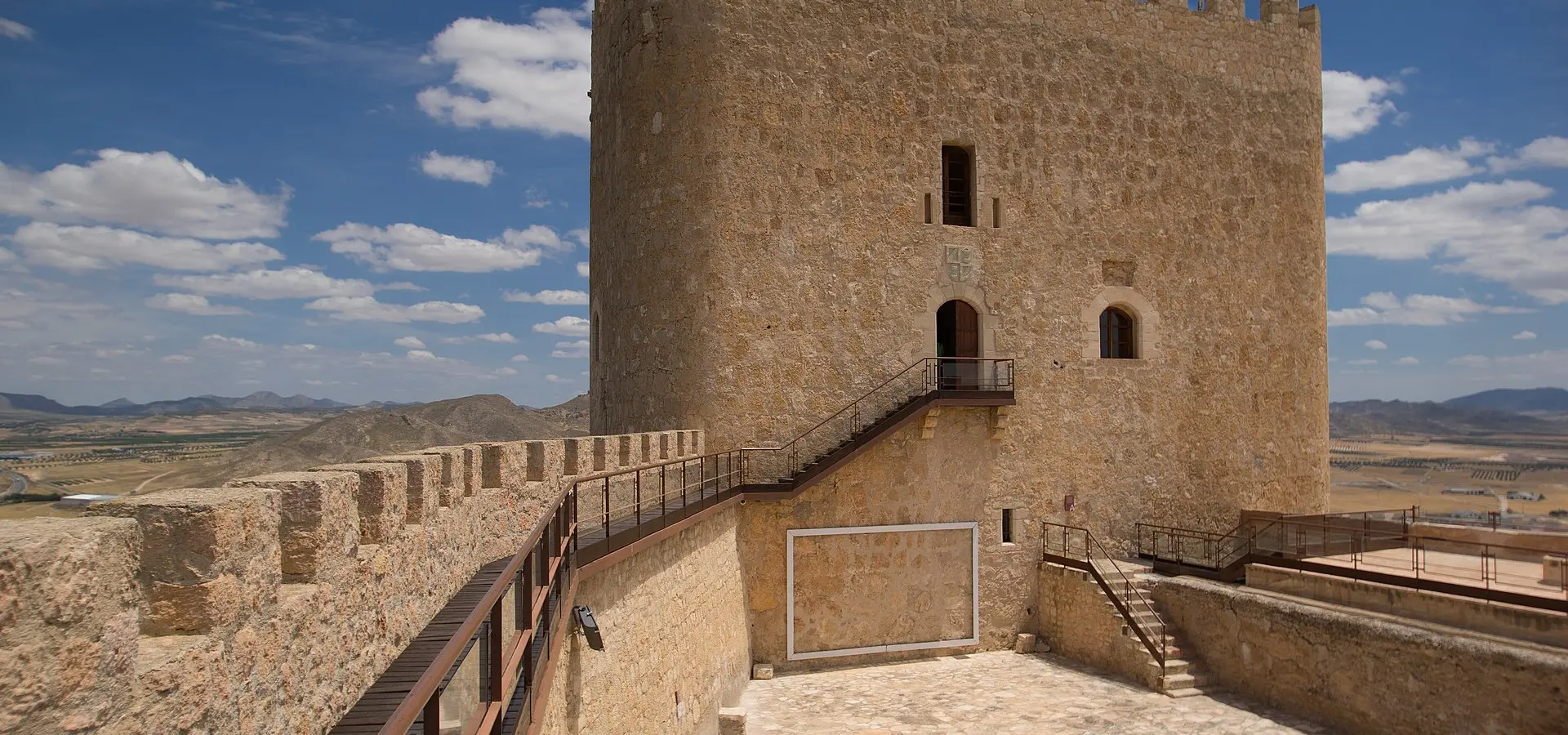
Highlands of Jumilla and Yecla
Best Season
Extreme heat in summer. Best October-May.
The Murcian Altiplano of Jumilla and Yecla is an area of wineries (D.O. Jumilla, monastrell), castles and lonely roads on a plateau at an altitude of over 600 metres.
Highlights
- 1Castillo de Jumilla
- 2Monte Arabí: rock paintings
- 3D.O. Jumilla wineries
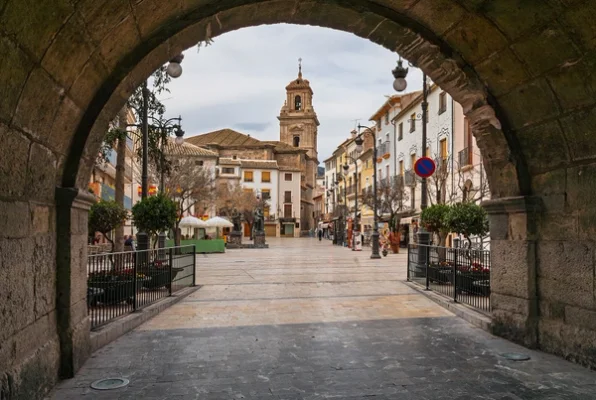
- 4Yecla and its churches
About this route
The Murcian-Valencian Altiplano is probably the most underrated and at the same time most promising wine region in all of Spain. Located at the far north of Murcia and the far south of Valencia (essentially encompassing the municipalities of Jumilla, Yecla and Pinoso), it is a dry plateau sitting above 600 m altitude with an extreme continental climate: scorching summers (40-42 degrees C is common in July and August) and cold winters (with frequent frosts and temperatures that can drop to -8 degrees C). These extreme conditions, seemingly so unfavourable, are however ideal for a very specific grape variety: monastrell, a red grape native to the southeastern Mediterranean that needs these thermal contrasts to concentrate sugars and develop complex tannins.
The D.O. Jumilla, one of the oldest wine appellations in Spain (established in 1966), today produces some of the most interesting and highly regarded young and aged reds in the entire southern half of the peninsula. Wineries such as Casa Castillo, Casa de la Ermita, Carchelo and El Sello have earned considerable international prestige over the past twenty years, especially with their old-vine monastrell cuvees (from vines over 50 years old) that critics describe as "the Spanish Chateauneuf-du-Pape" for their intensity, structure and ageing potential. Visiting a winery on the Altiplano is a very different experience from Rioja or Ribera del Duero: here there are no grand oenological chateaux but rather family-run bodegas, artisan producers and an almost militant pride in the rugged, mineral character of the local wines.
The Castillo de Jumilla, set atop the hill that dominates the town's old quarter, is one of the best-preserved Arab fortresses in the entire Region of Murcia. Built by the Andalusi Muslims in the 12th century, for 200 years it was one of the most important defensive strongholds of the Taifa kingdom of Murcia, controlling the natural pass between the Levante coast and the inland plateau. It fell to Christian forces in 1241 and was converted into the seat of the municipal council. Today you can visit the entire castle, and from its ramparts there is a panoramic view of the Altiplano that on clear days stretches as far as the inland sierras (Sierra Espuña to the south, Sierra de Pinoso to the east).
An archaeological rarity of the area: Monte Arabi, an isolated massif south of Yecla, harbours some of the most important Mediterranean Arc rock paintings in the entire Region of Murcia. These are Neolithic Levantine paintings (8,000 years old) depicting hunting scenes, ritual dances and stylised human figures, very similar to those found in the Valencian and Andalusian Levante. The painted caves (Cueva del Mediodía, Cueva de los Moros) are protected and can only be visited with a specialist guide, but the ride up to Monte Arabi alone, crossing the dry, almost lunar landscape of the Altiplano, is already a remarkable visual experience.
Practical riding tips: the Altiplano is very hot in summer (best avoided in July-August) and quite cold in winter with frosts. The optimal season runs from October to May, with September as the best month (grape harvest, laden vineyards, wineries in full swing). Traffic is very light year-round. Fill up in Jumilla, Yecla or Pinoso. For a meal, in Jumilla the Restaurante Reyes serves traditional Murcian cuisine with local wines in a restored 19th-century bodega. And a tip: visit at least one winery on the Altiplano (I recommend Casa Castillo for its architectural beauty and wine quality, or Bodegas Olivares for its five-generation family tradition). Tasting old-vine monastrell reds in a rural Altiplano bodega is an oenological experience hard to match in more touristy wine destinations.
Route stops
Castillo de Jumilla
Monument
Medieval castle of the Altiplano.
Yecla
Village
Capital of the Altiplano and wineries.
Practical information
Weather
Extreme heat in summer. Best October-May.
Traffic
Very low traffic.
Fuel stops
Petrol stations in Jumilla, Yecla and Pinoso.
Where to stay on this route
The towns this route passes through — useful for splitting it into stages or sleeping near the start. Book ahead in high season.
- Castillo de JumillaSee places to stay
- YeclaSee places to stay
- JumillaSee places to stay
Affiliate links: if you book through them, Nomadiq earns a small commission at no extra cost to you.
Related routes
Ricote Valley and meanders of the Segura River
Murcia
Pinoso, Yecla and Sax: wine and curves
Valencian Community
Ayora, Almansa and Sierra de Mariola
Valencian Community
Caravaca de la Cruz and Northwest Murcia
Murcia