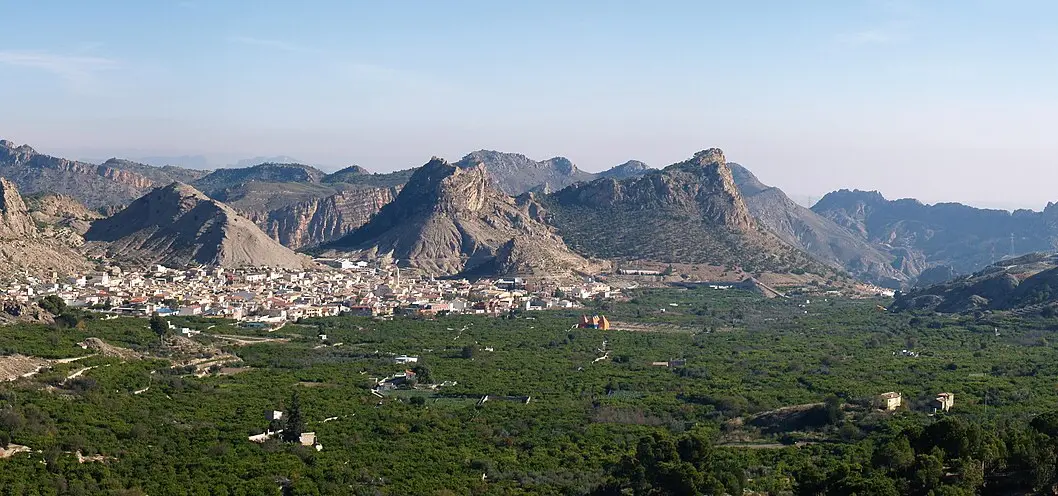
Ricote Valley and meanders of the Segura River
Best Season
Extreme heat in summer. Spectacular in February for flowering.
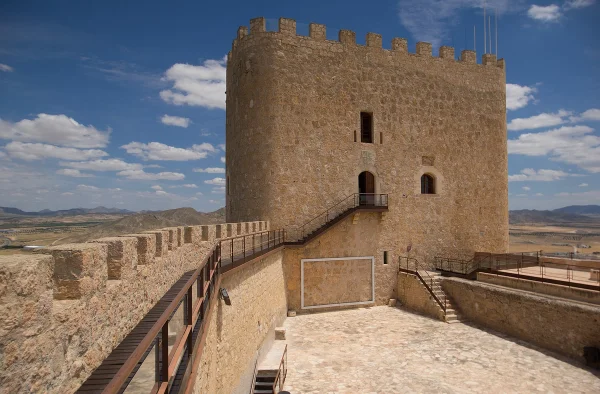
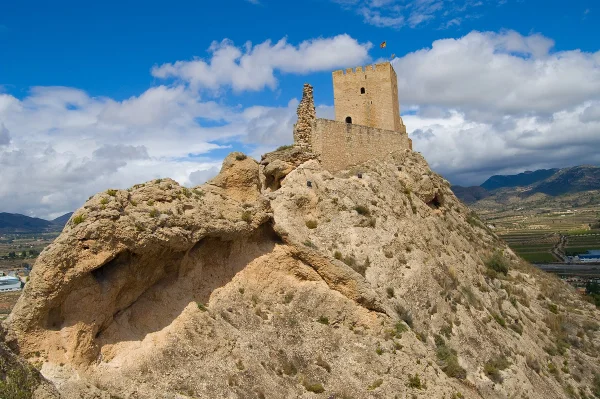
The Ricote Valley, the last Moorish stronghold in Murcia, follows the meanders of the Segura River between orchards and villages such as Ojós, Ricote and Blanca, declared Historic Sites.
Highlights
- 1Ricote Valley: the last Moorish stronghold
- 2Villages: Blanca, Ojós, Ricote
- 3The Meanders of the Segura
- 4Peach tree blossom (February–March)
About this route
The Ricote Valley is probably the most surprising and culturally complex corner of the entire Region of Murcia. It is a narrow river valley, nestled amongst the meanders of the River Segura, where a series of small villages — Abarán, Blanca, Ojós, Ricote, Villanueva del Río Segura — preserve an architectural style, an agricultural culture and an urban layout that bear witness to an intact Moorish past. Throughout the Al-Andalus period (8th–13th centuries), the valley was one of the most prosperous agricultural enclaves in the Taifa of Murcia, with sophisticated irrigation systems that made the most of the Segura’s water to cultivate vegetable gardens, vineyards and fruit trees on terraces painstakingly built into the hillsides. The Moriscos, descendants of those Andalusians, kept this tradition alive until the final expulsion of 1614, when the valley was virtually emptied of its inhabitants.
The historical significance of the Ricote Valley lies in the fact that it was the last Morisco stronghold in the whole of Spain. When Philip III ordered their final expulsion in 1609, the Moriscos of the Ricote Valley managed to delay the implementation of the order until 1614, thanks to a combination of pressure from the local nobility (the Christian lords of the valley, the Marquises of Vélez, were economically dependent on the Moriscos) and the valley’s own geographical inaccessibility, which made the logistical operation difficult. When they were finally shipped off to Algeria, the Moriscos of the Ricote Valley left behind almost deserted villages that took decades to repopulate, a situation which has allowed for the exceptional preservation of the town layout and irrigation systems to this day.
The meanders of the Segura in the Ricote Valley are one of the most beautiful and, at the same time, most unique river landscapes in the whole of Spain. As the river flows down from the inland mountain ranges towards the Mediterranean, it forms a series of sharp bends here (some almost 360 degrees) between limestone cliffs, creating small, extremely fertile floodplains where the area’s famous orchards thrive: lemon, orange, peach, plum and apricot trees. In February–March, when the fruit trees are in full bloom, the contrast between the pinkish-white of the blossoms, the deep green of the citrus trees and the dry ochre of the rock faces creates a landscape that is absolutely unique in the whole of Spain.
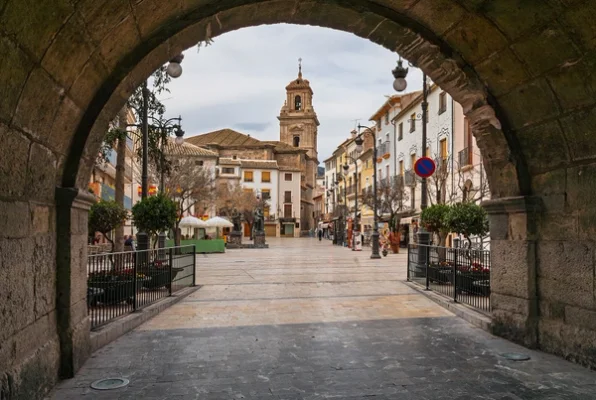
Ricote, the village that gives its name to the valley, is one of the most authentic spots in the whole of Murcia. Its steep, cobbled streets, its white houses with Moorish-style inner courtyards, its public fountains still in use (some with original 13th-century plumbing systems) and its atmosphere, a world away from the hustle and bustle of the coast, create an almost Moroccan feel. A must-try culinary highlight: a very special melon is grown here, the ‘Ricote melon’, a native variety that has survived for 800 years since the Al-Andalus period and boasts a concentrated, sweet flavour that is hard to find in any other variety. In August, during the harvest, it’s well worth stopping at any stall in the valley to try it.
Motorcycling tips: The Ricote Valley is accessible all year round, although it gets very hot in the height of summer (temperatures of 40°C are common). The best time to visit is from October to May, with February–March (when the fruit trees are in bloom) being the most spectacular. Traffic is very light all year round. Fill up in Cieza or Mula. For a bite to eat, in Ricote, Mesón La Vereda serves traditional Murcian cuisine featuring produce from the valley (fresh fruit, fish from the Segura, artisan cured meats) at reasonable prices. And a tip: if you have an extra hour to spare, don’t miss the Mirador del Solvente on the descent from the valley towards Ojós: it’s one of the most comprehensive viewpoints in the area, offering views of several meanders at once and the village of Ojós nestled within one of them. The scene is one of the most characteristic of the lesser-known side of Murcia.
Route stops
Ricote
Village
Moorish village in the heart of the valley.
Ojós
Village
Village in a meander of the Segura.
Practical information
Weather
Extreme heat in summer. Spectacular in February for flowering.
Traffic
Very low traffic.
Fuel stops
Petrol stations in Cieza and Mula.
Where to stay on this route
The towns this route passes through — useful for splitting it into stages or sleeping near the start. Book ahead in high season.
- RicoteSee places to stay
- OjósSee places to stay
- CiezaSee places to stay
Affiliate links: if you book through them, Nomadiq earns a small commission at no extra cost to you.