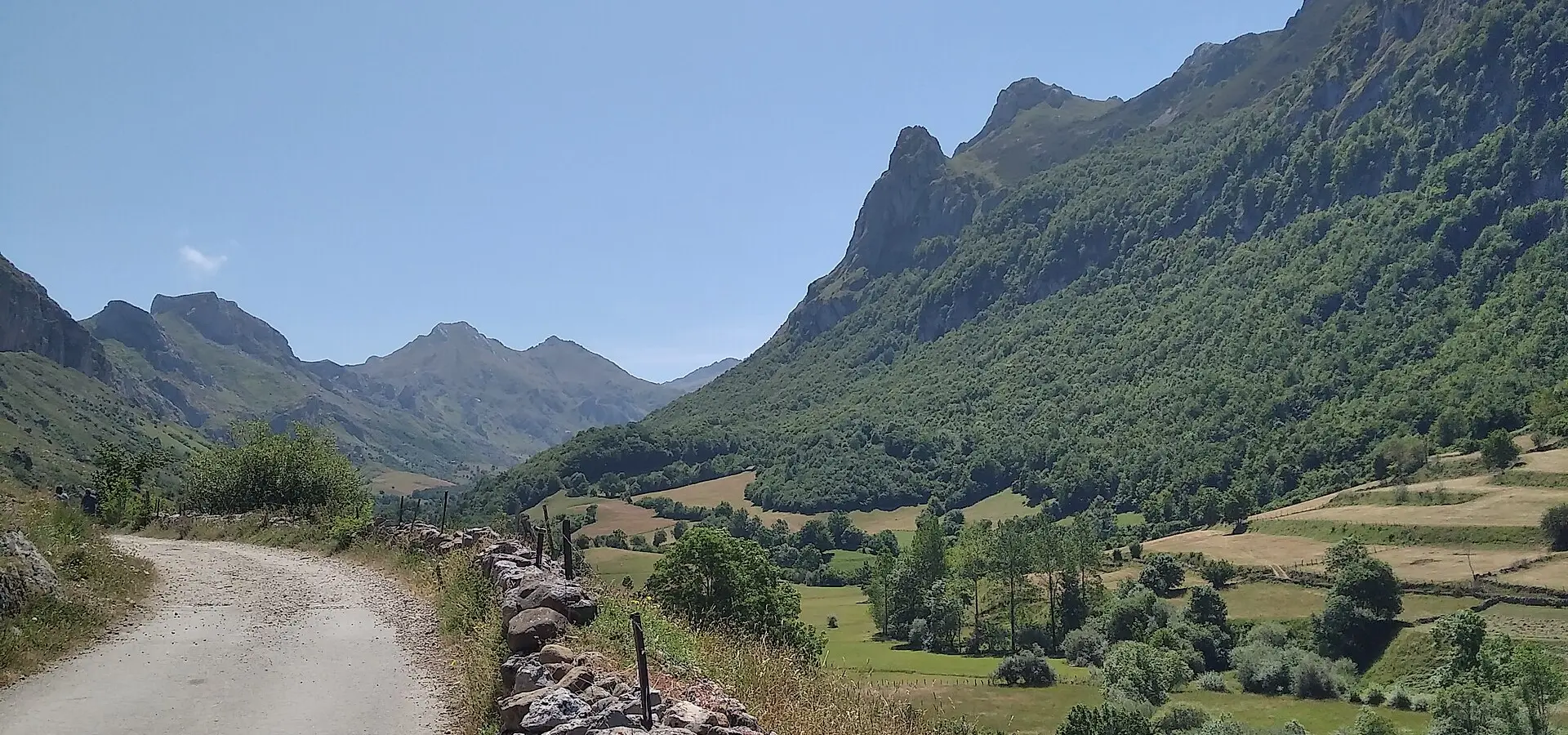
Senda del Oso and Somiedo
Best Season
Snow in winter. Best May-October.
Somiedo Natural Park, the last refuge of the Cantabrian brown bear, with its brañas, lakes and technical roads. One of the most unspoilt routes in Asturias.
Highlights
- 1Somiedo Natural Park
- 2Somiedo Pass (1,486 m)
- 3Mountain pastures and teitos of Somiedo
- 4Habitat of the brown bear
About this route
The Somiedo Natural Park is the last major refuge for the Cantabrian brown bear, a population of around 350 animals that survives in these remote Asturian valleys after having been on the brink of extinction in the 1970s. This is not merely an ecological curiosity: it is the reason why Somiedo has remained virtually untouched for decades, whilst other areas in the north have been developed for tourism. Restrictions put in place to protect the bear have kept the landscape in an almost prehistoric state, with alpine meadows, ancient beech and oak forests, and the famous ‘teitos’ — shepherds’ huts with rye-straw roofs that remain identical to those of the Neolithic period.
The AS-227 road towards Pola de Somiedo is one of the least well-known but most spectacular in Asturias. It climbs steadily from the Pigüeña valley, passing through forests so dense that in some sections they form veritable tunnels of foliage over the tarmac. The road is well maintained but narrow and technically challenging, with tight bends and steep gradients. At any time of year, you may come across Asturian cows of the native ‘casina’ breed slowly crossing the road, which means you must always drive with plenty of room to spare. In spring, the meadows are literally carpeted with wildflowers and the display of colour is almost too beautiful to believe.
Pola de Somiedo, the valley’s capital, is a modest village but one with an impressive wealth of ethnographic tradition. Here, a unique native breed of cow (the ‘casina’) is preserved, as is a breed of shepherd (the ‘pastor sano de Somiedo’), a transhumant grazing system that has all but disappeared in the rest of Europe, and the famous ‘brañas’: seasonal high-altitude settlements where herdsmen used to spend the summer months with their flocks. The Braña de la Mesa, accessible on foot from Pola, is a UNESCO-designated Ethnographic Site, with its perfectly preserved ‘teitos’.
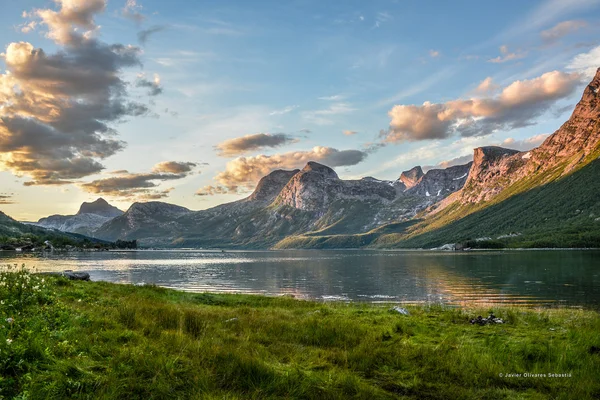
What many people don’t realise is that Lago del Valle, tucked away in a glacial hollow at an altitude of 1,580 metres, is one of the most beautiful mountain lakes in the whole of Spain. It is slightly larger than the Lakes of Covadonga, far less visited and without the same access restrictions. Getting there involves a walk of about 6 km from the Valle de Lago car park, but it’s well worth the effort. The resourceful motorcyclist can leave their bike there and walk up in about two hours to witness one of the most unspoilt sights in the Western Cantabrian Massif. If you’re lucky enough to spot bears — unlikely but possible — it would be in these high-altitude areas at dawn or dusk.
To complete the full route, the best option is to link Somiedo with the Senda del Oso (an old railway line now converted into a cycle and footpath between Tuñón and Entrago, which lies outside the motorbike route but is worth mentioning) and head down via Belmonte de Miranda. This combination makes for a very comprehensive circular route of around 170 km. The best time to visit is from May to October: in winter, the mountain passes may be closed due to snow and rain is very common. For a meal in Pola de Somiedo, the Mesón Casa Quirós serves roast suckling kid like few other places do. And if you visit in September, don’t miss the deer rutting in the high-altitude oak forests: it’s one of the most impressive wildlife spectacles you can experience in Spain.
Route stops
Pola de Somiedo
Village
Capital of the natural park.
Puerto de Somiedo
Viewpoint
Pass at 1,486 m.
Practical information
Weather
Snow in winter. Best May-October.
Traffic
Very low traffic.
Fuel stops
Petrol stations in Oviedo and Belmonte.
Where to stay on this route
The towns this route passes through — useful for splitting it into stages or sleeping near the start. Book ahead in high season.
- Pola de SomiedoSee places to stay
- OviedoSee places to stay
Affiliate links: if you book through them, Nomadiq earns a small commission at no extra cost to you.
Related routes
Puerto del Angliru: Spain's Steepest Wall
Asturias
Costa Verde: Cudillero, Luarca and Oscos
Asturias
San Glorio Pass and Fuentes de Invierno (Winter Springs)
Asturias
Lakes of Covadonga and central Picos de Europa
Asturias