Costa Verde: Cudillero, Luarca and Oscos
Best Season
Rain likely all year round. Summer more stable.
The Asturian Green Coast with two jewels: Cudillero, a fishing village in an amphitheatre, and Luarca, "the White Village". Continue through the Oscos, villages lost in the interior.
Highlights
- 1Cudillero: village in an amphitheater
- 2Luarca: the White Town of the Costa Verde
- 3Comarca of Los Oscos
- 4Cliffs of Cabo Vidio
About this route
The Asturian Costa Verde between Avilés and Luarca is one of the least touristically exploited and geologically most interesting coastal stretches of the Cantabrian Sea. The reason lies in the nature of the cliffs: unlike the Cantabrian coast (mostly limestone) or the Galician coast (granitic), here Paleozoic slates dominate, soft materials that the sea has sculpted into whimsical shapes, with hidden coves, natural arches, lighthouses planted on impossible crags, and small fishing ports tucked between vertical walls. This is the most authentic coast of Asturias, where mass tourism has never arrived and where people still live from the sea.
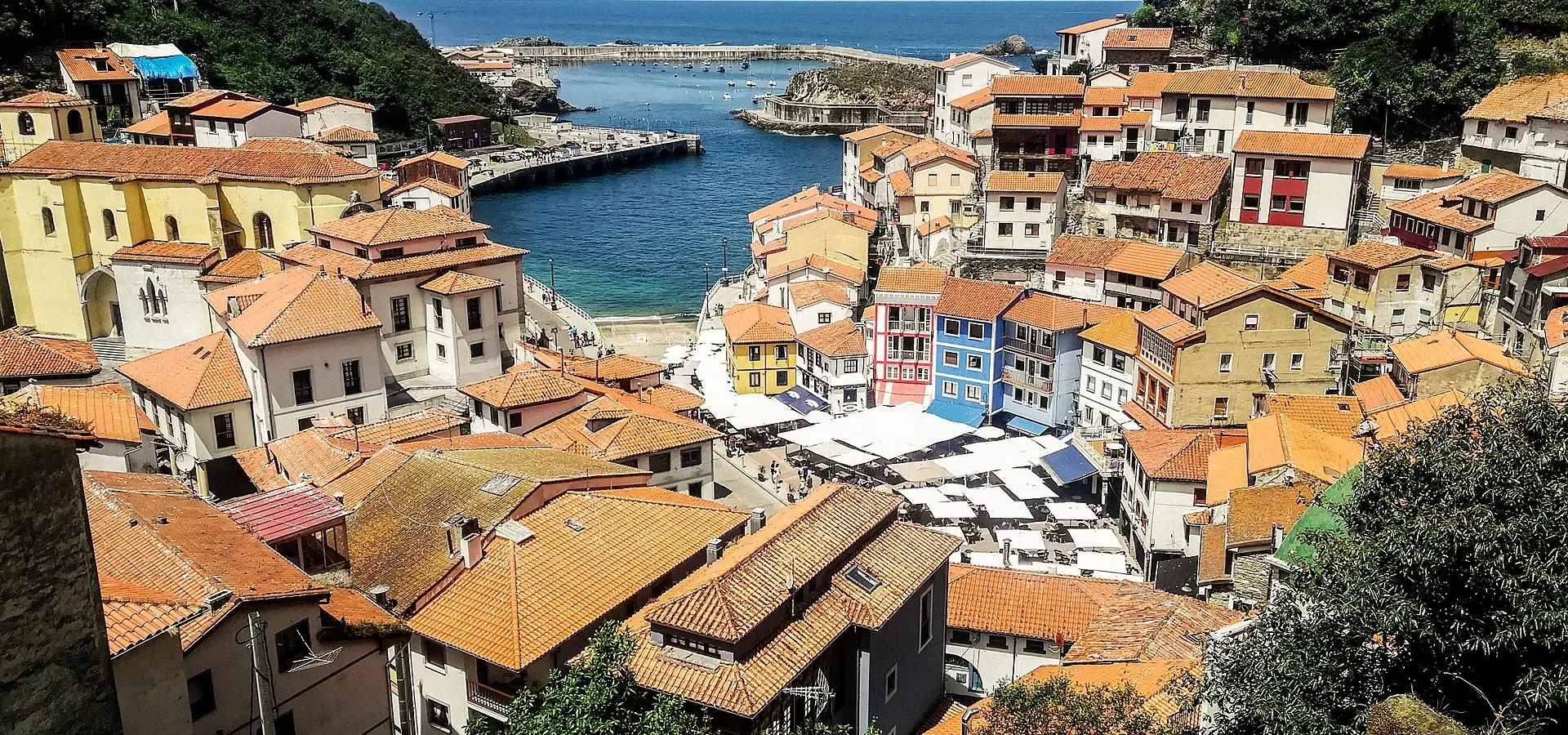
Cudillero is probably the quintessential Asturian postcard. The village is literally wedged into a funnel-shaped natural amphitheater, with white and colorful houses stacked in impossible tiers descending to the tiny fishing port. Its urban layout is a case study: every house faces the sea, every street drops down to the port, and the town's only square —La Marina— is basically a hanging step where four bar tables barely fit. According to some theories, its origin is Viking —the pixuetos, as Cudillero's inhabitants are called, have distinct physical traits and a dialect different from the rest of Asturias— and in fact until just a few generations ago they spoke their own language here, "pixueto," of which some words still survive.
Luarca, "the White Town of the Costa Verde," is the other jewel. Larger and more bourgeois than Cudillero, during the 19th century it was one of the most important whaling ports of the Cantabrian Sea, and the prosperity of that era left behind a historic quarter of indiano palaces —built by emigrants who returned rich from Cuba and Argentina— of exceptional architectural quality. The cemetery of Luarca, perched on a cliff at the edge of the Cantabrian Sea, is famous because Severo Ochoa, the 1959 Nobel laureate in Medicine, is buried there in a simple grave overlooking the ocean. It is one of the most spectacular and meditative cemeteries in all of Spain.
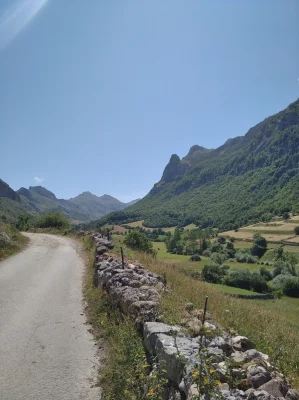
The logical continuation of the route is not to keep following the coast, but to head inland through the comarca of Los Oscos. This is an almost mythical area of Asturias: a group of three councils lost in the western mountains (Santa Eulalia, San Martín, and Villanueva de Oscos) that for centuries lived in almost total isolation and developed their own cultural identity, with their own language (Galician-Asturian or "fala"), their own gastronomy, and their own architecture of "teitos" (shepherd huts with thatched roofs). Today it is one of the most sparsely populated areas in Western Europe, with fewer than 4 inhabitants per km², and riding along its secondary roads is an experience of almost mystical solitude.
For the rider, the best thing about this route is its variety: in a single day you cross coastal cliffs, fishing villages, river valleys, and interior mountains. The coastal roads (N-632 and N-634) are comfortable, but the real pleasure lies in the detours: heading out to Cabo Vidio between Cudillero and Luarca, climbing up to the Mirador del Fito (one of the most famous panoramas in Asturias), or venturing into the secondary roads of Los Oscos. Refuel in Avilés at the start and in Vegadeo midway. For food, Casa Marcial in La Salgar (near Arriondas, a bit east of the route) is one of the best restaurants in northern Spain with three Michelin stars; but also the Mesón del Mar in Cudillero serves barnacles and a seafood stew that justify a long stop.
Route stops
Cudillero
Village
Fishing village in an amphitheatre of white houses.
Luarca
Village
Villa Blanca de la Costa Verde.
Santa Eulalia de Oscos
Village
Village in the heart of the Oscos.
Practical information
Weather
Rain likely all year round. Summer more stable.
Traffic
Moderate traffic. More tourism in August.
Fuel stops
Petrol stations in Cudillero, Luarca and Vegadeo.
Where to stay on this route
The towns this route passes through — useful for splitting it into stages or sleeping near the start. Book ahead in high season.
- CudilleroSee places to stay
- LuarcaSee places to stay
- Santa Eulalia de OscosSee places to stay
Affiliate links: if you book through them, Nomadiq earns a small commission at no extra cost to you.