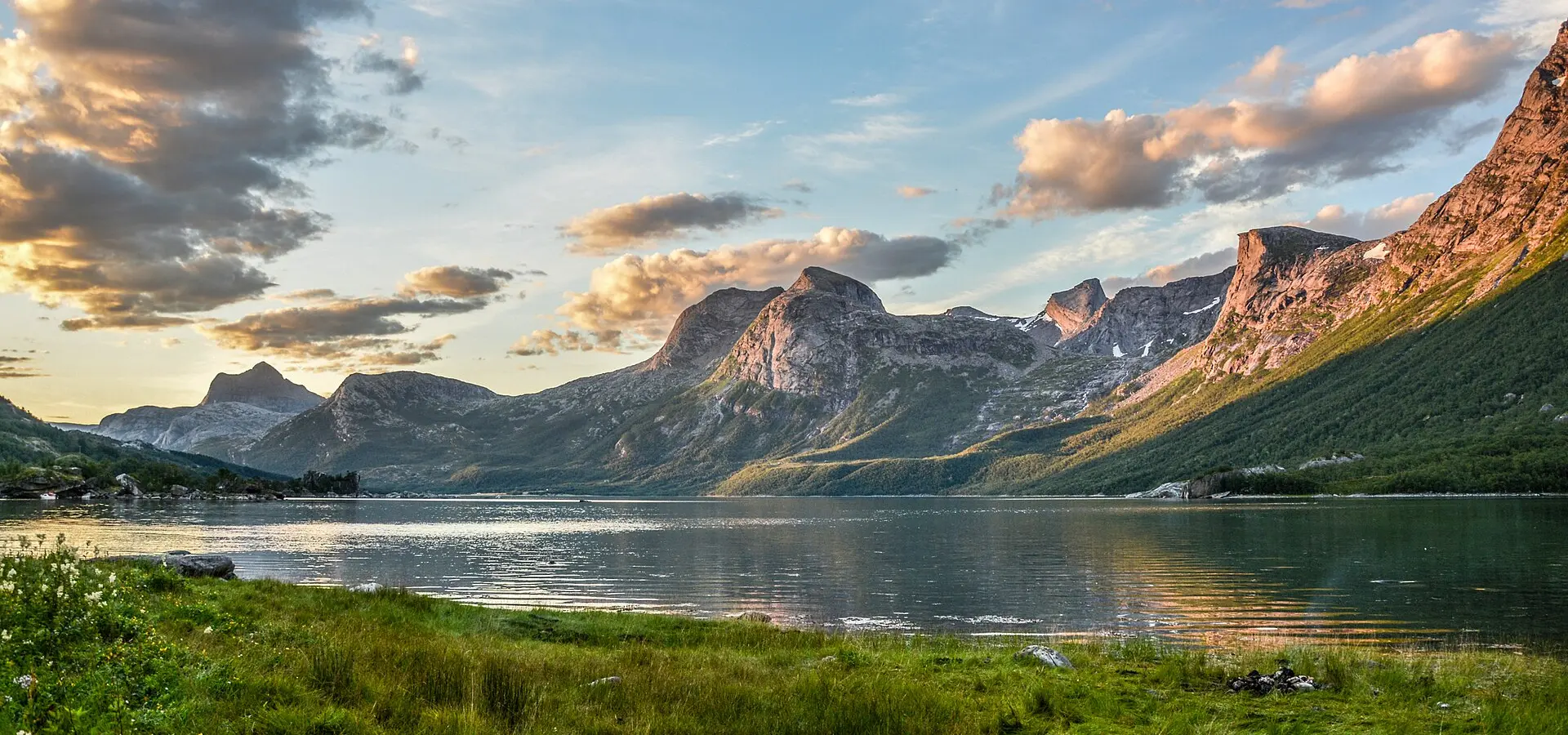
Lakes of Covadonga and central Picos de Europa
Best Season
Frequent fog on the lakes. Closed to private traffic in summer (July-October, must be climbed by bus). Motorbikes are allowed outside peak times - check current regulations.
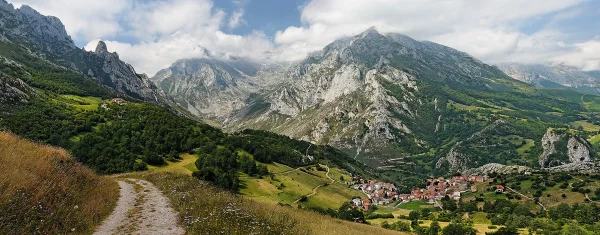
The Covadonga Lakes, the most famous of the Picos de Europa, with the mythical ascent from the Royal Site. Curves, turquoise lakes and the north face of the Western Massif.
Highlights
- 1Lagos de Covadonga (Enol and Ercina)
- 2Sanctuary of Covadonga
- 3The legendary climb road
- 4Cabrales and the Picos de Europa
About this route
The Lagos de Covadonga are probably the lakes most laden with historical symbolism in all of Spain. Not because of their geological beauty —which is notable but not exceptional— but because barely two kilometres from here, in a cave beneath a cliff, there took place in the year 722 what tradition regards as the beginning of the Reconquista: Don Pelayo's victory over the troops of emir Alkamah, the first military check to the Muslim expansion across the peninsula. That is why Covadonga is, in addition to a spectacular natural park, one of the founding places of the Spanish national imagination, and riding up to the lakes has that double dimension of scenic trip and historical pilgrimage.
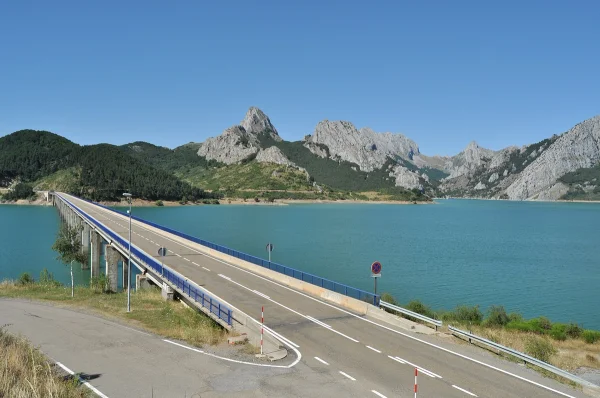
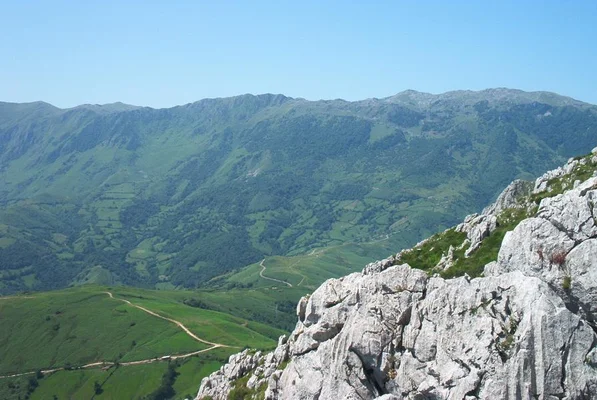
The road up to the lakes is short but brutal: 12 km of continuous climb with gradients reaching 15%, tight bends, good but narrow asphalt and scenery that changes radically every kilometre. It starts at the Real Sitio de Covadonga (with its 19th-century neo-Romanesque basilica and the cave of the sanctuary), crosses extremely dense beech forests, emerges into subalpine pasture and ends in a glacial hollow at 1,100 m where lakes Enol and Ercina lie, carved by the ice of the last glaciation 10,000 years ago. When the day is clear and there is no fog —which here is far from guaranteed— the views toward the Western Massif of the Picos are unforgettable.
There is one critical practical detail every rider needs to know: during Easter week, July, August and bank holiday weekends, private vehicle access to the lakes is forbidden between 8:30 and 19:30. The reason is environmental: mass tourism was seriously degrading the ecosystem. You have to go up in shuttle buses that leave from Cangas de Onís. Riders, however, are in luck: early in the morning or at dusk, riding up is allowed, and taking advantage of these time slots lets you have the road practically empty and the lakes free of crowds. Always check the website of the Picos de Europa National Park before heading up.
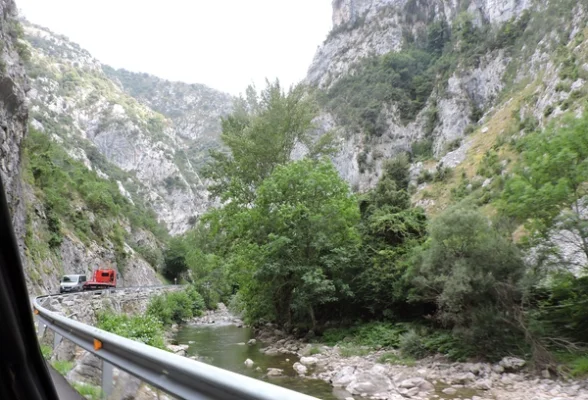
The logical continuation of the route is to descend to Cangas de Onís —with its famous 1st-century Roman bridge from which hangs the Victory Cross— and link up with the AS-114 towards Cabrales. This road crosses the northern face of the Picos through an impossible valley, with the Garganta del Cares to the south and the Naranjo de Bulnes peeking out between the clouds. Arenas de Cabrales, the capital of the valley, is famous for its blue cheese, one of the strongest and most characterful in the world, fermented in natural caves of the massif at a constant temperature. Tasting it in one of the village's sidrerías, with poured cider and hearth bread, is a total sensory experience.
For Asturian riders, this is the king of short itineraries. Barely 150 km in a relaxed day, but every kilometre has history, scenery or technical tarmac to enjoy. A tip: combine the ride up to the lakes with an early breakfast in Cangas de Onís (tortos de maíz with picadillo in any sidrería before nine) and keep the afternoon for Cabrales and the cheese. Fill up when you arrive in Cangas: inside the park, options are scarce. And always wear something warm: even in July, when you ride up to the lakes at dawn, the temperature can be 8°C while on the coast it's 24°C.
Route stops
Real Sitio de Covadonga
Monument
Foundational sanctuary of the Reconquest.
Lagos de Covadonga
Viewpoint
Lakes Enol and Ercina in the heart of the Picos.
Arenas de Cabrales
Village
Cabrales cheese village.
Practical information
Weather
Frequent fog on the lakes. Closed to private traffic in summer (July-October, must be climbed by bus). Motorbikes are allowed outside peak times - check current regulations.
Traffic
Restricted traffic in summer due to pollution.
Fuel stops
Petrol stations in Cangas de Onís and Arenas de Cabrales.
Where to stay on this route
The towns this route passes through — useful for splitting it into stages or sleeping near the start. Book ahead in high season.
- Real Sitio de CovadongaSee places to stay
- Arenas de CabralesSee places to stay
- Cangas de OnísSee places to stay
Affiliate links: if you book through them, Nomadiq earns a small commission at no extra cost to you.