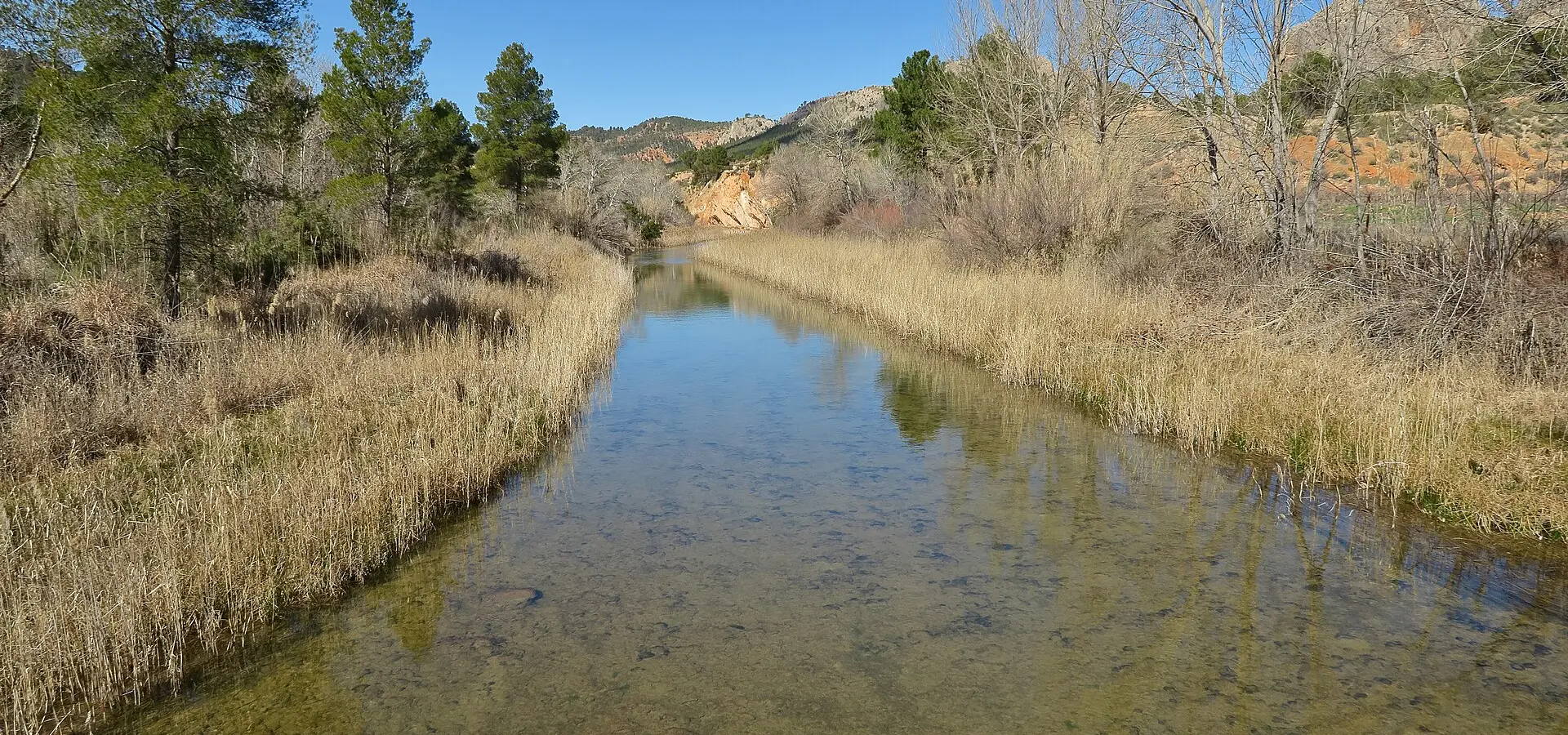
Hoces del Cabriel from Requena
Best Season
Very hot summers on the plateau. Risk of frost in winter. Best in spring and autumn.
A visit to the Hoces del Cabriel Natural Park from Requena, the capital of Valencian wine. Winding roads above cliffs and an impressive river canyon.
Highlights
- 1Hoces del Cabriel Natural Park: a protected river canyon
- 2Requena: wine and Modernist architecture
- 3Mirador de los Cuchillos: vertical views of the canyon
- 4Vineyards in the Utiel-Requena Designation of Origin
About this route
The Hoces del Cabriel form one of the most impressive river gorges in the whole of the Valencian Community and, possibly, one of the least visited given its beauty. Over millions of years, the River Cabriel, a tributary of the Júcar, has carved out a gorge up to 200 metres deep through a limestone massif of the Iberian System, forming vertical cliffs, enclosed meanders and natural viewpoints that are miniature versions of the great American canyons. The Hoces del Cabriel Nature Reserve, which protects the entire area, is also one of the few places in the Iberian Peninsula where the river’s waters remain virtually pristine: the Cabriel is considered one of the cleanest rivers in the whole of Western Europe, with water of a quality suitable for swimming at any point along the gorge.
The Mirador de los Cuchillos viewpoint, accessible from the CV-471 near Casas del Río, is probably the most spectacular vantage point in the canyon. From there, you can see the ‘swords’ or limestone folds that give the place its name: a series of parallel vertical ridges that rise from the bottom of the canyon like knives stuck in the ground. The geological explanation is fascinating: these formations were created tens of millions of years ago when the tectonic movements of the Alpine orogeny folded horizontal layers of limestone until they stood vertical, and subsequently river erosion wore away the softer layers, leaving the harder ones exposed. The result is one of the most spectacular geological landscapes in the Mediterranean.
Requena, the capital of the region and the starting point of the route, is the cultural highlight of the journey. Its Villa district, designated a Historic-Artistic Site, is one of the best-preserved medieval town centres in the whole of the Valencian Community: perched on a hilltop, with steep streets, cave houses dug into the ground, an 11th-century Moorish fortress still visible and an impressive Gothic-Renaissance church (Santa María). But Requena’s real claim to fame lies in its wine: the largest area of vineyards in the entire Valencian Community is cultivated here, and the Utiel-Requena Designation of Origin produces some of the most interesting wines in the east of the peninsula, particularly the reds made from Bobal, a native grape variety that was neglected for decades but has now been revived with excellent results.
One of Requena’s charming historical features is the Cueva de la Villa, a network of underground tunnels and galleries dug during the Middle Ages beneath the historic centre to serve as wine cellars, shelters and secret passageways in the event of a siege. There are over 800 catalogued caves (some still in use as private wine cellars) and several of them can be visited on a guided tour. Descending into these caves in the height of summer, when the temperature above reaches 38°C and below it remains a cool 14°C, is a thermal and historical experience that is hard to beat.
Motorcycling tips: the best times of year are spring and autumn; summers are very hot in this inland part of Valencia. Fill up with petrol in Requena at the start of the ride. For lunch in Requena, La Villa Restaurant serves traditional inland Valencian cuisine using local produce and the finest wines from the Utiel-Requena Designation of Origin. And a tip: if you go in September, it coincides with the grape harvest and many wineries open their doors to the public for tours and tastings (Bodegas Vegalfaro, Pago de Tharsys and Hispano-Suizas are some of the most interesting). The combination of motorbikes, river canyons and wine is hard to beat.
Route stops
Venta del Moro
Village
Village in the area, gateway to the Hoces del Cabriel.
Mirador Los Cuchillos
Viewpoint
Sheer views over the Cabriel canyon.
Practical information
Weather
Very hot summers on the plateau. Risk of frost in winter. Best in spring and autumn.
Traffic
Low traffic. Some visitors at viewpoints on weekends.
Fuel stops
Fuel stations in Requena, Utiel and Venta del Moro.
Where to stay on this route
The towns this route passes through — useful for splitting it into stages or sleeping near the start. Book ahead in high season.
- Venta del MoroSee places to stay
- RequenaSee places to stay
Affiliate links: if you book through them, Nomadiq earns a small commission at no extra cost to you.
Related routes
Buñol, Cortes de Pallás and the Reservoir
Valencian Community
Sierra Calderona: Bétera to Segorbe
Valencian Community

Sierra de Espadán - Montanejos
Valencian Community
Albufera, Cullera and the Rice Coast
Valencian Community