Albufera, Cullera and the Rice Coast
Best Season
All year round, although summer can be very hot. Spectacular in September during the rice harvest.
A short, easy route ideal for beginners or a relaxed morning: the Albufera Natural Park, the rice paddies, Cullera and the return along the coast to Valencia.
Highlights
- 1La Albufera Nature Reserve and rice fields
- 2El Palmar: traditional Valencian paella
- 3Cullera Castle, overlooking the Júcar Delta
- 4El Saler Beach and the dunes
About this route
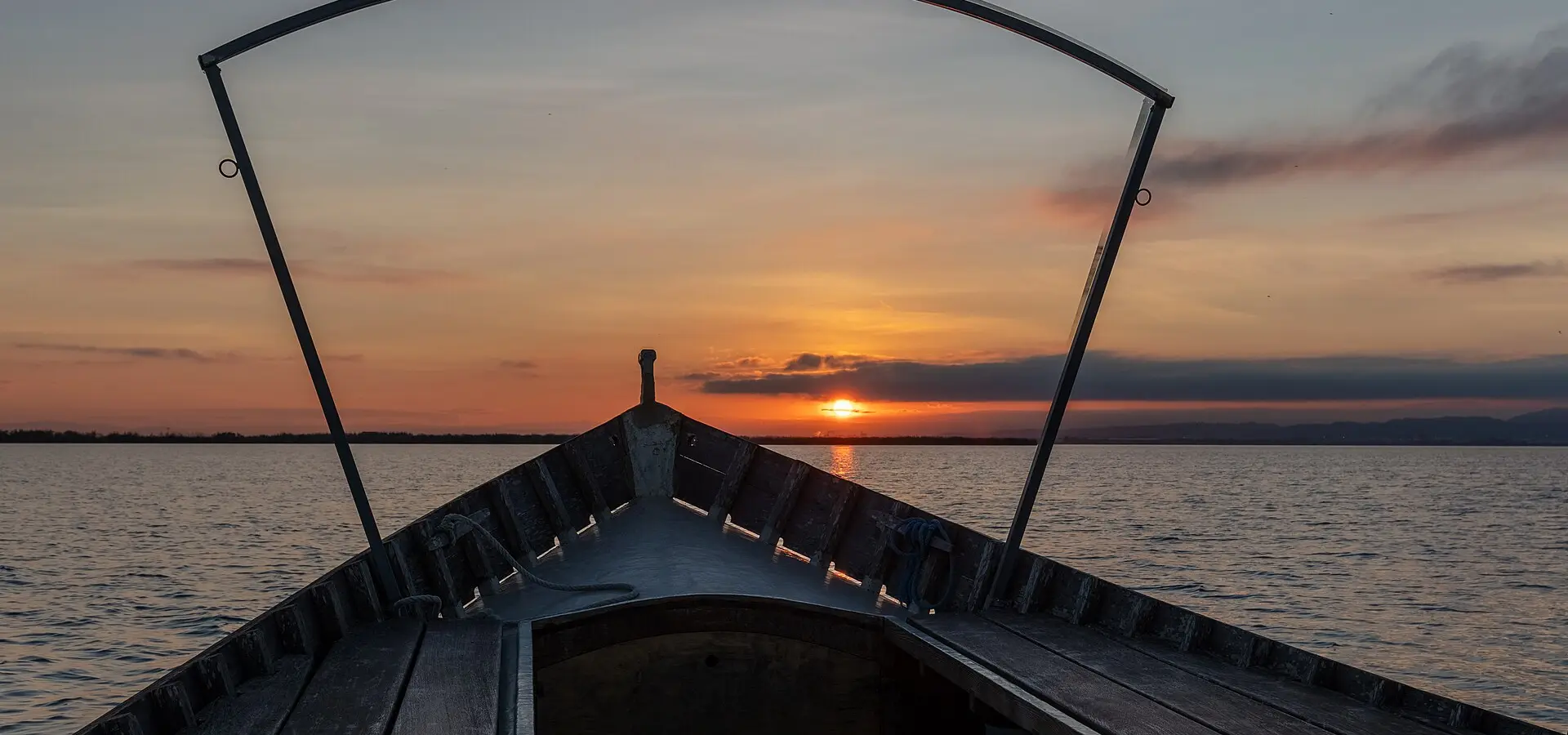
The Albufera de Valencia is one of the most important wetlands in the whole of Western Europe and, paradoxically, one of the least understood. Many people know it simply as ‘the lagoon where paella originated’ and that is as far as their knowledge goes, but the reality is far richer: it is a 21,000-hectare lake-marine system comprising a 2,800-hectare freshwater lagoon separated from the Mediterranean by a sandy spit of centuries-old pine forests (the Devesa del Saler). More than 350 species of birds coexist here, some of the world’s finest rice varieties are grown, and small-scale fishing continues much as it did 500 years ago, with flat-bottomed boats (the ‘albuferenques’) manoeuvred using poles and traditional trawl nets.
Rice cultivation was introduced to the Albufera by the Andalusian Muslims in the 10th century and has ever since shaped the economy, landscape and cuisine of the entire area. Today, more than 14,000 hectares of rice are grown in and around the lagoon, mainly the Bahía, Bomba and Senia varieties, all of which carry the ‘Arroz de Valencia’ PDO. The agricultural cycle creates a landscape that changes throughout the year: in April–May, the fields are flooded and reflect the sky like a giant mirror; in June–July, the intense green of the growing rice covers the entire horizon; in August–September, the fields turn golden before the harvest; in winter, they are flooded once more to allow the land to rest and to attract migratory birds. Each season is beautiful in its own way.
El Palmar is probably the most picturesque and, at the same time, most authentic village in the Albufera. Built literally on an artificial island within the lagoon and connected to the rest of the world by a single road, it is one of the few traditional fishing villages still in existence in the Valencian Community. This is where Vicente Blasco Ibáñez’s novel *Cañas y Barro* was set; one of the masterpieces of 19th-century Spanish realism, it is set in this very place and features characters based on real families from the village. Today it is a must-visit destination for lovers of authentic Valencian paella: not the watered-down, second-rate version served in tourist restaurants, but the real thing, cooked over a wood fire with rabbit, chicken, garrofó beans, green beans and Bomba rice.
Cullera, to the south of the Albufera, offers the perfect contrast: a coastal town with one of the best-situated medieval castles on the eastern Mediterranean. Cullera Castle, perched atop a hill 200 metres above sea level, served for centuries as a defensive stronghold against the Barbary pirates who ravaged the entire Valencian coast between the 14th and 17th centuries. The views from the castle take in the entire mouth of the River Júcar, the open Mediterranean, the Albufera to the north and the rice fields of the Ribera Baixa to the south. It is one of the most comprehensive viewpoints on the Valencian coast.
Motorcycling tip: this is a short and easy route (just 75 km), perfect for a relaxed morning or for beginners. The best time to visit is from March to June (for the spectacular sight of the flooded rice paddies) and from September to November (the rice harvest and golden light). In summer, it’s very hot and very crowded with tourists. If you’re fancying paella in El Palmar, avoid the restaurants at the entrance (expensive and aimed at tourists) and head up to Casa Mateo or Casa Salvadora, where they serve authentic Valencian paella cooked over a wood fire at a reasonable price. And here’s a tip: spend an hour exploring the Devesa del Saler by motorbike: the forest track between the N-332 and the Mediterranean cuts through centuries-old pine forests and shifting sand dunes, and leads to some of the most unspoilt beaches on the entire Valencian coast.
Route stops
El Palmar
Restaurant
Village within the Albufera famous for its paellas.
Cullera - Castillo
Monument
Medieval castle with views over the Júcar delta.
Practical information
Weather
All year round, although summer can be very hot. Spectacular in September during the rice harvest.
Traffic
Moderate traffic. Busy with tourists at El Palmar on weekends.
Fuel stops
Fuel stations plentiful along the entire route.
Where to stay on this route
The towns this route passes through — useful for splitting it into stages or sleeping near the start. Book ahead in high season.
- Cullera - CastilloSee places to stay
- ValenciaSee places to stay
Affiliate links: if you book through them, Nomadiq earns a small commission at no extra cost to you.
Related routes
Chelva, Aras de los Olmos and Rincón de Ademuz
Valencian Community
Sierra de Espadán - Montanejos
Valencian Community
Sierra Calderona: Bétera to Segorbe
Valencian Community
Tous Reservoir and the Inland Júcar Ribera
Valencian Community