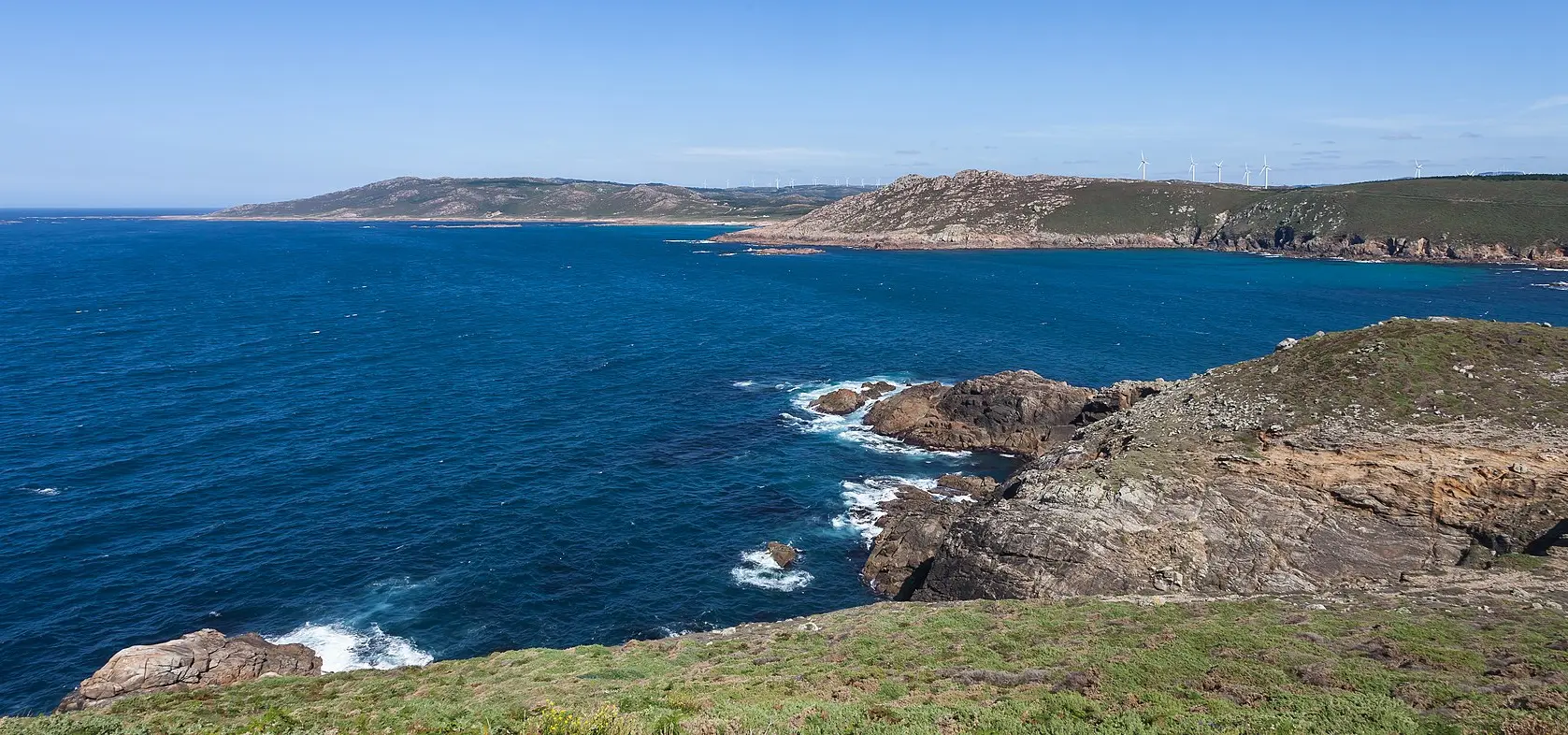
Costa da Morte: lighthouses and cliffs
Best Season
Frequent rainfall all year round. More stable summer. Beware of fog.
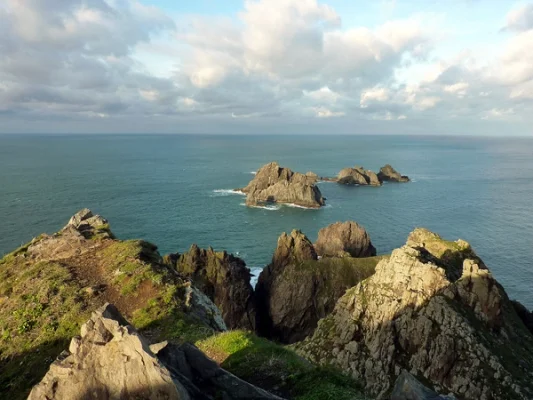
The Galician Costa da Morte, with its cliffs, legendary lighthouses and fishing villages. Cabo Vilán, Fisterra (the end of the world) and Muxía on an unforgettable Atlantic route.
Highlights
- 1Cabo Vilán: an iconic Atlantic lighthouse
- 2Fisterra: the end of the world
- 3Muxía and the Costa da Morte
- 4Atlantic Cliffs
About this route
Galicia’s Costa da Morte has one of the most sinister – and at the same time most apt – names in the whole of Spain. The name is neither a tourist marketing ploy nor literary hyperbole: for centuries, this stretch of coastline between A Coruña and Fisterra has been the scene of hundreds of shipwrecks, to the point where it has become one of the densest marine graveyards in the European Atlantic. The combination of persistent fog (more than 100 days a year), treacherous currents, shifting winds and a rocky coastline with very few natural sheltered harbours meant that, between the 19th and 20th centuries, before the modernisation of navigation systems, merchant ships to suffer catastrophic losses here. In 1890 alone, the famous shipwreck of the HMS Serpent (a British training ship) claimed the lives of 172 sailors off the coast of Camariñas.
Cabo Vilán, just north of Camariñas, is probably the most impressive and, at the same time, the most picturesque lighthouse on the entire Galician coast. Built in 1896 after the sinking of the Serpent forced the British authorities to put pressure on the Spanish government to improve maritime signalling, it was the first electric lighthouse in the whole of Spain. Perched on an 80-metre-high vertical cliff exposed to the fiercest Atlantic winds, the lighthouse boasts a unique architectural design: a cylindrical tower made of local granite, connected by an elevated walkway to the keepers’ quarters, all designed to withstand the Atlantic’s fiercest storms. The views from Cape Vilán on a stormy day — with 8–10-metre waves crashing against the cliffs — are among the most breathtaking sights to be experienced on the European coast.
Fisterra (in Spanish, ‘Finisterre’) is, both geographically and symbolically, the ‘end of the world’ for the ancient Romans, who for centuries believed that the mainland literally ended here. The etymology is clear: ‘finis terrae’, the end of the earth. For the Celtic pilgrims of the 9th century, it was the place where the sun plunged into the ocean every night only to be reborn the following day, and they developed a rich solar mythology centred on the headland. When the Way of St James developed in the Middle Ages, many pilgrims continued walking to Fisterra after reaching Compostela, believing that the true ‘end of the Way’ was to reach the very edge of the sea and symbolically burn their old clothes at the lighthouse as a rite of purification. That tradition is still partially observed today, and many modern pilgrims continue to reach Fisterra as the spiritual culmination of the Camino.
Muxía, another of the route’s unmissable stops, is home to one of the most unique and spiritually significant shrines in the whole of Galicia: the Sanctuary of the Virxe da Barca, perched literally on the cliffs overlooking the Atlantic. According to local tradition, the Virgin Mary arrived here in a stone boat to visit St James the Apostle whilst he was preaching in Galicia, and left behind three stones with miraculous properties: one of them (the ‘Pedra de Abalar’) rocks when someone sits on it —a real geological phenomenon caused by the rock’s precarious balance— and another (the ‘Pedra dos Cadrís’) has a hole through which people slide to be cured of back pain. The sanctuary’s Baroque church was severely damaged by a fire in 2013 but has since been rebuilt, and the atmosphere of the place is so powerful that even the most sceptical visitors are moved.
Motorcycling tips: the Costa da Morte is renowned for its unpredictable weather, even in the height of summer, with fog, rain and wind that can strike at any moment. The best time to visit is strictly from May to September. Fill up with petrol in Carballo or Cee. For lunch, in Camariñas, the O Pirucho restaurant serves fresh seafood sold by weight at affordable prices — the Roncudo barnacles are the most prestigious in the world and here they’re sold at producer’s prices. And a tip: spending the night in Fisterra and climbing up to the lighthouse at dawn (before the tourist crowds arrive) is an unforgettable experience. The light of the first rays of sun striking the cliffs, with the ocean still dark in the background, is probably the best possible postcard view of the ‘end of the world’.
Route stops
Cabo Vilán
Viewpoint
Iconic lighthouse of the Galician Atlantic.
Muxía
Village
Fishing village with sanctuary on the sea.
Cabo Fisterra
Viewpoint
The end of the world for the Romans.
Practical information
Weather
Frequent rainfall all year round. More stable summer. Beware of fog.
Traffic
Moderate traffic. More tourism in August.
Fuel stops
Petrol stations in Carballo, Camariñas and Cee.
Where to stay on this route
The towns this route passes through — useful for splitting it into stages or sleeping near the start. Book ahead in high season.
- MuxíaSee places to stay
- CarballoSee places to stay
Affiliate links: if you book through them, Nomadiq earns a small commission at no extra cost to you.