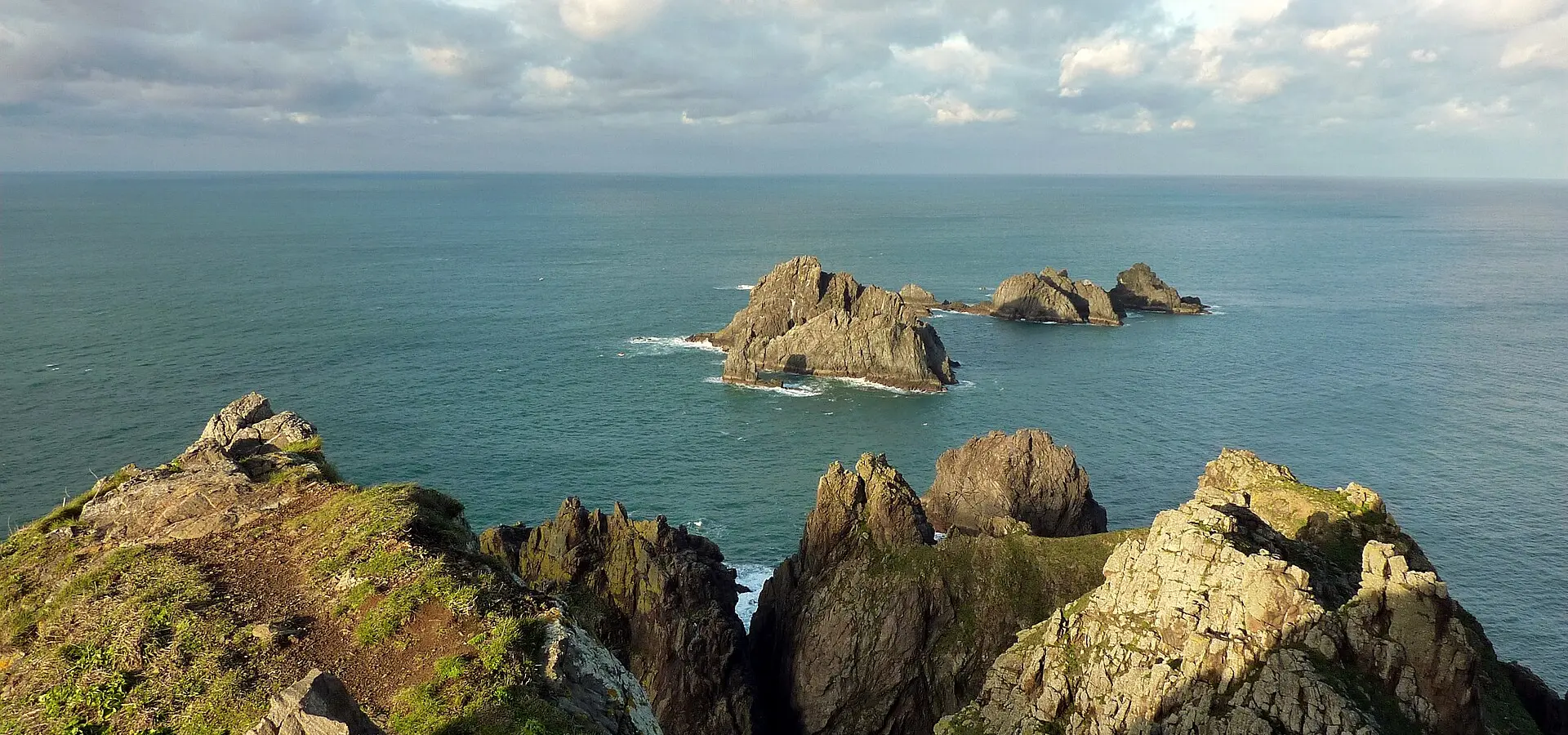
Cabo Ortegal and Serra da Capelada
Best Season
Frequent rain. Best from May to September. Watch out for fog.
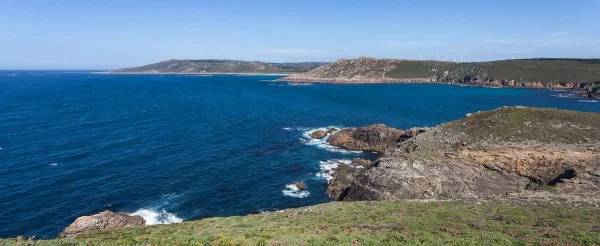
The highest cliffs in continental Europe are in the Serra da Capelada. Cabo Ortegal and Garita de Herbeira offer ocean views that few places can match.
Highlights
- 1Garita de Herbeira: the highest cliffs in mainland Europe
- 2Cape Ortegal
- 3San Andrés de Teixido
- 4The unspoilt coast of northern Galicia
About this route
The cliffs at Garita de Herbeira are the highest in the whole of continental Europe: 615 metres straight down to the Atlantic Ocean, a drop so dramatic that when you peer over from the viewing point situated right at the edge of the summit, the sensation is almost one of cosmic vertigo. The figure is so staggering that many people find it hard to believe until they see it for themselves: we’re talking about cliffs taller than twice the height of the Eiffel Tower. The geological explanation is fascinating: here, the Capelada mountain range (a Palaeozoic massif composed mainly of amphibolites and serpentinites) plunges directly into the Atlantic without any coastal shelf in between, creating a vertical drop that is absolutely exceptional in a European context. Only in the Aegean Sea, on some Greek islands, are there comparable sea cliffs.
Cape Ortegal, just north of La Garita, has a geographical feature that very few people are aware of: it is the exact point where the Atlantic and Cantabrian Seas meet. Although, for all intents and purposes, ‘the Cantabrian Sea’ ends at Cape Estaca de Bares (just 8 km to the north-east), technically it is at Cape Ortegal that the coastline turns dramatically from a south-north axis to a west-east axis, marking the actual transition between the two marine systems. The Cabo Ortegal lighthouse, perched on an isolated crag at the end of a rugged headland, is one of the most spectacularly situated in the whole of Spain, and the area is also a prime vantage point for seabird enthusiasts: shearwaters, gannets, rare Atlantic gulls and, occasionally, migrating whales and dolphins.
San Andrés de Teixido, in the heart of the Serra da Capelada, is probably the most unique and culturally complex sanctuary in the whole of Galicia. Popular tradition has it that ‘whoever has not been to San Andrés de Teixido whilst alive will go there as a dead person’ (“whoever did not go to San Andrés de Teixido whilst alive will go there as a dead person”), an ancestral belief according to which any Galician who has not visited the sanctuary in life is bound to visit it after death, in the form of an animal or an insect. This belief, possibly of pre-Christian origin, has kept alive one of Galicia’s most important pilgrimages for over 1,000 years, and even today, on the saint’s feast day (8 September), thousands of Galicians make the pilgrimage to the sanctuary out of devotion or curiosity.
Cedeira, the main town in the area, is a perfectly preserved fishing port and one of the most authentic spots in the north of A Coruña. Its small, sheltered bay, its brightly coloured boats, its white houses and its family-run seafood restaurants make up one of the most photogenic coastal settings in the whole of Galicia. The road leading up from Cedeira to Garita de Herbeira (the AC-862 and then a local turn-off) first passes through farmland and eucalyptus groves before entering the high-altitude meadows of La Capelada, where cows graze freely and the wind blows constantly in from the Atlantic. The views throughout the climb are absolutely spectacular.
Motorcycling tip: this area is probably one of the most secluded in the whole of Galicia, with virtually no traffic apart from on the major pilgrimage days to San Andrés. The best time to visit is from May to September. The weather is very changeable: Atlantic fog can roll in within fifteen minutes and reduce visibility to five metres at the viewpoints. Fill up with petrol in Cedeira or Ortigueira. For a bite to eat, in Cedeira, the Restaurante Asturiano (ironically, the name is misleading) serves the best barnacles in the area, harvested that very morning by the local shellfish gatherers themselves. And a tip: head to the Garita de Herbeira at dawn on a clear September day. The golden light striking the vertical cliffs, with the ocean still dark in the background, is one of the most powerful visual experiences you can have on the peninsula.
Route stops
Garita de Herbeira
Viewpoint
Highest cliffs in continental Europe.
Cabo Ortegal
Viewpoint
Meeting point of the Cantabrian Sea and the Atlantic.
San Andrés de Teixido
Monument
Galician pilgrimage sanctuary.
Practical information
Weather
Frequent rain. Best from May to September. Watch out for fog.
Traffic
Very low traffic. Lonely roads.
Fuel stops
Petrol stations in Cedeira and Ortigueira.
Where to stay on this route
The towns this route passes through — useful for splitting it into stages or sleeping near the start. Book ahead in high season.
- San Andrés de TeixidoSee places to stay
- CedeiraSee places to stay
Affiliate links: if you book through them, Nomadiq earns a small commission at no extra cost to you.