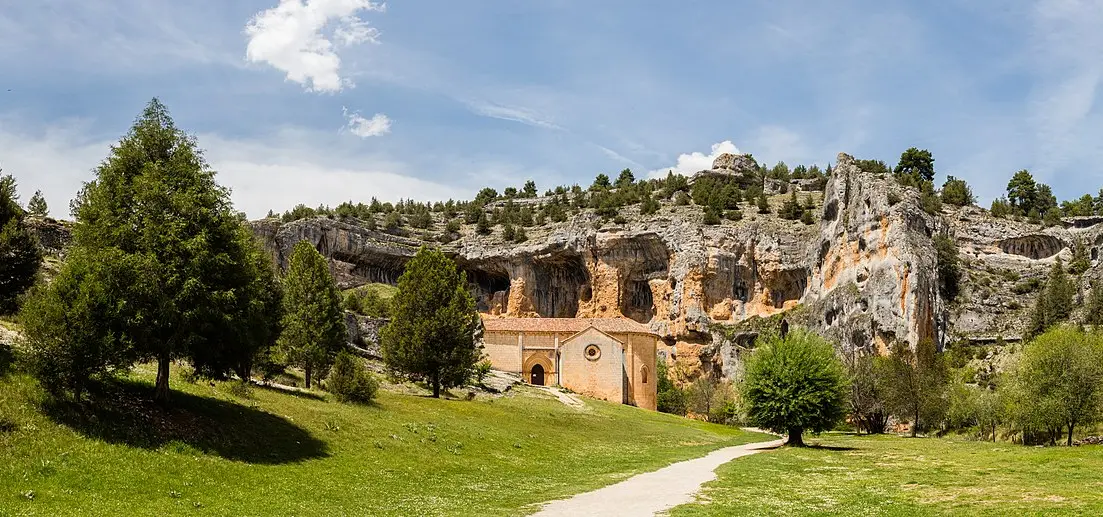
Río Lobos Canyon and Magical Soria
Best Season
Continental: cold winters with snow. Pleasant summers. Best April-November.
Río Lobos Canyon (vultures, Templar hermitage, turquoise river), red villages of the Sierra de las Vicarías, and the Soria of Machado and Bécquer. Spain's most poetic heartland.
Highlights
- 1Cañón del Río Lobos: vultures and a Templar hermitage
- 2Machado's Soria: Campos de Castilla
- 3Black truffle and torreznos with designation of origin
- 4San Juan de Duero: a unique Romanesque-Mudéjar cloister
About this route
The Cañón del Río Lobos is one of the most impressive and least crowded natural areas in all of Castilla y León: a limestone gorge 25 kilometres long, cut by the river Lobos between the provinces of Soria and Burgos, with walls over 100 metres high where griffon vultures nest — more than 150 pairs — alongside golden eagles and Egyptian vultures. The river, crystalline and turquoise, periodically vanishes beneath the limestone in a karst system and reappears kilometres later at spectacular springs.
The Hermitage of San Bartolomé, in the heart of the canyon, is among the most enigmatic monuments in Spain: a 12th-century Romanesque chapel attributed to the Knights Templar, standing at the exact point where the canyon widens into a natural rock amphitheatre. Its geographical position — said to be equidistant from the four extremes of the Iberian Peninsula — and the mysterious symbols carved on its corbels have fed Templar legends for decades. The walk in from the car park (2 km along the riverbank, between poplars and vultures wheeling overhead) is one of the loveliest in Spain.
Soria is the smallest and least populated provincial capital in Spain, and it is precisely that solitude that gives it a melancholy charm which captivated the great Spanish poets. Antonio Machado lived here between 1907 and 1912, wrote Campos de Castilla and married Leonor Izquierdo, who died of tuberculosis at just 18. Gustavo Adolfo Bécquer set several of his Leyendas at the Monastery of San Juan de Duero — a Romanesque cloister with Mudéjar arches unique in Spain — and on the Monte de las Ánimas, beside the Duero.
Soria's cooking is one of the great unknowns of Castile: Soria butter, the only butter in Spain with a designation of origin; autumn mushrooms (boletus, saffron milk caps, king oyster — Soria is Spain's mushroom-tourism capital); the torrezno de Soria, crisp and juicy pork belly that has earned its own designation; and winter black truffle, of which Soria produces 35% of the Spanish crop. The repertoire is startlingly good.
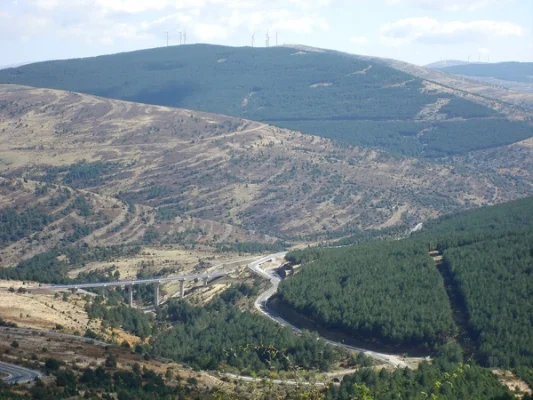
Practical notes: Soria is cold in winter, with frequent snow above 1,100 m, but pleasant from April to November. The roads are good, lightly trafficked, through moorland, pine forest and canyons. Fuel in Soria, El Burgo de Osma and San Leonardo. For a bed, the Hotel Castilla Termal in El Burgo de Osma — the 16th-century Hospital de San Agustín — has a thermal spa. For food, wood-oven roast lamb, in any restaurant in the area, is the definitive dish of Castile.
Route stops
Ermita de San Bartolomé (Río Lobos)
Monument
Templar hermitage at the canyon's heart, vultures circling above.
San Juan de Duero (Soria)
Monument
Unique Romanesque-Mudéjar cloister, Bécquer and his Legends.
El Burgo de Osma
Village
Episcopal town with Gothic cathedral and thermal spa.
Practical information
Weather
Continental: cold winters with snow. Pleasant summers. Best April-November.
Traffic
Very low traffic. Castilla's emptiest roads.
Fuel stops
Petrol stations in Soria, El Burgo de Osma and San Leonardo.
Where to stay on this route
The towns this route passes through — useful for splitting it into stages or sleeping near the start. Book ahead in high season.
- Ermita de San Bartolomé (Río Lobos)See places to stay
- San Juan de Duero (Soria)See places to stay
- El Burgo de OsmaSee places to stay
Affiliate links: if you book through them, Nomadiq earns a small commission at no extra cost to you.
Related routes
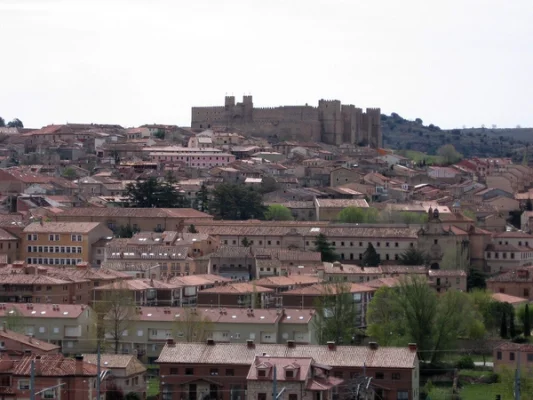
Sigüenza and the Sierra Norte of Guadalajara
Castilla-La Mancha
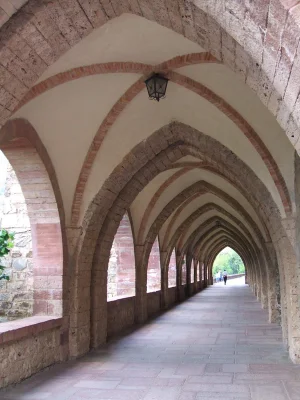
Valvanera, Monasteries and La Rioja's Sierra de la Demanda
La Rioja
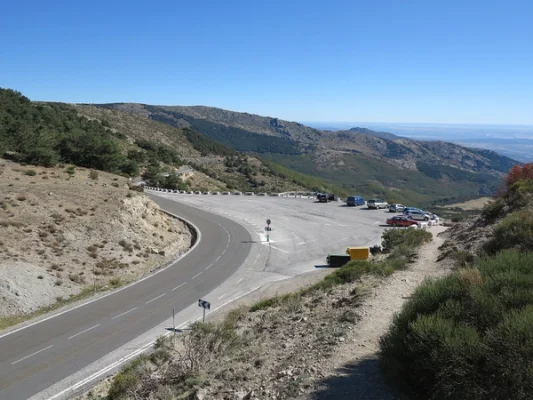
Morcuera-Canencia: The Madrid Bikers' Big Loop
Madrid
Cameros and the slate villages
La Rioja