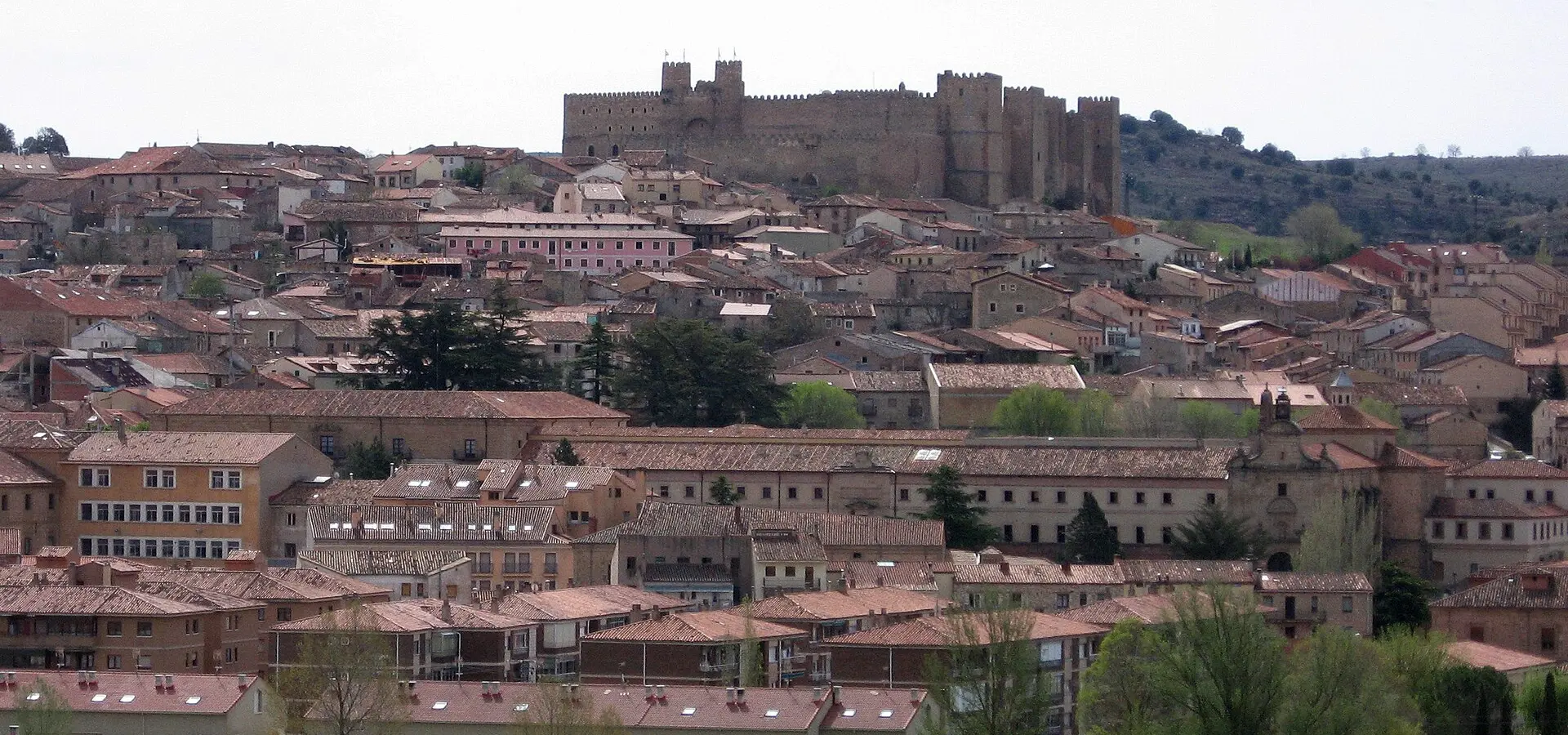
Sigüenza and the Sierra Norte of Guadalajara
Best Season
Cold winters. Hot summers. Better spring and autumn.
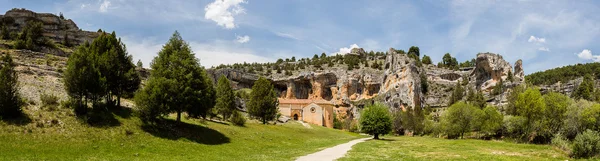
Sigüenza, a medieval town with cathedral and castle-parador, opens a route through the black and red villages of the Sierra Norte de Guadalajara, one of the most depopulated areas of Spain.
Highlights
- 1Sigüenza: a medieval town with a cathedral and a castle
- 2Black villages (slate architecture)
- 3The red villages of Tamajón
- 4Atienza and Pelegrina
About this route
Sigüenza is probably the most complete and best-preserved medieval gem in the whole of Castilla-La Mancha, and yet it remains a relatively little-known destination outside the circles of seasoned travellers. Its cathedral — a 12th-century Romanesque fortress converted to Gothic style over the following centuries — is one of the most fascinating cathedrals in Spain: half church and half castle, with crenellated towers, defensive embrasures and walls up to three metres thick, all because, when it was built, Sigüenza lay right on the frontier with the Muslims and the cathedral had to fulfil both religious and military functions simultaneously. Inside, one of the most famous funerary sculptures in Spanish art is preserved: that of the Doncel de Sigüenza, a young 15th-century knight depicted reading a book whilst reclining on his tomb—an image so modern and serene that it seems to belong to another century.
Sigüenza Castle, perched atop the hill overlooking the town, is now one of the most spectacular Parador hotels in Spain. The original fortress dates from the 8th century and was built by the Andalusian Muslims, and was conquered by the Christians in 1124, becoming the residence of the bishops of Sigüenza —one of the richest and most powerful bishoprics in central Spain— for over 700 years. Today, staying in one of its rooms is a unique historical experience: the walls are the original 13th-century ones, the corridors wind through medieval towers, and from the battlements there is a breathtaking view of the Henares Valley and the Sierra Norte.
But the most fascinating reason to visit this area by motorbike is not Sigüenza, but the ‘Black Villages’ of the Sierra Norte de Guadalajara. This is one of the most sparsely populated and least touristy regions in the whole of Spain (with a population density of less than 3 inhabitants per km², comparable to Lapland), and in its most remote valleys, a dozen villages built entirely from local black slate still survive: Campillo de Ranas, Roblelacasa, Majaelrayo, El Espinar and Valverde de los Arroyos. The houses, the walls, the floors, the roofs – everything is made of dark slate, giving the villages a colour scheme that is absolutely unique in Spain. The reason is geological: these valleys lie on a massif of Ordovician slate, and for centuries the inhabitants had nothing else with which to build.
Atienza, on the border between the Sierra Norte and the Tajo region, is another must-visit village. Perched atop a hill crowned by an impressive medieval castle, it was one of the most important towns on the Castilian-Aragonese border during the 12th–14th centuries. Its historic centre boasts three perfectly preserved Romanesque churches and one of the most beautiful arcaded Plaza Mayors in Guadalajara. The views from the castle take in the whole of the Sierra de Pela and, on clear days, stretch as far as the Sierra Norte in Madrid.
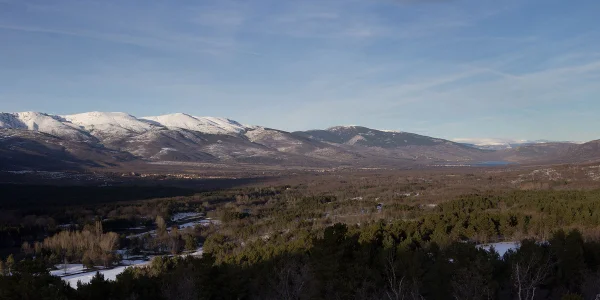
Motorcycling tips: The Sierra Norte de Guadalajara is high-altitude and cold in winter, with frequent snowfall. The best time to visit is from April to October. The roads leading to the ‘black villages’ (CM-1101, GU-186, GU-188) are narrow, secondary roads with absolutely no traffic, ideal for a leisurely ride. Fill up with petrol in Sigüenza or Cogolludo before heading into the area. For food, in Sigüenza, the Restaurante Calle Mayor serves traditional Castilian cuisine, and the Mesón El Doncel offers a tasting menu featuring local mountain produce. And a tip: if you’re visiting in autumn, the beech forests of Tejera Negra (just 40 km from the ‘black villages’, within the Sierra de Guadarrama National Park) are among the most spectacular in Europe, comparable to the beech forests of Otzarreta in the Basque Country or Irati in Navarre.
Route stops
Atienza
Village
Medieval village with castle on top.
Campillo de Ranas
Village
Black slate village.
Majaelrayo
Village
Black village at the foot of the Ocejón.
Practical information
Weather
Cold winters. Hot summers. Better spring and autumn.
Traffic
Very low traffic. One of the emptiest areas in Spain.
Fuel stops
Petrol stations in Sigüenza and Cogolludo.
Where to stay on this route
The towns this route passes through — useful for splitting it into stages or sleeping near the start. Book ahead in high season.
- AtienzaSee places to stay
- Campillo de RanasSee places to stay
- MajaelrayoSee places to stay
Affiliate links: if you book through them, Nomadiq earns a small commission at no extra cost to you.