Ayora, Almansa and Sierra de Mariola
Best Season
Hot summers. Best in spring and autumn.
A long ride through the south of inland Valencia: the Ayora valley, Almansa castle and the ascent to the Sierra de Mariola. Solitary roads and landscapes reminiscent of Castilla.
Highlights
- 1Almansa Castle: one of the best-preserved
- 2The Ayora-Cofrentes Valley and the nuclear power station
- 3Sierra de Mariola Natural Park
- 4Valencia–Castile-La Mancha link roads
About this route
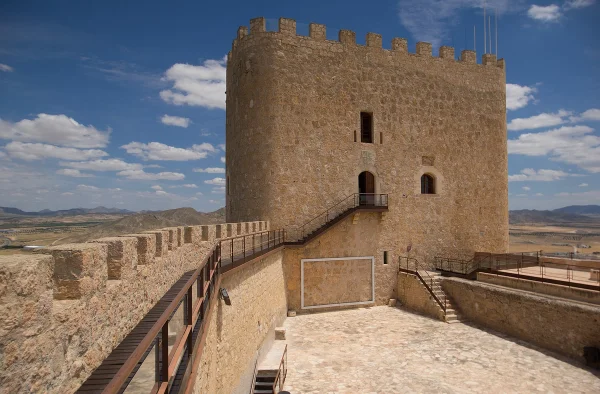
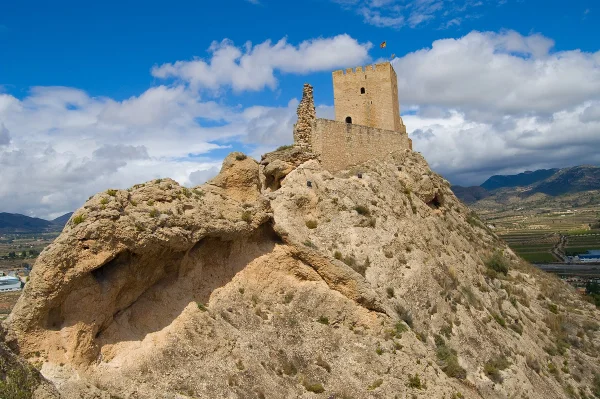
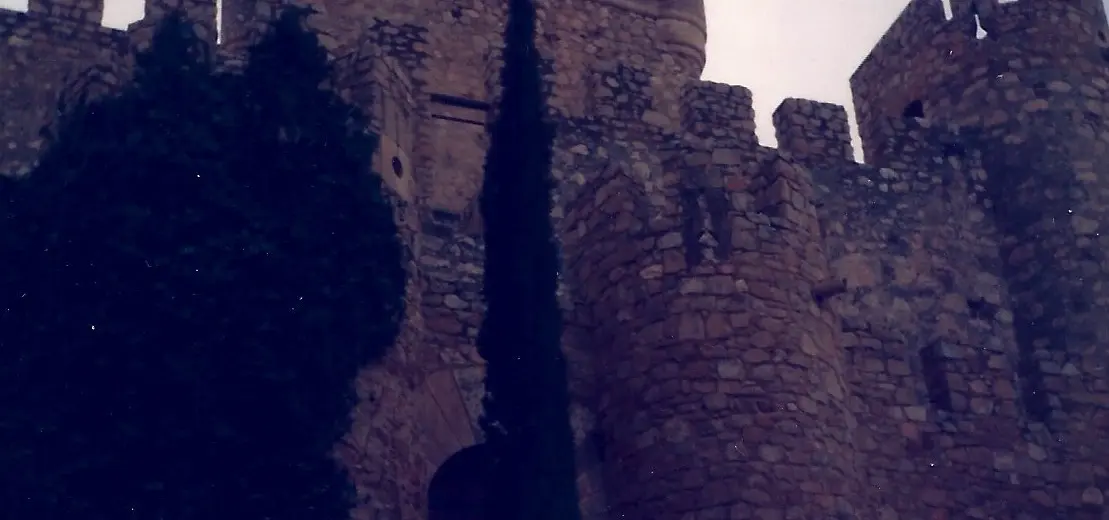
Almansa Castle is probably the most impressive and best-preserved medieval fortress in the whole of Castilla-La Mancha and one of the most strategically situated defensive positions in the whole of Spain. Perched on an isolated limestone crag on the very edge of the village, it visually dominates the entire plain of the Campo de Almansa as far as the horizon, at a historic natural pass which, for over a thousand years, has marked the border between the Christian kingdoms of the north (Castile) and the Muslim kingdoms of the south (first the Taifa of Murcia, then the Nasrid Kingdom). Its unmistakable silhouette — three square towers and a central parade ground surrounded by a wall — is the visual icon of the entire region and one of the most photographed castles in the east of the Iberian Peninsula.
The Battle of Almansa, fought on 25 April 1707 in the fields at the foot of the castle, was one of the most decisive episodes of the War of the Spanish Succession and, by extension, of the whole of 18th-century European history. It was here that the troops loyal to Philip V (supporters of the future King of Spain) clashed with those loyal to the Archduke (supporters of Archduke Charles of Austria), and the victory for Philip’s forces definitively changed the course of the war and of Spanish political history. The battle was so significant that it is still commemorated every year with a massive historical re-enactment on the very fields where it took place, featuring hundreds of participants dressed in period uniforms. To visit Almansa without knowing this is to miss out on half the appeal of the place.
The Ayora-Cofrentes Valley, just east of Almansa, is home to a geological and industrial curiosity that is unique in Spain: it is here that the Valencian Community’s only currently operational nuclear power station (Cofrentes) is situated, alongside the river Júcar. The plant, built in the 1970s, has become a visual landmark in the valley’s landscape: the two 120-metre-high cooling towers rise up amongst the mountain ranges and are visible from dozens of kilometres away. Beyond its industrial interest, the valley is home to authentic villages such as Cofrentes (with its 12th-century Moorish castle still standing) and Ayora, the region’s capital, where the Castle of El Cid stands atop a hill offering sweeping views of the valley.
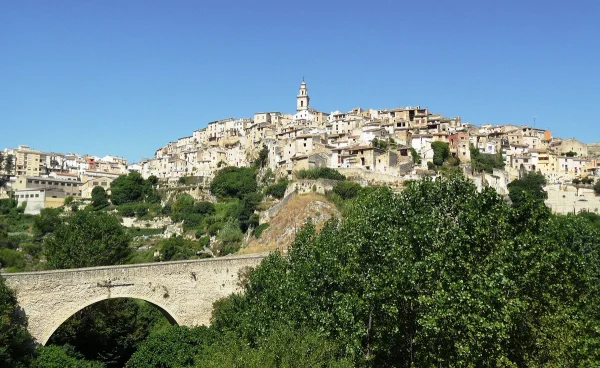
The Sierra de Mariola, at the far end of the route on the border between Valencia and Alicante, is a botanical surprise: it is one of the few places in the Valencian Community where significant tracts of native Mediterranean woodland still survive, featuring holm oaks, oaks, Aleppo pines and, above all, a unique density of aromatic plants: thyme, rosemary, lavender, sage, fennel and chamomile. For centuries, the mountain range has been one of the main sources of medicinal herbs in the whole of Spain, and even today there are artisanal distilleries in villages such as Bocairent that produce essential oils and traditional liqueurs using plants gathered in the mountains themselves. The famous Herbero de Mariola, a liqueur made from local herbs with a centuries-old tradition, is well worth a try.
Motorcycling tip: this is a long route (180 km) along almost deserted back roads. The best time of year is from March to November; it gets very hot in the height of summer. Fill up in Almansa or Ayora. For lunch, in Almansa, Mesón Pincelín (one of the most affordable Michelin-starred restaurants in Castilla-La Mancha) serves traditional La Mancha cuisine made with local produce at surprisingly reasonable prices. And a tip: if you’re visiting in August (on the last Wednesday), don’t miss the Moors and Christians Festival in Bocairent, one of the oldest and best-preserved in the whole of Spain, featuring parades lasting up to six hours and spectacular historical costumes.
Route stops
Castillo de Almansa
Monument
One of the best-preserved medieval castles in Spain.
Ayora
Village
Capital of the Ayora-Cofrentes valley.
Bocairent
Village
Medieval village with caves carved into the rock.
Practical information
Weather
Hot summers. Best in spring and autumn.
Traffic
Very low traffic. Empty roads for most of the year.
Fuel stops
Fuel stations in Almansa, Ayora and Bocairent.
Where to stay on this route
The towns this route passes through — useful for splitting it into stages or sleeping near the start. Book ahead in high season.
- Castillo de AlmansaSee places to stay
- AyoraSee places to stay
- BocairentSee places to stay
Affiliate links: if you book through them, Nomadiq earns a small commission at no extra cost to you.