Baztan Valley and French coast
Best Season
Frequent rain. Best May-September.
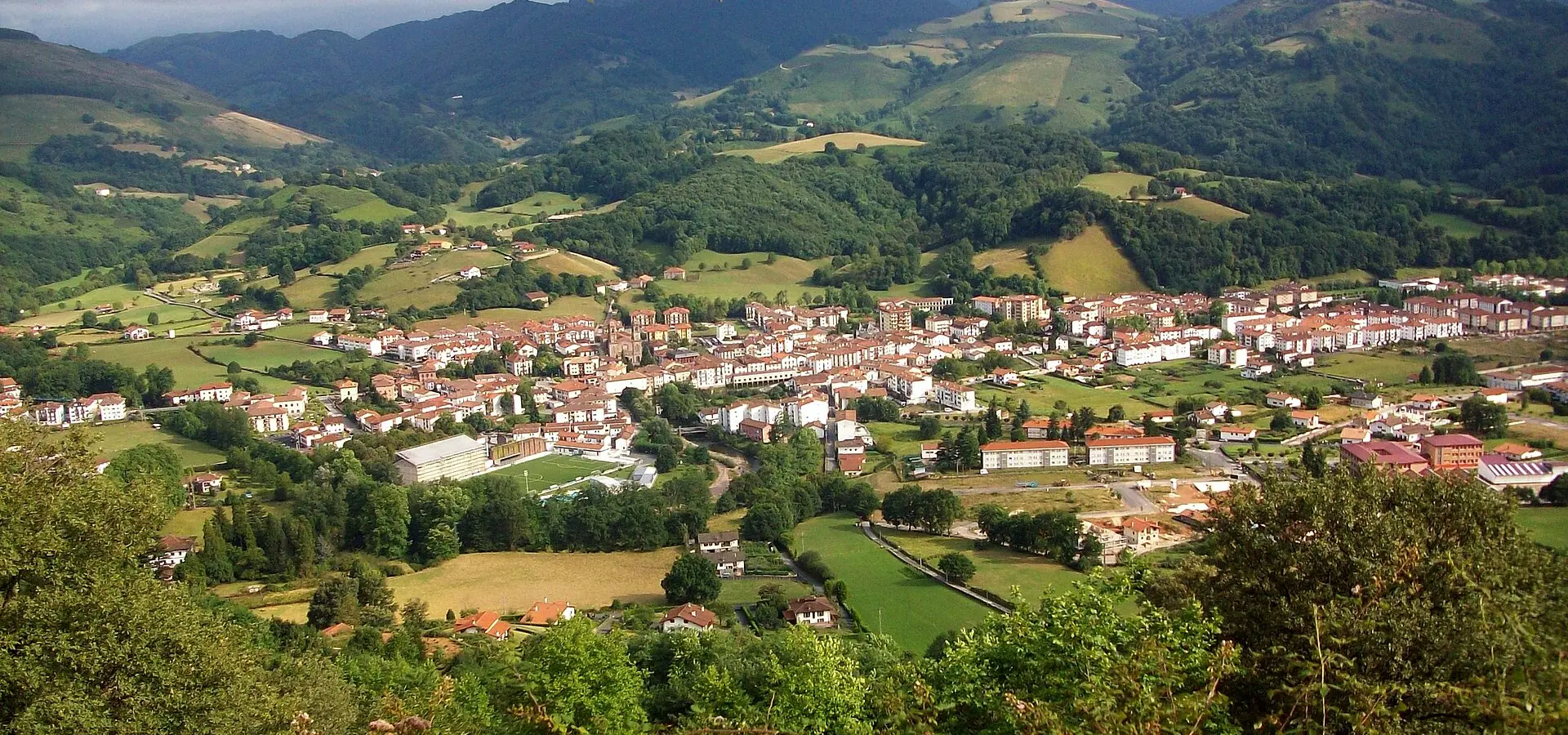
The Baztan Valley, with its villages of white houses and red lintels, connected to the French coast at Saint-Jean-de-Luz. A very enjoyable cross-border route.
Highlights
- 1Elizondo and the Baztán Valley
- 2Zugarramurdi and the Witches’ Caves
- 3Saint-Jean-de-Luz (France)
- 4Hondarribia
About this route
The Baztán Valley is probably the most beautiful and, at the same time, most characteristic corner of the entire western Navarrese Pyrenees. It is a vast river valley in the north-eastern corner of Navarre, right on the border with France, where a very distinctive culture of farming and livestock rearing has developed over the centuries: scattered Basque farmsteads, lush green meadows, villages with stately white houses and lintels carved from redstone, and an extraordinary wealth of history. The Baztán is one of the few places in Navarre where traditional Basque culture (the Basque language, farmsteads and rural customs) remains strongly preserved, and where a visitor can experience a region that is culturally closer to Bizkaia than to Madrid.
Elizondo, the valley’s capital, is an architectural surprise for first-time visitors. Far from being a modest mountain village, Elizondo boasts a historic centre with dozens of 18th-century stately homes — some featuring coats of arms, carved lintels, wrought-iron balconies and inner courtyards with arcades—which bear witness to a past of agricultural and commercial prosperity. The wealth of historic Baztán came from various sources: cross-border trade with France (both legal and illegal), large-scale transhumance, emigration to the Americas (many people from Baztán made their fortune in Mexico, Cuba and Argentina and returned to build stately homes in their homeland), and, during the 19th century, the ‘indianos’ or returning emigrants who invested their capital in transforming the local architecture.
Zugarramurdi is one of the most culturally fascinating villages in the whole of northern Spain. Its international fame stems from a historical episode that is both dark and paradigmatic: the ‘Auto de fe of Logroño’ in 1610, during which the Spanish Inquisition tried and condemned several inhabitants of Zugarramurdi (mostly women) for crimes of witchcraft. The trial, one of the largest witch-hunts in European history, ended with six people being burnt at the stake in Logroño. The natural caves on the outskirts of the village — where the famous ‘akelarres’ or witches’ gatherings were supposedly held — can still be visited, and are one of the most interesting and mysterious cultural experiences to be had in the north of the Iberian Peninsula. The Witches’ Museum in the village itself recounts the whole story in chilling detail. Although this route starts in the Baztán Valley, Zugarramurdi is its own municipality: it borders Baztán but belongs to the separate cross-border Xareta district, along with Urdazubi-Urdax, Sare and Ainhoa.
San Juan de Luz (Saint-Jean-de-Luz in French), just across the border, is probably the most authentic and best-preserved Basque-French coastal village on the entire Labord coast. Its small, still-operational fishing harbour, its Church of St John the Baptist (where Louis XIV married the Infanta Maria Theresa of Austria in 1660, sealing the Peace of the Pyrenees), its traditional Basque houses with red beams and its spectacular cuisine (trying the original Basque cake, the ‘gâteau basque’, is a must) make it one of the most well-rounded spots for a motorbike stopover. Crossing the border between Spain and France in the middle of a motorbike route is a delightful geopolitical experience: no checks, no formalities, simply a change of country in the middle of a valley.
Motorcycling tips: the route is relatively easy (180 km, no major mountain passes, good road surface) but passes through an area with changeable weather: rain is common all year round in the Baztán, so it’s advisable to bring waterproof gear. The best time of year is from May to September. Fill up in Pamplona or Elizondo. For lunch, in Saint-Jean-de-Luz, any crêperie in the harbour area offers savoury buckwheat galettes and cider at reasonable prices. And a tip: if you visit Zugarramurdi, spend at least an hour exploring the caves and the museum. Without understanding the historical context of the witch hunts, the village is merely a picturesque spot; with that knowledge, it becomes one of the places steeped in cultural symbolism throughout Europe.
Route stops
Elizondo
Village
Capital of the Baztan Valley.
Zugarramurdi
Village
Witches' village with historic caves.
Hondarribia
Village
Walled town on the border.
Practical information
Weather
Frequent rain. Best May-September.
Traffic
Moderate border traffic.
Fuel stops
Petrol stations in Elizondo, Bera and Hondarribia.
Where to stay on this route
The towns this route passes through — useful for splitting it into stages or sleeping near the start. Book ahead in high season.
- ElizondoSee places to stay
- ZugarramurdiSee places to stay
- HondarribiaSee places to stay
Affiliate links: if you book through them, Nomadiq earns a small commission at no extra cost to you.