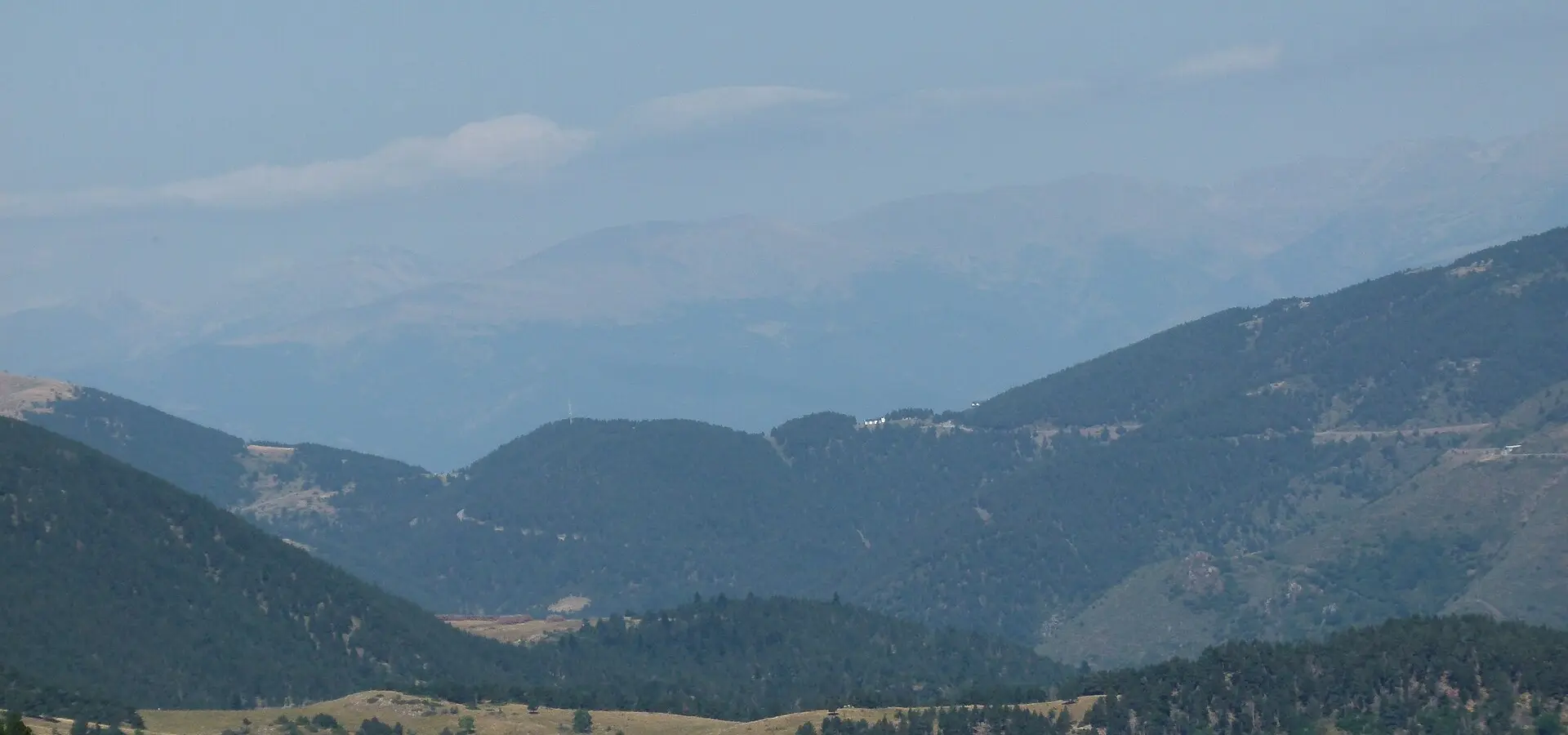
Vall de Núria, Toses and Ribes de Freser
Best Season
Frequent snow from November to April, may close the harbour. Cool and pleasant summer. June-October is the best time.
Ascent to Coll de Toses on the legendary N-260 with descent to Cerdanya and return via Ribes de Freser. One of the classic passes of the Catalan Pyrenees with continuous curves and alpine scenery.
Highlights
- 1Coll de Toses (1,800 m): classic pass of the Catalan Pyrenees
- 2N-260: the Pyrenean Axis, legendary among motorcyclists
- 3Cerdanya: the largest high-altitude plain in Europe
- 4Puigcerdà and the glacial lake
About this route
The Coll de Toses (1,800 m) is one of the oldest and most photographed passes in the Catalan Pyrenees. The N-260, known as the "Pyrenean Axis," has been crossing it since the early 20th century on its route from the Mediterranean (Portbou) to the Atlantic (Hondarribia), and it is probably the most legendary motorcycling route in all of Spain. Any serious rider from the north has done the full traverse at least once, a journey that can take two or three leisurely days. The Toses section, specifically, is one of the most spectacular: a long, technical climb from Ripoll through the Ribes valley, generally good tarmac, and a descent into the Cerdanya with views over one of the broadest high plateaux in the Pyrenees.
The Cerdanya is a fascinating geographical oddity: it is probably the only valley in the world divided between two countries (Spain and France) by an entirely artificial border drawn in 1659 under the Treaty of the Pyrenees. The Spanish side (around 25,000 inhabitants) and the French side (barely 10,000) share language (Catalan), culture, gastronomy, and even a physically isolated enclave: Llívia, a Spanish town completely surrounded by French territory, connected to Spain by a six-kilometre road that passes over French land. Llívia is one of the most curious geopolitical facts in Europe.
Ribes de Freser, at the start of the valley, is famous for being the departure point of the Vall de Núria rack railway, one of the few rack-and-pinion trains still operating on the Iberian Peninsula. Built in 1931 by a Swiss company, it climbs in 45 minutes to the Santuari de Núria, a site at 2,000 m altitude completely closed to road traffic and accessible only by the rack railway or on foot. The sanctuary, built in the 12th century, is dedicated to the Verge de Núria, patron saint of Pyrenean shepherds, and is one of the most significant sites of traditional Catalan Catholicism. For the curious motorcyclist, leaving the bike in Ribes and taking the rack railway up for a couple of hours is absolutely worth it.
Puigcerdà, the capital of the Cerdanya, is a small border town with a particular charm: it has a famous 12th-century artificial lake next to the historic quarter, well-preserved Catalan Modernista architecture from the 1900s-1930s, and one of the best ski resorts in the Pyrenees (La Molina) just 20 km away. But what defines Puigcerdà is its border-town character: languages, cultures and currencies mix here, and the restaurants offer fascinating Catalan-French hybrid menus. The Sunday morning market is one of the most complete in the Pyrenees, with products from both sides of the border.
Practical motorcycling notes: the N-260 is well maintained but the Coll de Toses can have snow and ice from November to April, so it is worth checking beforehand. The ideal motorcycling season runs from May to October, with the Cerdanya autumn (October-November) offering spectacular colours in the beech forests. Traffic is moderate in summer and winter (skiers), and low the rest of the year. Fill up in Ripoll at the start or in Puigcerdà at the midpoint. For dining, El Pati de Llívia is a delightful restaurant with a Catalan-Pyrenean tasting menu, or for something more casual, Mesón La Cantonada in the centre of Puigcerdà. And if you have time, do not miss Bellver de Cerdanya, a small medieval town with a 13th-century arcaded square just 20 km west of Puigcerdà: one of the most beautiful corners of the valley.
Route stops
Ribes de Freser
Village
Ripollès village, base for the rack railway to Núria.
Coll de Toses
Viewpoint
Pass at 1,800 m with views of the Pyrenees.
Puigcerdà
Village
Capital of Cerdanya with a glacial lake.
Practical information
Weather
Frequent snow from November to April, may close the harbour. Cool and pleasant summer. June-October is the best time.
Traffic
Moderate traffic in summer. Very quiet on weekdays.
Fuel stops
Petrol stations in Ripoll, Ribes de Freser and Puigcerdà.
Where to stay on this route
The towns this route passes through — useful for splitting it into stages or sleeping near the start. Book ahead in high season.
- Ribes de FreserSee places to stay
- PuigcerdàSee places to stay
- RipollSee places to stay
Affiliate links: if you book through them, Nomadiq earns a small commission at no extra cost to you.