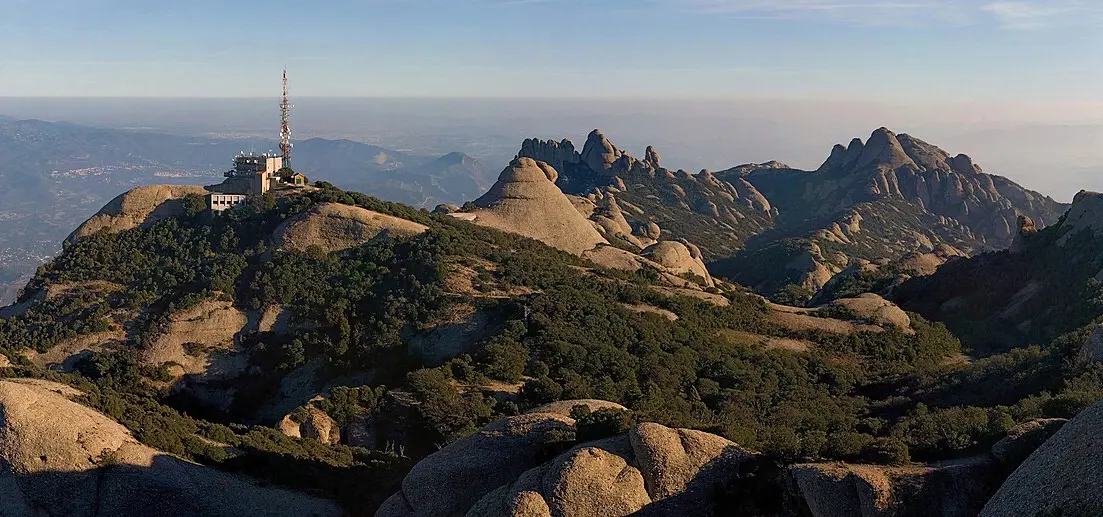
Montserrat: monastery and roads
Best Season
Good route almost all year round. Hot summer midday.
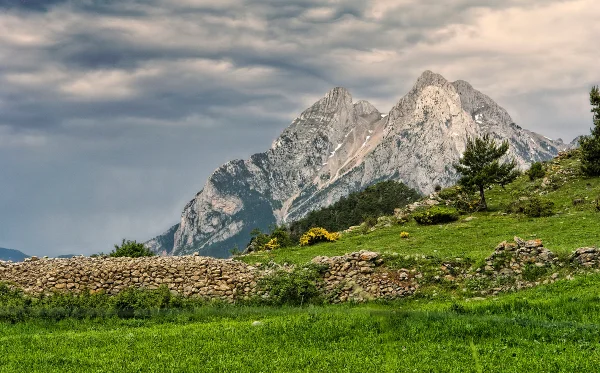
The sacred mountain of Catalonia, with its unique rock formations and Benedictine monastery. The climb up the BP-1121 from Monistrol is one of the most photogenic stretches of road in the country.
Highlights
- 1Monastery of Montserrat and the Moreneta
- 2BP-1121: an epic climb of continuous bends
- 3Unique views of the magical mountain
- 4Towns of the Bages: Manresa and Monistrol
About this route
Montserrat is probably the most culturally symbolic mountain in all of Catalunya. Its unmistakable rock formations — the "needles" or "stone monks" as the Catalans call them — are a geological rarity unique in Europe: a conglomerate massif of cemented cobblestones that erosion has sculpted into pinnacles, caves and gorges over 50 million years. Legend has it that angels cut the mountain with golden saws to create a throne worthy of the Virgin Mary, and the truth is that when you first see Montserrat from the BP-1121 climbing up from Monistrol, it is hard not to think of supernatural intervention.
The Monastery of Montserrat, founded in 1025 by Benedictine monks on a small pre-existing hermitage, quickly became one of the most important religious and cultural centres of the Crown of Aragon. It houses the Moreneta, a 12th-century Romanesque carving of the Black Virgin of Montserrat, patron saint of Catalunya, one of the most venerated religious images in Spanish Catholicism. But Montserrat is much more than a sanctuary: over the centuries, it has also been one of the great universities of southern Europe, one of the first printing presses on the Iberian Peninsula (1499), a refuge for political exiles during the Civil War and, above all, a symbol of Catalan cultural and linguistic identity during the Franco years.
The Escolanía de Montserrat, founded in the 14th century, is one of the oldest music schools in Europe still in operation. Its boy choristers perform each midday (except Saturday and Sunday afternoons) a concert in the basilica that is an acoustic and emotional experience difficult to describe: the treble voices of the escolanes resonating through the Romanesque-Baroque nave possess an almost supernatural purity. If your motorcycle visit to Montserrat happens to coincide with that hour (12:00 on weekdays), do not miss it: it lasts only five minutes but it is one of those moments that stays with you.
The BP-1121 road from Monistrol to the monastery is a small masterpiece of road engineering. Barely 8 km that climb 600 m through an endless series of bends designed to navigate the precipices and rock walls. Each turn offers a different view of the massif, and the viewpoints carved into the rock allow you to stop and photograph (though it is best to do so on weekdays to avoid tourist traffic). The asphalt is well maintained by the Diputación de Barcelona and the bends are technical but not excessively tight. It is one of Catalan bikers' favourite climbs for a short weekend outing.
Practical riding notes: Montserrat is one of the most visited destinations in Catalunya, so it is absolutely advisable to avoid weekends, bank holiday bridges and especially major feast days (8 September, Easter, Christmas), when crowds are massive and car parks can be full. The early morning hours (before 10:00) are perfect: the eastern light on the pinnacles is spectacular, there is little traffic and you can attend the choirboys' singing in peace. For dining in the area, skip the tourist restaurants at the monastery itself: head down to Collbató or Monistrol, where the set menus are half the price and considerably better. And a tip: the Sant Joan funicular, which climbs from the monastery to 970 m, offers a panoramic view of the massif and the Pyrenees in the distance (on clear days) that is well worth the 12-euro ticket.
Route stops
Monistrol de Montserrat
Village
Village at the foot of the mountain, base of the climb.
Monasterio de Montserrat
Monument
Benedictine Abbey and Our Lady of the Moreneta.
El Bruc
Village
Historic village at the foot of Montserrat.
Practical information
Weather
Good route almost all year round. Hot summer midday.
Traffic
High traffic at weekends due to tourists to Montserrat. Better on weekdays.
Fuel stops
Petrol stations in Manresa, Monistrol and El Bruc.
Where to stay on this route
The towns this route passes through — useful for splitting it into stages or sleeping near the start. Book ahead in high season.
- Monistrol de MontserratSee places to stay
- Monasterio de MontserratSee places to stay
- El BrucSee places to stay
Affiliate links: if you book through them, Nomadiq earns a small commission at no extra cost to you.