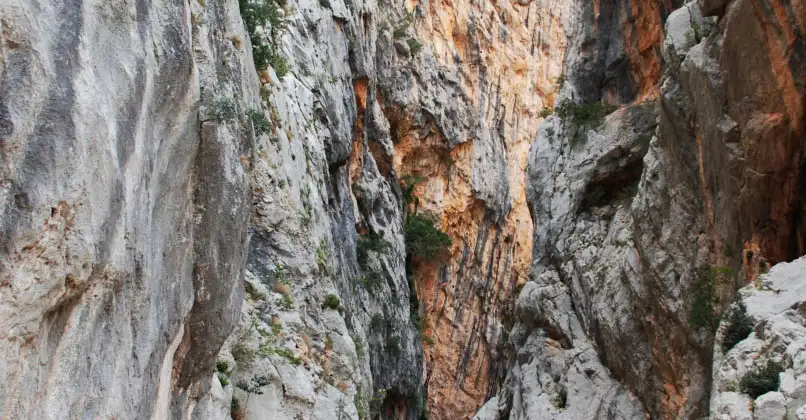
Supramonte: Gorropu and Cala Luna
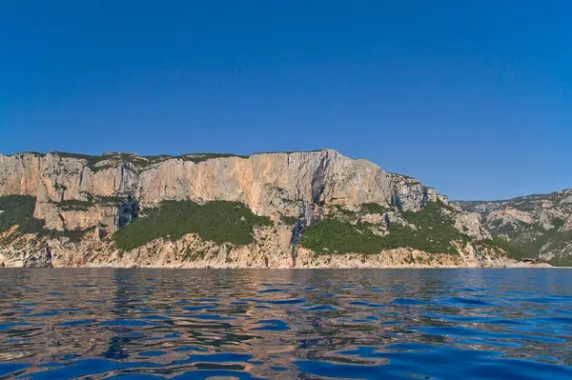
The Supramonte is Sardinia's wildest region: the Gorropu Gorge (Europe's deepest canyon), Cala Luna (paradisiacal beach accessible only by sea or trail) and mountain roads through millennial holm oak forests.
Checking the route…
Roadbook
5 points- Start
Dorgali
Gola di Gorropu
Europe's deepest canyon: 500 m deep, 4 m wide.
ViewpointCala Luna
Paradisiacal beach with caves at the base of limestone cliffs.
ViewpointUrzulei
Supramonte village, gateway to forest tracks and the canyon.
Village- Finish
Dorgali
Take the route to Google Maps
- Dorgali
- Gola di Gorropu
- Urzulei
- Dorgali
We add waypoints from the GPX so Google Maps sticks to the route's roads (they show up as extra stops). To follow the exact track, use the GPX.
Highlights
- 01Gola di Gorropu: the deepest canyon in Europe
- 02Cala Luna: a paradise beach reachable only by sea or on foot
- 03The thousand-year-old holm oak forests of the Supramonte
- 04Su filindeu: the rarest pasta in the world (Nuoro only)
About this route
The Supramonte is the wild heart of Sardinia: a region of limestone plateaux, deep canyons, centuries-old holm oak forests and a solitude so absolute it seems impossible on a Mediterranean island. This mountain chain, stretching between Oliena, Orgosolo, Urzulei and Baunei, reaches 1,463 metres at Punta Corrasi and holds some of the most spectacular and least-visited landscapes in all of Western Europe. The Gola di Gorropu, 500 metres deep and barely 4 metres wide at its floor, is considered the deepest canyon in Europe — or at least in the Mediterranean basin — a colossal cleft in the limestone that the river Flumineddu has carved over millions of years.
The geology of the Supramonte is purely calcareous: Mesozoic dolomites and limestones (200-65 million years old) forming a spectacular karst of sinkholes, poljes, caves (the Grotta del Bue Marino, reached by boat, has some of the most impressive stalactite formations in the Mediterranean), springs and canyons. The Supramonte is Sardinia's answer to the French Causses or the Picos de Europa, with the twist of being ringed by sea on every side, which creates unique contrasts: limestone canyons opening onto white-sand beaches with Caribbean-blue water.
Riding the Supramonte combines sealed roads — the SP13 from Dorgali to Cala Gonone is a spectacular run of bends between cliffs — with forest track sections: the road from Urzulei to the Rifugio di Gorropu is compacted dirt, suitable for trail bikes. Reaching the Gola di Gorropu itself requires an hour's walk from the track. Cala Luna, the most famous beach, is accessible by boat from Cala Gonone (20 minutes) or on a three-hour hike from the Supramonte.
The food of the Supramonte is the most authentic and archaic in all of Sardinia: pane carasau (paper-thin crisp bread baked twice, the staple of Sardinian shepherds for centuries), Sardinian pecorino (one of Europe's great cheeses, with PDO status), porceddu arrosto (suckling pig roasted over myrtle wood), and su filindeu, a rare hand-made pasta drawn into impossibly fine threads that only a handful of women in Nuoro still know how to make — widely called the rarest pasta in the world. The Cannonau di Sardegna from the vineyards of Oliena is one of the most powerful and aromatic reds in Italy.
Practical notes: the Supramonte is trail-bike country if you want to explore the inland tracks, but the sealed roads (SP13, SS125, SP45) also make an excellent route for road bikes. The track sections require off-road experience. There is no fuel anywhere in the Supramonte: fill up in Dorgali or Oliena before heading in. Carry water and food if you plan to hike to Gorropu or Cala Luna. Mobile coverage is patchy: bring a paper map.
Practical information
Weather
Mountain Mediterranean. Moderate heat in summer at altitude. Possible rain in autumn. Ideal May-June and September-October.
Traffic
Almost zero traffic on the tracks. Moderate on the SP13 to Cala Gonone.
Fuel stops
Petrol stations in Dorgali and Oliena. Nothing in the Supramonte. Refuel before entering.
Where to stay on this route
The towns this route passes through — useful for splitting it into stages or sleeping near the start. Book ahead in high season.
- UrzuleiSee places to stay
- DorgaliSee places to stay
Affiliate links: if you book through them, Nomadiq earns a small commission at no extra cost to you.
Published on