SS125 Orientale Sarda: Sardinia's Route 66
Best Season
Mediterranean. Hot in summer on the coast. Accessible all year. Ideal May-June and September-October.
The SS125, the "Orientale Sarda", is Sardinia's most legendary coastal road: 200 km of infinite curves between mountains and sea, with hidden coves, vertiginous cliffs and virtually no traffic.
Highlights
- 1SS125: 200 km of endless bends between mountains and sea
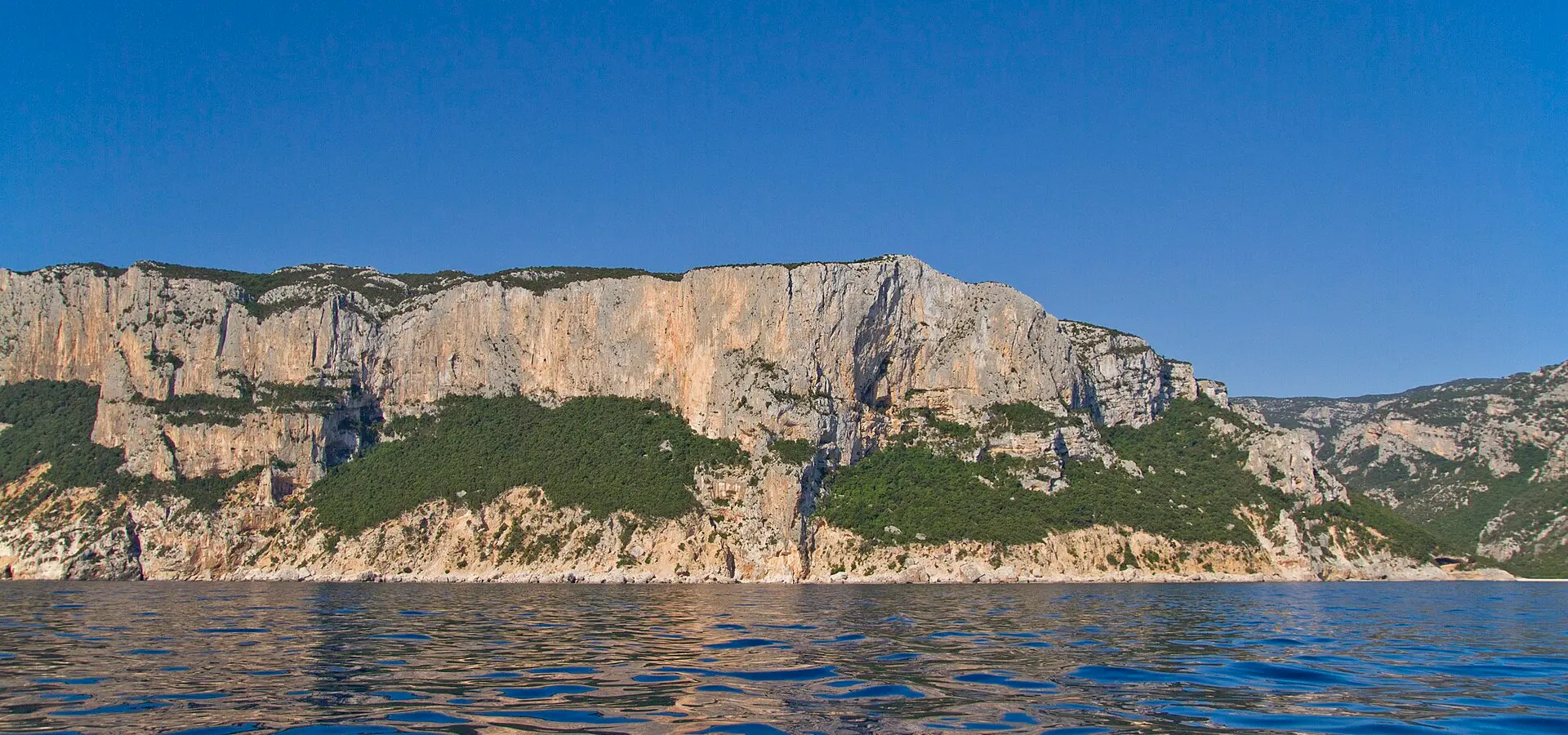
- 2Gulf of Orosei: limestone cliffs and unspoilt coves
- 3Cala Luna: one of the Mediterranean's most famous beaches
- 4Fregola con arselle and cannonau: true Sardinian flavours
About this route
The SS125, known as the Orientale Sarda, is the great coast road of eastern Sardinia and one of the most prized motorcycling routes in the whole Mediterranean. Its course, winding between the inland mountains and the eastern cliffs for over 200 km from Cagliari to Olbia, is an exercise in continuous riding: tight bends chained together without respite, constant climbs and descents between sea level and 1,000 metres, and a landscape alternating centuries-old holm oak woods, Mediterranean macchia, vertical cliffs above an impossibly blue sea, and white-sand coves reachable only on foot.
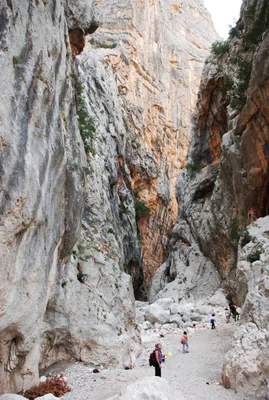
The geology of Sardinia's east coast is a mosaic: Mesozoic limestone forming the great cliffs of the Gulf of Orosei, Palaeozoic granite on the stretch between Tortolì and Dorgali, and metamorphic schist inland. The Codula di Luna — the canyon that opens onto Cala Luna, one of Sardinia's most famous beaches — is a spectacular example of fluvial erosion in limestone: a gorge 300 metres deep that meets the sea through a natural rock arch.
The SS125 is famous for how slow it is: average speed rarely exceeds 40 km/h, and the full 200 km easily takes six hours of riding without stops. But that slowness is precisely its charm: every bend reveals a new landscape, every hill offers a different angle on the sea, and the feeling of riding a road that time forgot is deeply rewarding. There is no hurry on the SS125; hurry is the enemy of this route.
The food stops along the SS125 are part of the pleasure. In Tortolì, the harbour restaurants serve fregola con arselle (Sardinian pasta with clams), spaghetti with bottarga (mullet roe), and sebadas (fried cheese-filled pastries with honey). In Baunei, the inland agriturismi offer su pane (pane carasau, paper-thin bread), spit-roast porceddu and goat's cheese with mountain honey. Cannonau, Sardinia's red wine — the same grape as Spanish Garnacha — is the perfect match for Sardinian cooking.
Practical notes: the SS125 is a toll-free national road, rideable year-round, but the best months are May-June and September-October (moderate heat, little traffic). In summer the stretches near the most famous beaches (Cala Luna, Cala Goloritzè) get noticeably busier. Fuel in Cagliari, Tortolì, Dorgali and Olbia, but there are 60-70 km stretches with no station, so keep an eye on the tank. The SS125 pairs naturally with the SP13 to Cala Gonone for reaching the Gulf of Orosei beaches.
Route stops
Tortolí
Village
Coastal town base for the southern section of the Orientale Sarda.
Cala Gonone
Village
Port with access to the coves of the Gulf of Orosei.
Dorgali
Village
Artisan village with views of the Supramonte and access to Cala Luna.
Practical information
Weather
Mediterranean. Hot in summer on the coast. Accessible all year. Ideal May-June and September-October.
Traffic
Very low traffic except near famous beaches in summer. Average speed 40 km/h.
Fuel stops
Petrol stations in Tortolí, Dorgali and Olbia. 60-70 km stretches without stations.
Where to stay on this route
The towns this route passes through — useful for splitting it into stages or sleeping near the start. Book ahead in high season.
- TortolíSee places to stay
- Cala GononeSee places to stay
- DorgaliSee places to stay
Affiliate links: if you book through them, Nomadiq earns a small commission at no extra cost to you.