Calatayud, Monasterio de Piedra and Jiloca
Best Season
Hot summers in the Jiloca. Cold winters with risk of snow. Spring and autumn are ideal.
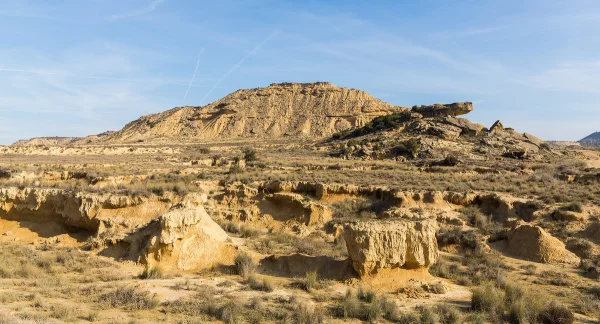
A comfortable route between Zaragoza and Teruel passing through the spectacular Monasterio de Piedra with its waterfalls, and the Jiloca valley with its Mudéjar villages.
Highlights
- 1Monasterio de Piedra: waterfalls and caves
- 2Daroca: a walled town with intact walls
- 3The Jiloca Valley and Mudejar architecture
- 4Quiet roads on the plateau
About this route
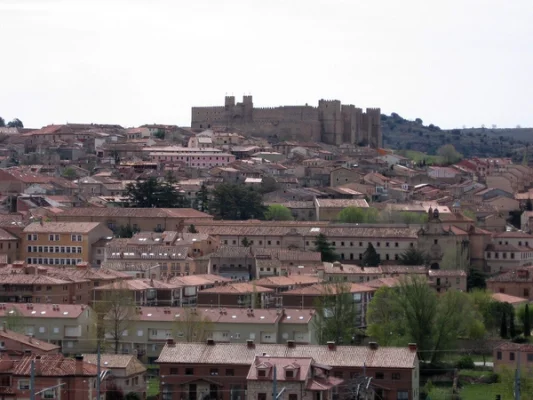
Calatayud has one of the oldest names in Spain: it derives from the Arabic Qalat Ayyub, ‘Job’s castle’, and refers to the Muslim governor who, in the 8th century, founded the city on the ruins of the Roman Bilbilis, the birthplace of the Latin poet Martial. This layering of civilisations — Celtiberian, Roman, Moorish, Jewish and Christian — has left Calatayud with a fascinating historic centre featuring five different castles (yes, five) crowning as many hills around the town, several Mudejar churches designated as UNESCO World Heritage Sites, and a Jewish past of which traces still remain in the Morería neighbourhood. Any motorcyclist passing through here should stop for at least an hour: Calatayud is full of surprises.
But the reason for taking this route is not Calatayud, but the Monasterio de Piedra. And it is hard to overstate just how extraordinary this place is. In the 12th century, a community of Cistercian monks discovered, in the heart of the Aragonese scrubland, a river gorge where the River Piedra had, over thousands of years, carved out a series of caves, lakes and, above all, waterfalls that formed an utterly surreal landscape: a tropical oasis in the middle of the Castilian desert. They built their monastery there in 1194 and, almost unwittingly, created what is now considered Europe’s first landscaped ‘nature reserve’. The walking trail through the gorge — which is done on foot but is worth mentioning as it’s the reason for making the detour by motorbike — includes more than fifteen waterfalls, amongst them the 50-metre-high Cola de Caballo, considered one of the most beautiful in Spain, and the spectacular Gruta Iris, a cave hidden behind a curtain of water, accessed via a staircase carved into the rock.
Another fascinating fact: Europe’s first chocolate was made at this monastery. In 1534, Hernán Cortés brought the first cocoa beans back from Mexico and presented them to the abbot of Piedra, Friar Jerónimo de Aguilar, who experimented with them in the monastery kitchens and developed the first European method for making solid chocolate. There is a small museum inside the monastery that tells this story. For the curious motorcyclist, it’s a gastronomic and historical highlight that’s hard to beat.
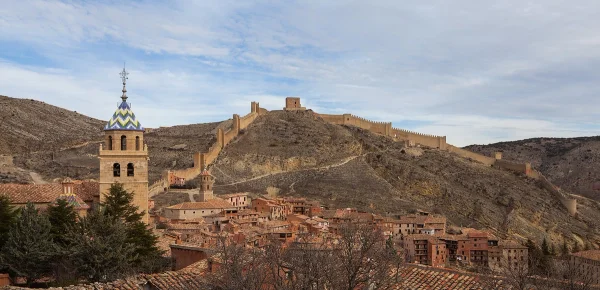
To reach the monastery by motorbike, the most straightforward route from Calatayud is the A-202 to Nuévalos, a quiet local road that winds through the reddish moorland typical of the Iberian Mountain Range. The natural continuation of the route is to head south through the Jiloca Valley, one of the most significant tectonic depressions in central Spain, whose Mudejar towns (Daroca, Calamocha, Monreal del Campo) preserve some of the most interesting architectural ensembles of Islamic-Christian art in Europe. Daroca, in particular, boasts two kilometres of medieval walls with 114 towers still standing – an absolute record in Spain.
Motorcycling tips: the route is generally easy, with no major mountain passes, making it ideal for a relaxed day out. The A-202 to the monastery can get a bit busy with tourist traffic at weekends, but the local roads in the Jiloca region are almost always deserted. Fill up with petrol when you reach Calatayud and take care in summer: the Jiloca region is one of the hottest parts of Aragon, with maximum temperatures often exceeding 38°C. For a bite to eat along the way, stop at the Mesón Castillo de Daroca, inside the city walls, where they serve migas with grapes and lamb cooked on vine branches like few other places do. And one final tip: the Monasterio de Piedra charges an entrance fee (approx. 15 euros), but it’s worth every cent. Allow at least two hours to walk through the canyon.
Route stops
Monasterio de Piedra
Monument
12th-century Cistercian complex surrounded by waterfalls.
Daroca
Monument
Medieval town with intact walls and towers.
Calamocha
Village
Capital of the Jiloca valley.
Practical information
Weather
Hot summers in the Jiloca. Cold winters with risk of snow. Spring and autumn are ideal.
Traffic
Low traffic. Some visitors at Monasterio de Piedra at weekends.
Fuel stops
Fuel stations in Calatayud, Daroca and Calamocha.
Where to stay on this route
The towns this route passes through — useful for splitting it into stages or sleeping near the start. Book ahead in high season.
- Monasterio de PiedraSee places to stay
- DarocaSee places to stay
- CalamochaSee places to stay
Affiliate links: if you book through them, Nomadiq earns a small commission at no extra cost to you.