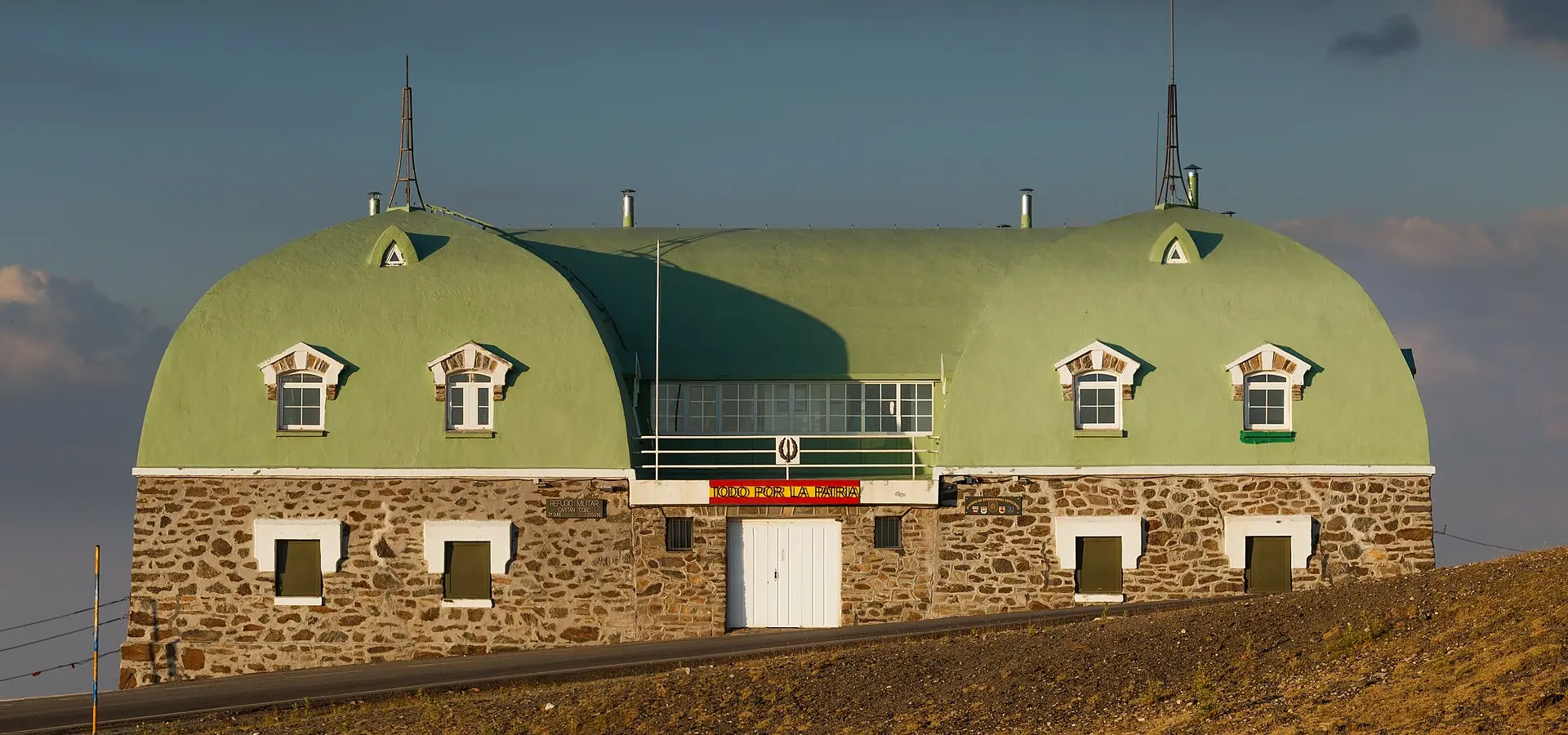
Sierra Nevada: Veleta and Alpujarras
Best Season
Only summer for the high area (June-October). The Alpujarras can be ridden almost all year round.
Ascent to Pico Veleta on the highest asphalt road in Europe and descent to the Alpujarras in Granada, the white villages where time stood still.
Highlights
- 1Europe’s highest road to Mount Veleta
- 2White villages of the Alpujarras
- 3Views of the Alboran Sea from the mountains
- 4A-348: route via the south face
About this route
The Sierra Nevada is the highest mountain range on the Iberian Peninsula, south of the Pyrenees, and the road leading up to Pico Veleta holds a curious record: for decades, it was officially the highest tarmac road in Europe. Today, for environmental reasons, it no longer reaches the 3,398-metre summit, but it still climbs to 2,500 metres – an altitude at which it would be unthinkable to find no snow in August in any other European mountain range. What’s more, that altitude is just an hour and a half’s ride by motorbike from the Mediterranean: few routes in the world allow you to have breakfast on a subtropical beach and lunch surrounded by snowfields.
The climb from Granada along the A-395 is deceptively civilised at first, with sweeping bends and motorway-quality tarmac. From Pradollano onwards, things change: the air grows cooler, the pine forests give way to alpine scrub and the road narrows. There are sections where you can clearly see the mica schist strata that gave rise to the mountain range, one of the geologically youngest and most dynamic ranges on the peninsula, still in the process of uplift. It’s well worth stopping at one of the viewpoints: on clear days, you can see the Mediterranean glistening to the south and North Africa in the distance – a picture-postcard view that makes the journey worthwhile in its own right.
The southern side, now in the Alpujarras, is a world apart. When the Catholic Monarchs conquered Granada in 1492, the defeated Moriscos took refuge in these almost inaccessible ravines and kept a miniature Andalusian culture alive here for another century. The white villages the motorcyclist passes through — Pampaneira, Bubión, Capileira — retain the Berber architecture of flat launa roofs, covered tinaos alleyways and houses terraced in tiers, exactly like the villages of the Moroccan Atlas Mountains. The resemblance is no coincidence: many of the Christian settlers who arrived following the final expulsion of 1571 came from Galicia and León, but they inherited the houses just as they were and never bothered to alter them.
As far as riding is concerned, the climb up to Veleta is one of the few routes in Spain where altitude really makes a difference. Above 2,000 m, naturally aspirated motorbikes may experience a noticeable loss of power (a good 10–15 per cent less at higher altitudes), the bends become tighter and the radii narrow. The Alpujarras, on the other hand, are technical but accessible: the A-4025 links Lanjarón with Trevélez via a stretch of continuous bends for over 60 km – so many, in fact, that some motorcyclists recommend riding it in one direction only, stopping to eat some ham —Trevélez is one of Spain’s leading producers of high-altitude cured ham— and returning the following day.
A practical tip that’s hard to find in guidebooks: in July and August, the road up to Veleta is closed to private traffic above Hoya de la Mora, except for very specific sections; it’s worth checking the Andalusian Regional Government’s website before setting off. And in the Alpujarras, avoid the major summer weekends in Pampaneira: the village is lovely but gets absolutely packed. Wednesdays in the off-season are perfect: you’ll have the viewpoints all to yourself and a coffee at Bar Casa Diego for three euros.
Route stops
Pradollano
Village
Ski resort, base for the ascent to the Veleta.
Pampaneira
Village
Alpujarra's white village with typical streets.
Capileira
Village
The highest village in the Barranco de Poqueira.
Practical information
Weather
Only summer for the high area (June-October). The Alpujarras can be ridden almost all year round.
Traffic
Low traffic on weekdays. More tourism in August.
Fuel stops
Refuelling in Granada or Lanjarón. Petrol station in Órgiva.
Where to stay on this route
The towns this route passes through — useful for splitting it into stages or sleeping near the start. Book ahead in high season.
- PradollanoSee places to stay
- PampaneiraSee places to stay
- CapileiraSee places to stay
Affiliate links: if you book through them, Nomadiq earns a small commission at no extra cost to you.
Related routes
Costa Tropical: La Herradura and La Contraviesa
Andalusia
Córdoba's Subbética: Zuheros and Priego
Andalusia
Axarquía: Comares, Frigiliana and Málaga's Mudéjar Route
Andalusia

Caminito del Rey, El Chorro and Antequera
Andalusia