Axarquía: Comares, Frigiliana and Málaga's Mudéjar Route
Best Season
Warm Mediterranean: accessible all year. Hot in summer in the valleys.
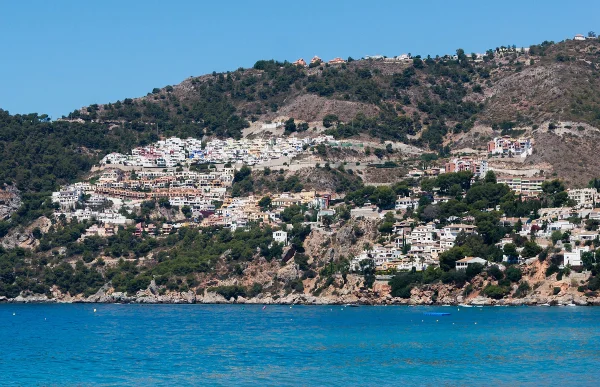
The Málaga Axarquía: Comares (the "Balcony of the Axarquía"), Frigiliana (Andalusia's prettiest village), and the Mudéjar route through white villages inland Málaga among raisin vineyards and almond trees.
Highlights
- 1Comares: the "Balcony of the Axarquía", a village on a crag
- 2Frigiliana: the prettiest village in Andalusia
- 3The Mudéjar route: Árchez, Salares, Sedella
- 4Muscatel vineyards and sun-dried raisins
About this route
The Axarquía is the eastern district of Málaga province, a land of low but abrupt mountains dropping straight into the Mediterranean, creating deep valleys, terraced farmland, white villages perched on crags and winding roads that are a constant pleasure to ride. Unlike the touristy Costa del Sol along its southern edge, the inland Axarquía is an almost untouched world of traditional agriculture (muscatel raisin vineyards, olives, almonds, avocados), Moorish-Mudéjar culture and villages with fiercely distinct character.
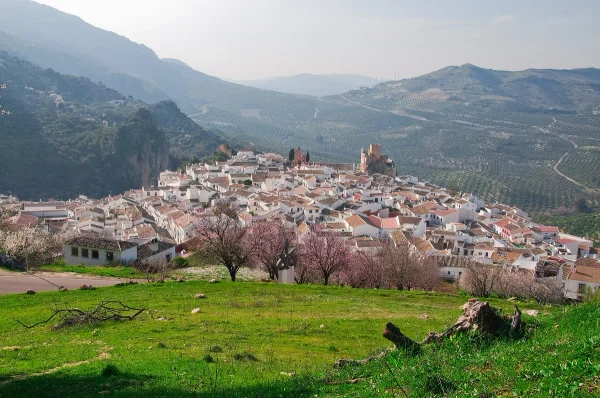
Comares, nicknamed "the Balcony of the Axarquía", is a village of Moorish origin perched on a crag at 703 m, commanding the whole district and, on clear days, the African coast. Its centre is a maze of whitewashed alleys too narrow for cars, with arches, stairways and corners that preserve the layout of the original Moorish medina. The road climbing from El Borge to Comares is a delight: constant bends through raisin vineyards, with views of the white village rising from its rock.
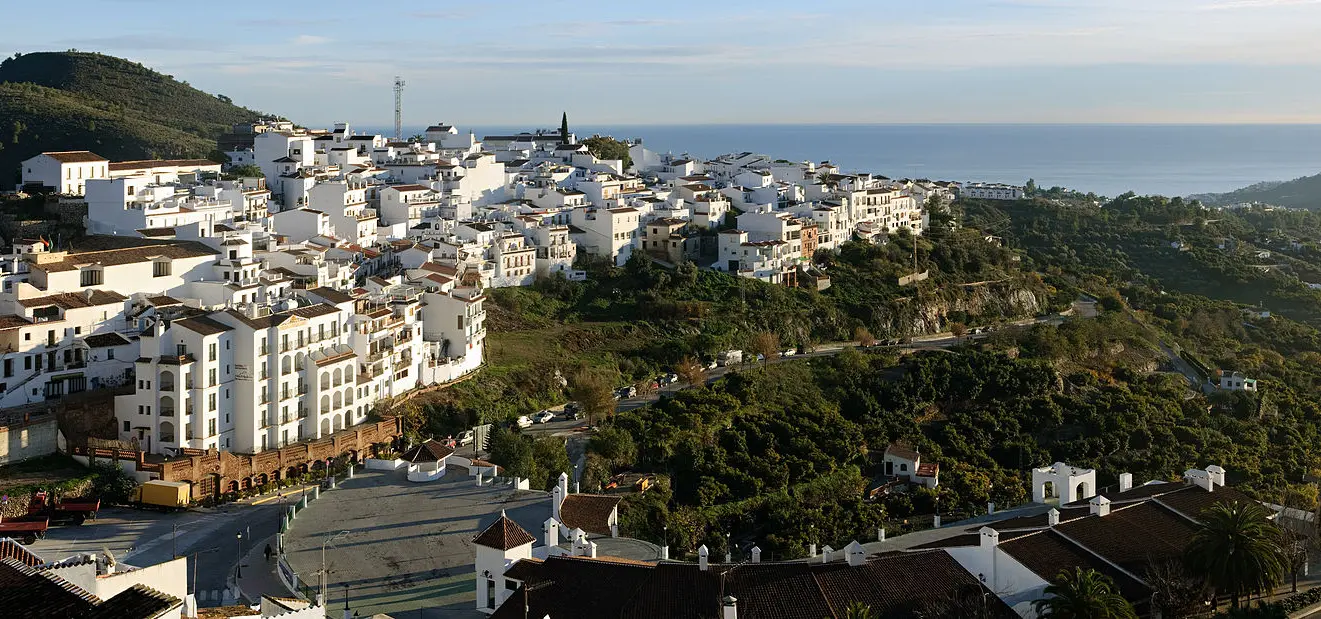
Frigiliana has repeatedly been voted the prettiest village in Andalusia — and one of the prettiest in Spain. Its Barrio Alto, or "barribarto" (the Mudéjar quarter), is a set of cobbled streets of dazzling whiteness, with red geraniums on the balconies, Moorish fountains, mosaics underfoot and views of the Mediterranean and the Nerja coast. Ceramic panels telling the story of the Battle of the Peñón de Frigiliana (1569, the last Morisco revolt in the area) are set throughout the quarter.
The Mudéjar route of the Axarquía links villages where Moorish architecture and culture left a deep mark that outlived the Reconquest: Árchez with its 14th-century Almohad minaret, the only one in Málaga province; Salares with its Mudéjar church; Sedella with its Moorish tower; and Canillas de Aceituno at the foot of the Sierra de Tejeda. The roads between them are narrow, endlessly curving and almost traffic-free — perfect for an unhurried ride with the landscape as the point.
Practical notes: the Axarquía is rideable year-round in a warm Mediterranean climate. The roads are narrow but well surfaced. Traffic is light except on the coast. For a bed, Frigiliana has charming guesthouses in the Mudéjar quarter. For food, chivo malagueño (kid with garlic, the Axarquía speciality), the sweet muscatel wines of Cómpeta and Málaga raisins — sun-dried on paseros, sloping stone platforms — are the district's star products.
Route stops
Comares
Village
"Balcony of the Axarquía": white village on a crag at 703 m.
Frigiliana
Village
Prettiest village in Andalusia, white Mudéjar quarter.
Árchez
Monument
14th-century Almohad minaret, unique in Málaga.
Practical information
Weather
Warm Mediterranean: accessible all year. Hot in summer in the valleys.
Traffic
Low traffic inland. Frigiliana slightly busier.
Fuel stops
Petrol stations in Vélez-Málaga and Nerja.
Where to stay on this route
The towns this route passes through — useful for splitting it into stages or sleeping near the start. Book ahead in high season.
- ComaresSee places to stay
- FrigilianaSee places to stay
- ÁrchezSee places to stay
Affiliate links: if you book through them, Nomadiq earns a small commission at no extra cost to you.