Serranía de Cuenca: Ciudad Encantada and the Source of the Cuervo
Best Season
Cold winters with snow. Best from May to October.
The Serranía de Cuenca hides the Ciudad Encantada (unique rock formations), the source of the River Cuervo and roads winding through endless pine forests.
Highlights
- 1Enchanted City: unique rock formations
- 2Source of the River Cuervo (waterfall)
- 3Hoz de Beteta
- 4Pine forests of the Serranía Alta
About this route
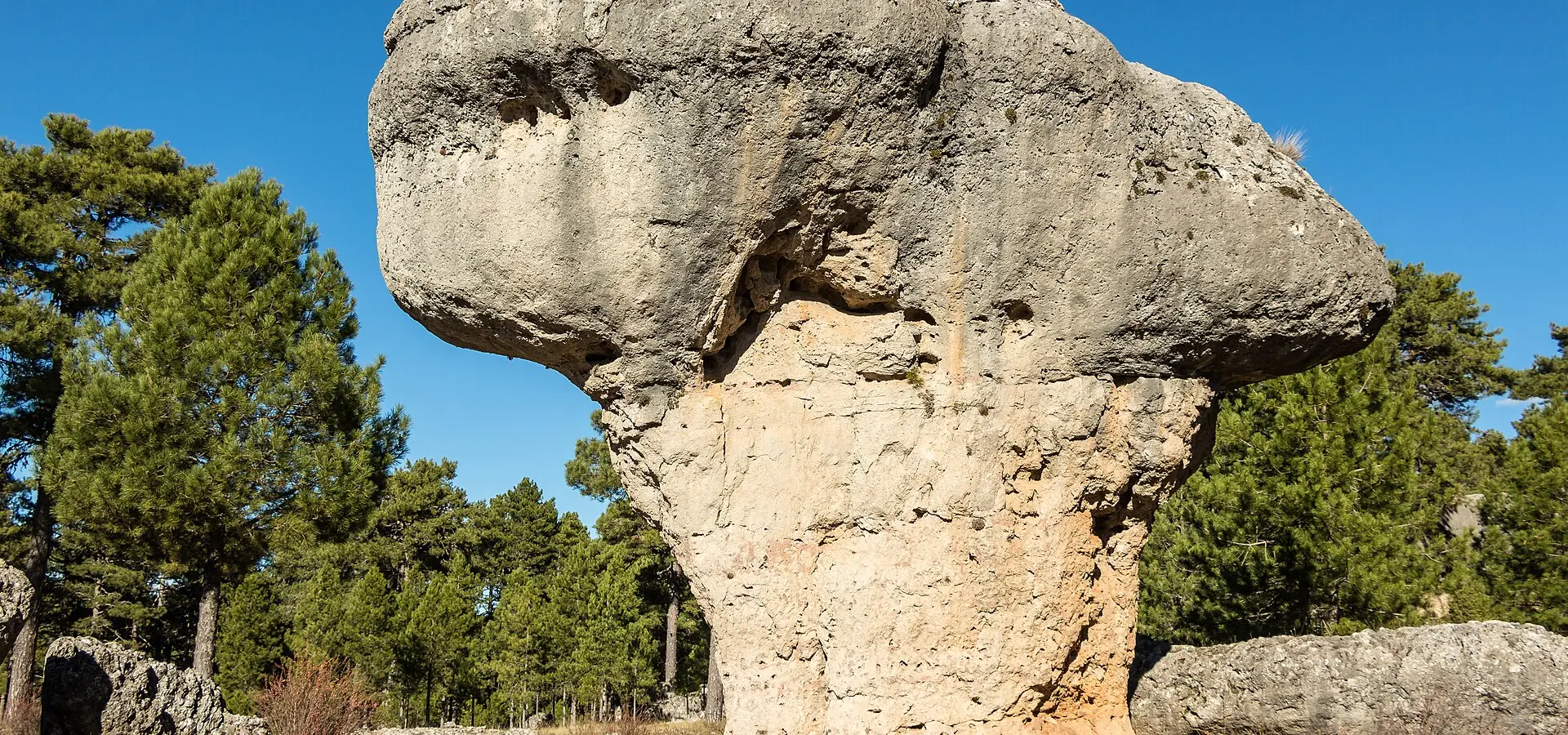
The Enchanted City of Cuenca is one of the most spectacular and unique examples of karst landscape to be found anywhere in Europe. It consists of a limestone field covering several square kilometres, where chemical and mechanical erosion has, over 90 million years, sculpted formations that literally resemble buildings, animals, ships, bridges and human figures carved by a forgotten civilisation. The name is no marketing ploy: when you walk amongst these formations, it is practically impossible not to feel as though you are wandering through the ruins of an ancient city devoured by nature. Some of the formations’ popular names — ‘the Slide’, ‘the Lovers’, ‘the Convent’, ‘the Sea of Stone’ — give an idea of the imaginative freedom the place inspires.
The geological explanation for this phenomenon is fascinating: during the Cretaceous period, this area lay beneath the sea, and alternating layers of harder and softer limestone were deposited. When the region was subsequently uplifted by the Alpine orogeny and exposed to a continental climate, rainwater (slightly acidic due to atmospheric CO₂) began to dissolve the softer layers more quickly than the harder ones, causing the resistant layers to emerge in the form of the pinnacles, arches and formations we see today. The process continues very slowly and the formations are constantly (albeit imperceptibly) changing. The Enchanted City was declared a Natural Monument in 1929, one of the first formal environmental protection measures in Spain.
The Serranía de Cuenca, home to the Ciudad Encantada, is one of the most beautiful yet least populated mountain ranges in central Spain. Its population density — a mere 5 inhabitants per km² — places it amongst the least populated areas in the whole of Western Europe, which for motorcyclists means secondary roads that are almost completely deserted for hours on end. The CM-2104 between the city of Cuenca and Tragacete cuts through the heart of the mountain range and is probably one of the most beautiful roads in the whole of Castilla-La Mancha: endless forests of black pine, natural viewpoints overlooking canyons, and fresh air even in the height of August thanks to the altitude (most of the route is above 1,300 m).
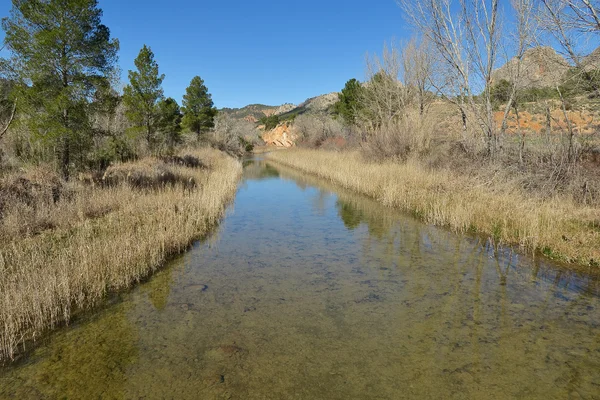
The source of the River Cuervo, some 35 km from the Ciudad Encantada, is the other unmissable stop on the route. Here, in a secluded hollow deep in the mountains, an entire river literally gushes forth from the limestone walls of a vertical cliff, forming a series of tiered waterfalls covered in moss and tropical vegetation. In winter, the waterfalls freeze, forming ice stalactites several metres long that create an utterly surreal spectacle, unique across the entire Iberian Peninsula. It is one of the few places in Spain where you can witness the phenomenon of a river springing from nowhere in a single visual scene.
Motorcycling tips: the Serranía is high and cold in winter, with frequent snowfall from November to March. The best time to visit is from May to October. Fill up as much as possible in Cuenca before heading up: there are only two petrol stations in the mountains (Tragacete and Beteta) with irregular opening hours. For lunch, in Tragacete, the Mesón Río Cuervo serves river trout caught in the River Cuervo itself and morteruelo from Cuenca (a traditional La Mancha game pâté) like few other places. One final recommendation: combine the ‘Enchanted City’ with a visit to the city of Cuenca itself, a UNESCO World Heritage Site thanks to its famous ‘Hanging Houses’, which literally hang over the Huécar River canyon. Cuenca and the Serranía together make for one of the best motorcycling weekends in central Spain.
Route stops
Ciudad Encantada
Viewpoint
Unique rock formations in a pine forest.
Tragacete
Village
Mountain village in the upper Cuenca.
Nacimiento del Cuervo
Viewpoint
Waterfall at the source of the river.
Practical information
Weather
Cold winters with snow. Best from May to October.
Traffic
Low traffic. More tourists in August.
Fuel stops
Petrol stations in Cuenca and Tragacete.
Where to stay on this route
The towns this route passes through — useful for splitting it into stages or sleeping near the start. Book ahead in high season.
- TragaceteSee places to stay
- CuencaSee places to stay
Affiliate links: if you book through them, Nomadiq earns a small commission at no extra cost to you.