Teruel's Maestrazgo: Cantavieja and La Iglesuela
Best Season
Very harsh winters with snow and ice. Cool summer. Frequent afternoon thunderstorms in July-August. May-September is the best time.
An epic journey through the Maestrazgo region of Teruel, one of the most unpopulated and spectacular regions of Spain. Cantavieja, La Iglesuela del Cid, endless passes and almost private roads.
Highlights
- 1Cantavieja: medieval town perched on a sheer crag
- 2La Iglesuela del Cid: monumental architecture
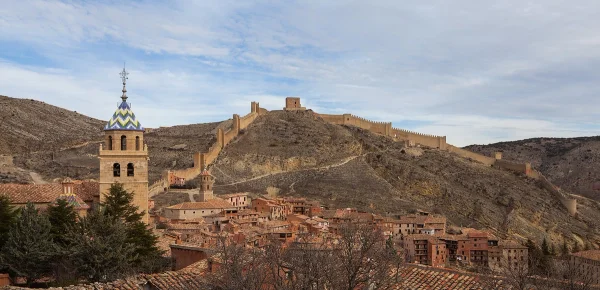
- 3Mirambel: intact walled village
- 4Plateaux and gorges of the Maestrazgo of Teruel
About this route
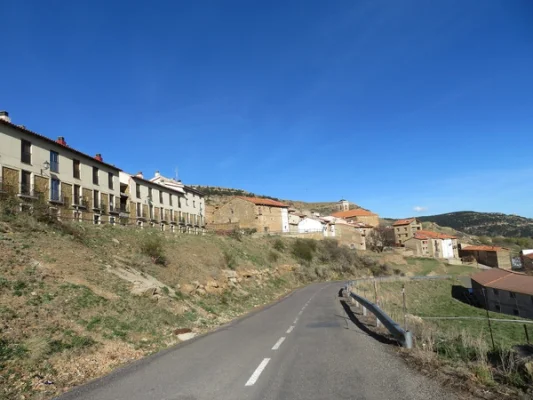
The Maestrazgo of Teruel is probably the most depopulated and forgotten district in Spain. The numbers are staggering: a population density of barely 2 inhabitants per km² (the national average is 94), villages where only ten residents remain in winter, schools closed for decades, centuries-old stone houses abandoned in perfect condition. What a sociologist would call a tragedy is, for the motorcyclist, an absolute blessing: here you can ride for a full hour without crossing paths with a single car, the roads wind through solitary limestone plateaux, and the villages that appear on the hilltops are genuine medieval gems preserved intact precisely because nobody has had the money to "modernise" them.
Cantavieja is the historic capital of the Maestrazgo and one of those towns that seem impossible. It is literally built on a sheer limestone crag, with a single access from the east and drops of over a hundred metres on the other three sides. The Knights Templar founded it in the 12th century as a frontier stronghold between Aragón and Muslim Valencia, and it kept its military status all the way through to the Carlist Wars of the 19th century, when General Cabrera ("the Tiger of the Maestrazgo") made it his capital and directed the war from here for years. The arcaded streets, the Plaza Mayor with its Gothic town hall, and the parish church are first-rate architectural elements in perfect condition.
La Iglesuela del Cid, another jewel of the Maestrazgo, takes its name from El Cid Campeador, who according to tradition passed through here during his campaigns across the Levante lands. Its historic quarter is one of the most important rural monumental ensembles in Spain: the main street is lined with Renaissance and Baroque palaces of proportions that seem out of place in a village of a hundred inhabitants, but which are explained by the livestock wealth of the Maestrazgo during the 15th to 18th centuries, when the Mesta organised massive sheep transhumance and local lords grew rich by collecting tolls. Mirambel, a few kilometres away, preserves the only intact medieval wall in Aragón and was declared a Historic-Artistic Site in 1980.
The Maestrazgo landscape is harsh but beautiful: solitary limestone plateaux where little more than juniper and black pine grow, deep valleys with tiny villages lost at the bottom, and every now and then a spectacular karstic gorge such as the Barranco de la Tinaja or the Barranco de las Truchas. The average altitude of the district exceeds 1,000 m, so it snows frequently in winter and the passes can close for weeks. The motorcycling season runs strictly from May to October, and it is worth checking the weather forecast before heading up: the afternoon storms of July and August are frequent and violent.
For the motorcyclist, the two essential routes are: the A-227 between Castellote and Cantavieja, a road that climbs relentlessly through solitary plateaux with technical curves for 60 km; and the A-226 between Cantavieja and Villafranca del Cid, which crosses the heart of the Maestrazgo with a layout of continuous curves and spectacular views. Fill up your tank to the brim in Alcañiz or Mora de Rubielos before entering; inside the Maestrazgo there is only one operating petrol station in Cantavieja and another in La Iglesuela, and their opening hours can be unpredictable. And a practical tip: the Hospedería del Maestrazgo in Cantavieja serves oven-roasted lamb like very few places can.
Route stops
Cantavieja
Monument
Medieval Maestrazgo village perched on a cliff.
La Iglesuela del Cid
Village
Monumental village with stately stone houses.
Mirambel
Village
Walled town declared a National Monument.
Practical information
Weather
Very harsh winters with snow and ice. Cool summer. Frequent afternoon thunderstorms in July-August. May-September is the best time.
Traffic
Almost empty roads. It is one of the areas with the least traffic in Spain.
Fuel stops
Refuelling in Teruel. Petrol station in Cantavieja. Long stretches without services.
Where to stay on this route
The towns this route passes through — useful for splitting it into stages or sleeping near the start. Book ahead in high season.
- CantaviejaSee places to stay
- La Iglesuela del CidSee places to stay
- MirambelSee places to stay
Affiliate links: if you book through them, Nomadiq earns a small commission at no extra cost to you.