Route of Silence: Empty Spain in Teruel
Best Season
Altitude: cold possible even in summer. Snow from November to March. Best May-October.
The famous "Route of Silence" through the Maestrazgo and Teruel highlands, western Europe's most depopulated area. Ghost villages, canyons, UNESCO rock art and the continent's deepest silence.
Highlights
- 1Most sparsely populated area in Western Europe
- 2Albarracín: often called the most beautiful village in Spain
- 3UNESCO Rock Art of the Mediterranean Arc
- 4Maestrazgo: Cantavieja, Mirambel, and Templar villages
About this route
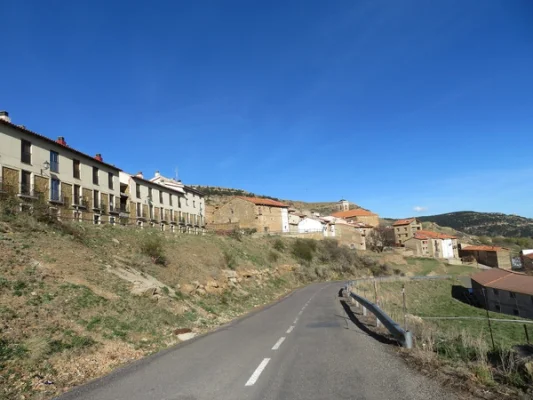
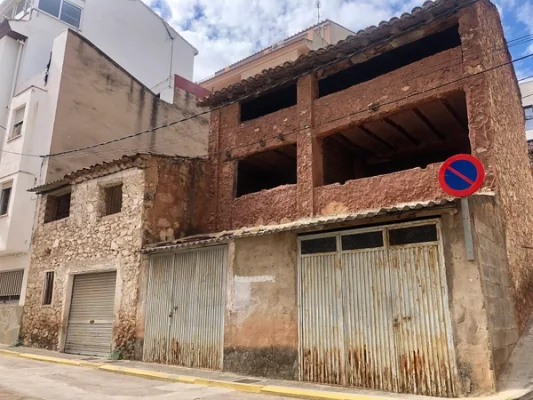
The Ruta del Silencio is one of the most unique motorcycling itineraries in all of Europe, and its name is no metaphor: it crosses the most sparsely populated area in Western Europe, with municipalities that have fewer than 1 inhabitant per square kilometer, entire abandoned villages, and a silence so deep and enveloping that when you stop and kill the engine you experience an almost supernatural sensation. The Serranía de Teruel and the Maestrazgo have lost more than 80% of their population since the 1950s, creating a ghostly human landscape where empty churches, shuttered schools, and crumbling houses stand in contrast to a natural world that has been steadily reclaiming the land.
The road connecting Cantavieja with Villarluengo via the A-1702 is probably the most spectacular stretch: it descends to the bottom of the Río Cañada gorge, crosses the bridge over the Río Guadalope, and climbs the opposite slope with constant curves through pine forests and limestone crags that form breathtaking canyons. The Órgano de Montoro, a rock formation of limestone columns resembling the pipes of a cathedral organ, is visible from the road and is one of the most impressive geological monuments in all of Spain.
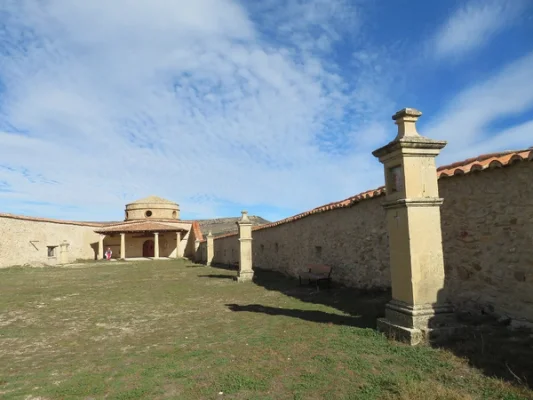
The Aragonese Maestrazgo preserves medieval villages of austere beauty that reflect centuries of Templar and Carlist history. Cantavieja, the historic capital of the Maestrazgo, has a 14th-century arcaded plaza that literally hangs over a precipice. Mirambel, designated one of the most beautiful villages in Spain, retains its medieval walls intact and a silence so absolute that Ken Loach chose it as the setting for his film "Land and Freedom" (1995). Allepuz, Fortanete, La Iglesuela del Cid — every village in the Maestrazgo is a journey back in time.
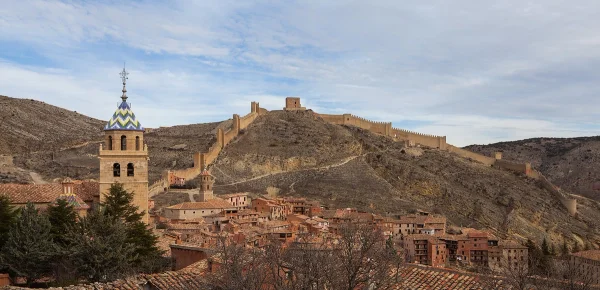
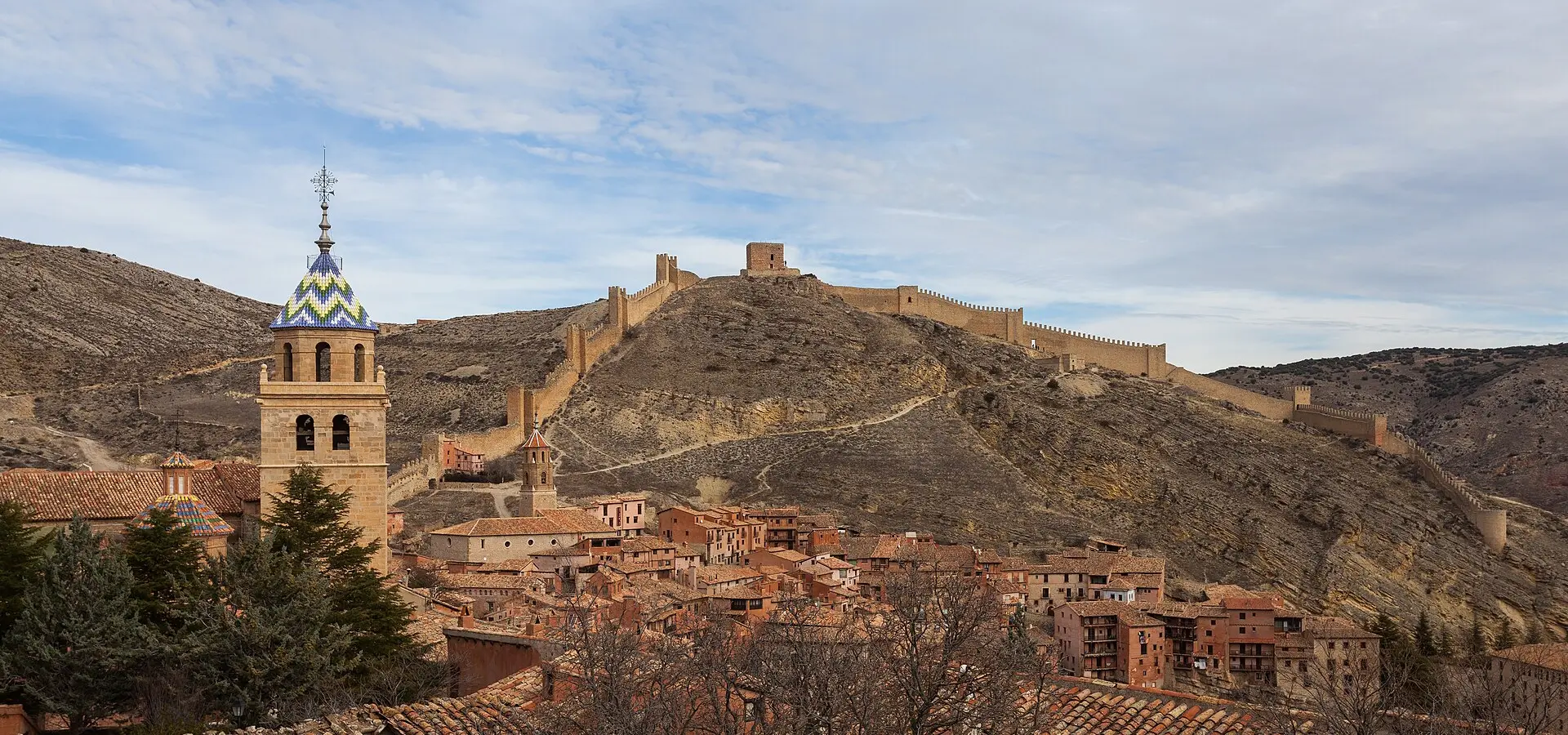
The Rock Art of the Mediterranean Arc, a UNESCO World Heritage Site, has some of its finest examples in the Serranía de Teruel. The shelters of Albarracín (with paintings of bulls and human figures dating back 7,000 years), the paintings of the Parque Cultural del Río Martín, and the engravings of the Maestrazgo constitute the largest collection of post-Paleolithic rock art in all of Europe. Albarracín itself is considered by many to be the most beautiful village in all of Spain: a cluster of rust-colored houses perched above the Río Guadalaviar with Moorish walls and impossibly narrow streets.
Rider practicalities: the Ruta del Silencio is ideal for motorcyclists seeking solitude and empty roads. The roads are well paved but narrow and full of curves. The cold can be fierce even in summer due to the altitude (1,000–1,600 m). Fuel stations are scarce — fill up in Teruel, Cantavieja, or Alcañiz. For accommodation, the Casa de Santiago in Albarracín is a charming hotel in a 16th-century house. For eating, ternasco de Aragón (roast suckling lamb) is the signature dish of the entire area.
Route stops
Albarracín
Village
Reddish village perched above the river, Arab walls and rock art.
Cantavieja
Village
Capital of the Maestrazgo, 14th-century square over a precipice.
Mirambel
Village
Intact medieval walls, filming location for "Land and Freedom".
Órgano de Montoro
Viewpoint
Limestone column rock formation, geological monument.
Practical information
Weather
Altitude: cold possible even in summer. Snow from November to March. Best May-October.
Traffic
Virtually no traffic. Spain's emptiest roads.
Fuel stops
Petrol stations in Teruel, Cantavieja and Alcañiz. Scarce on the route.
Where to stay on this route
The towns this route passes through — useful for splitting it into stages or sleeping near the start. Book ahead in high season.
- AlbarracínSee places to stay
- CantaviejaSee places to stay
- MirambelSee places to stay
Affiliate links: if you book through them, Nomadiq earns a small commission at no extra cost to you.