Matarraña: the Aragonese Tuscany
Best Season
Hot summers but milder than the Ebro valley. Spring and autumn are perfect. Spectacular in February with almond trees in blossom.
The Matarraña region is known as the "Aragonese Tuscany" for its hilltop stone villages, olive groves and empty roads. Valderrobres, Calaceite and Beceite on a perfect route.
Highlights
- 1Valderrobres: a Gothic castle overlooking the river
- 2Calaceite: one of the prettiest villages in Spain
- 3Beceite and the Estrets del Parrissal
- 4La Fresneda: a medieval arcaded square
About this route
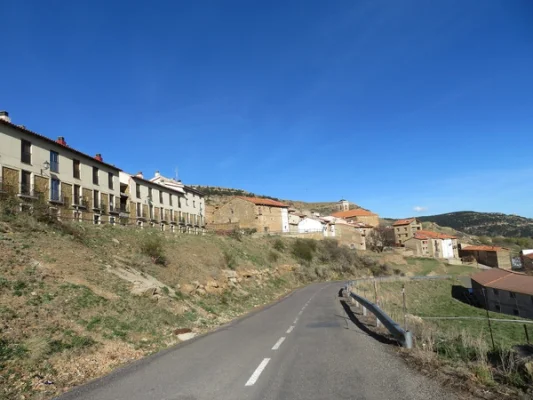
The Matarraña has a nickname that at first sounds like exaggerated tourist marketing but which, after travelling through it on a motorbike, turns out to be perfectly justified: the ‘Aragonese Tuscany’. The comparison is geographically spot on: rolling hills, valleys planted with olive trees, almond trees and vineyards, golden-stone villages perched on hilltops, and a light so distinctive that it seems to soften every contour. The difference from the real Tuscany is that there’s no mass tourism here, prices are a quarter of what they are there, and motorcyclists can ride along back roads for hours without coming across almost anyone. It’s one of the best-kept secrets of the north-east of the Iberian Peninsula.
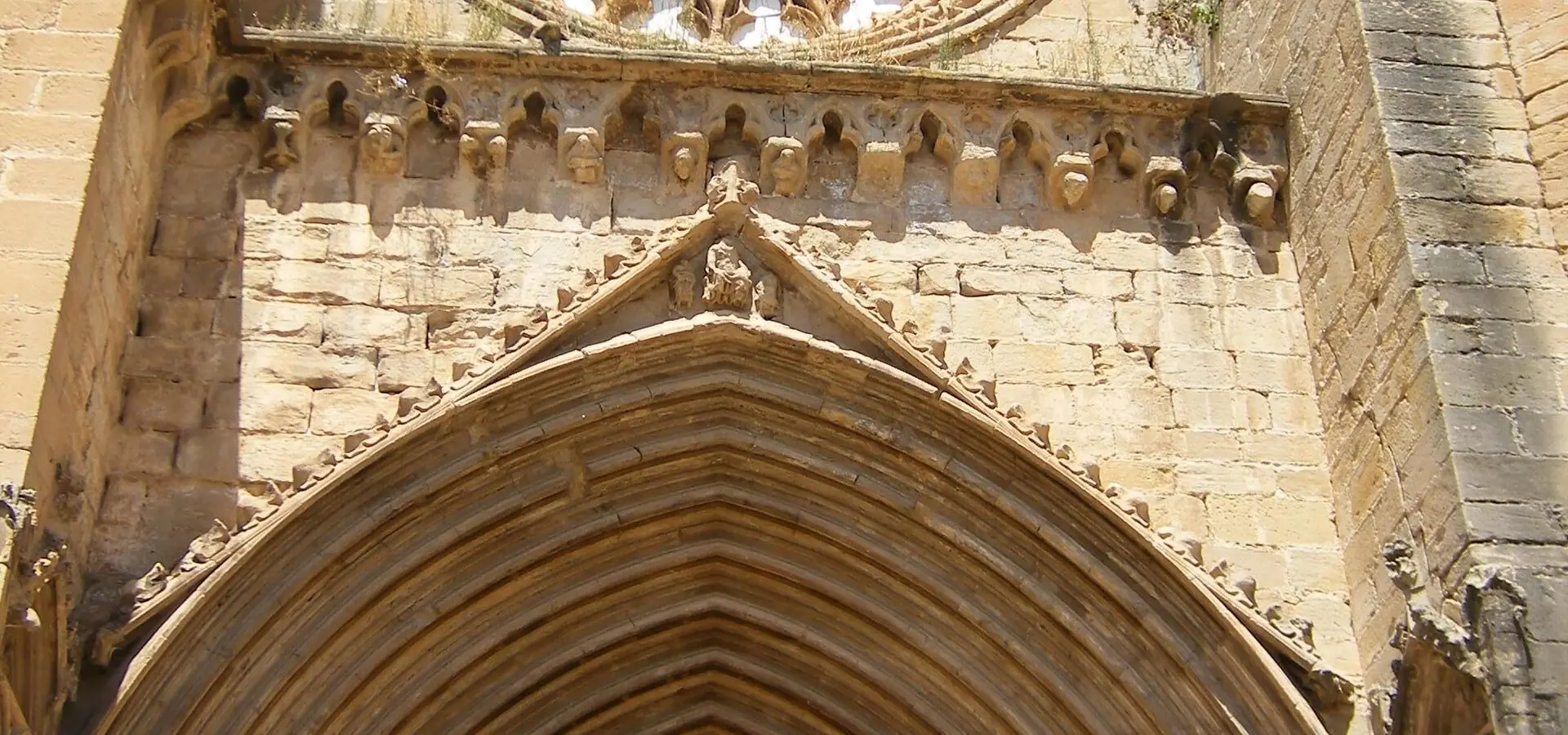
Valderrobres is the natural and visual capital of the Matarraña region. Its skyline —dominated by an Aragonese Gothic castle that looks as though it has stepped out of a fairy tale— is probably one of the most photogenic scenes in the whole of Spain. The castle, built between the 14th and 15th centuries by the archbishops of Zaragoza (who were the feudal lords of the region), is perfectly preserved and can be visited in its entirety: Gothic halls, the parade ground, the chapel and views from the top that take in the entire Matarraña valley as far as the Puertos de Beceite. The Church of Santa María, right next to the castle, is one of the purest examples of Levantine Gothic architecture in existence, with a rose window twelve metres in diameter and of almost cathedral-like proportions.
Calaceite and Cretas, the other two unmissable villages on the route, are true architectural gems. Calaceite is included on the official list of ‘Spain’s Most Beautiful Villages’ and its historic centre, declared a Historic-Artistic Site in 1973, is one of the best-preserved examples of 16th–18th-century Aragonese architecture: Renaissance palaces, medieval arcades, cobbled streets and houses bearing coats of arms on every corner. Cretas, smaller and less visited, boasts a Plaza Mayor with a 16th-century town hall that is probably the most beautiful civil building in Lower Aragon.
Matarraña’s cuisine is another compelling reason to visit. This is a region renowned for its extra virgin olive oil of the very highest quality (the D.O.P. Aceite del Bajo Aragón covers the entire region), late-season peaches with a designation of origin, and, above all, black truffles: Matarraña and the neighbouring Sierra de Gúdar are one of the few natural truffle-growing areas in Europe, comparable to Périgord. In winter, local restaurants prepare entire tasting menus based on fresh black truffles at prices that would be unaffordable in France. If you visit between December and February, be sure to try the truffle menu at the Hotel Hospes in Valderrobres or at any reputable rural guesthouse in the region.
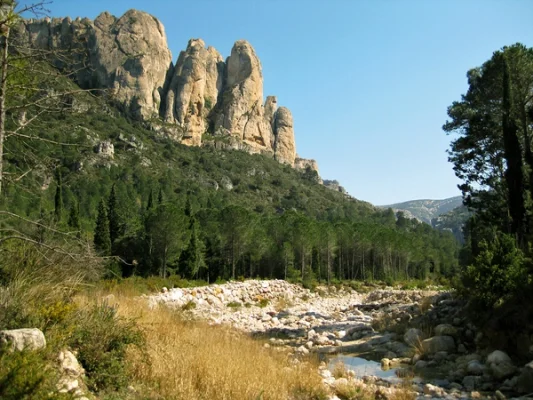
For a motorbike ride, the classic Matarraña route is the A-1414, which links Valderrobres with Beceite (and the entrance to the Ports Natural Park), combined with the smaller local roads leading to Calaceite, Cretas and La Fresneda. All are single-carriageway roads with one lane in each direction, featuring tarmac in good condition and continuous but gentle bends, perfect for a relaxed weekend ride. Beceite is particularly worth a visit as it offers the chance to reach the start of the Parrissal, a spectacular river canyon formed by the River Matarraña, which can be explored on foot via wooden walkways. The best time to visit is from March to June (when the almond and olive trees are in bloom) and September–October (grape harvest and golden autumn). Fill up in Alcañiz or Caspe before heading in: there are only three petrol stations within the region and opening hours can be irregular.
Route stops
Valderrobres
Monument
Capital of the Matarraña with a Gothic castle.
Beceite
Village
Gateway to the Ports Natural Park.
Calaceite
Village
One of the most beautiful villages in Spain.
La Fresneda
Village
Medieval village with an arcaded square.
Practical information
Weather
Hot summers but milder than the Ebro valley. Spring and autumn are perfect. Spectacular in February with almond trees in blossom.
Traffic
Low traffic. Roads nearly empty on weekdays.
Fuel stops
Fuel stations in Alcañiz, Valderrobres and Calaceite.
Where to stay on this route
The towns this route passes through — useful for splitting it into stages or sleeping near the start. Book ahead in high season.
- ValderrobresSee places to stay
- BeceiteSee places to stay
- CalaceiteSee places to stay
Affiliate links: if you book through them, Nomadiq earns a small commission at no extra cost to you.