Delta de l'Ebre and Els Ports
Best Season
Hot summer in the Delta. Spring and autumn are ideal. In February the almond trees in the interior are in blossom.
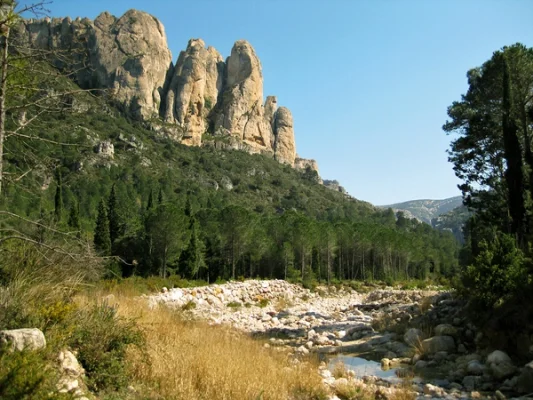
Perfect contrast: from the Ebre Delta, with its endless rice fields and birds, to the passes of the Parc Natural dels Ports, with canyons, black pines and technical roads. A full day in Terres de l'Ebre.
Highlights
- 1Ebro Delta: rice fields and bird sanctuary
- 2Tortosa and La Suda (Arab castle)
- 3Ports Natural Park: gorges and black pines
- 4Estrets del Parrissal
About this route
The Ebro Delta is one of the most important wetlands in the whole of Western Europe and, in terms of size, the second largest in the Mediterranean after the Camargue in France. Over 300 km² of marshes, rice paddies, lagoons and unspoilt beaches have been formed by the accumulation of sediment from the River Ebro over the last 6,000 years. For motorcyclists, riding through the Delta is an experience quite unlike anywhere else in Catalonia: here there are no mountain passes, no technical bends, no cliffs; instead, there are dead-straight roads cutting through flooded landscapes, vast skies filled with birds everywhere, and a horizon so flat that it is more reminiscent of the Netherlands than the Mediterranean.
Rice cultivation is the delta’s main economic activity and has shaped the landscape to such an extent that the two are inseparable. One of Spain’s finest rice varieties is grown here (Ebro Delta PDO, Bahía and Bomba varieties), perfect for the famous Catalan rice dishes with broth and the paellas of southern Valencia. In spring (May–June), the freshly flooded rice paddies create a mirror-like effect that reflects the sky and the thousands of pink flamingos that pass through to feed in the lagoons. In September–October, the fields turn golden before the harvest. Each season has its own beauty, and all are well worth the trip.
The Delta’s birdlife is legendary. More than 350 species of birds have been recorded in this small area, making it one of the most important birding hotspots in the Mediterranean. Flamingos, grey herons, purple herons, spoonbills, coots, ducks, black-winged stilts, terns, rare gulls and, in the most secluded marshes, some of the few pairs of Montagu’s harriers still surviving in Catalonia. To spot them, it’s best to hire (or bring) binoculars and head to the viewing points at Encanyissada or l’Olla, in the southern part of the delta, where the concentration of birds is particularly high.
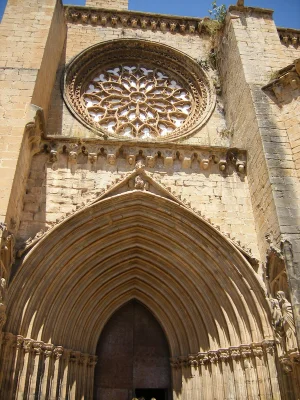
Tortosa, the capital of the Terres de l’Ebre and the natural gateway to the delta, comes as a surprise to many visitors. Its medieval and Renaissance old town is remarkably well-preserved, featuring a 14th-century Gothic cathedral, a Romanesque cloister, the former Jewish and Moorish quarters, and, above all, the Castle of La Suda, an imposing 9th-century Moorish fortress that crowns the city’s central hill and is now a top-class Parador hotel. For centuries, Tortosa was a border town between Aragon, Catalonia and Valencia, and this triple heritage is reflected in its architecture, its cuisine and even in the local dialect.
The perfect contrast to the delta is the Ports Natural Park, just west of Tortosa: a rugged limestone mountain range, full of gorges, black pine forests and mountain trails, offering a landscape that is the complete opposite of the flat delta. The road climbing from Roquetes to the Cims dels Ports passes through the Estrets del Parrissal, a spectacular river gorge carved by the River Matarranya, with vertical walls reaching up to 200 m. Combining the delta and the Ports in a single day is the best possible introduction to the geographical diversity of southern Catalonia. Practical tip: in summer it gets very hot in the delta (40°C), so spring and autumn are better. For rice dishes, the Casa Nuri Restaurant in Riumar (right at the mouth of the Ebro) is legendary.
Route stops
Amposta
Village
Capital of Montsià, gateway to the Delta.
Desembocadura del Ebro
Viewpoint
Where the river merges with the Mediterranean.
Parc Natural dels Ports
Viewpoint
Limestone canyons in southern Catalonia.
Practical information
Weather
Hot summer in the Delta. Spring and autumn are ideal. In February the almond trees in the interior are in blossom.
Traffic
Low traffic. More tourism in the Delta at weekends.
Fuel stops
Petrol stations in Tortosa, Amposta and Sant Carles de la Ràpita.
Where to stay on this route
The towns this route passes through — useful for splitting it into stages or sleeping near the start. Book ahead in high season.
- AmpostaSee places to stay
- TortosaSee places to stay
Affiliate links: if you book through them, Nomadiq earns a small commission at no extra cost to you.