Lagunas de Ruidera and Campo de Montiel
Best Season
Very hot summers. Best in spring and autumn.
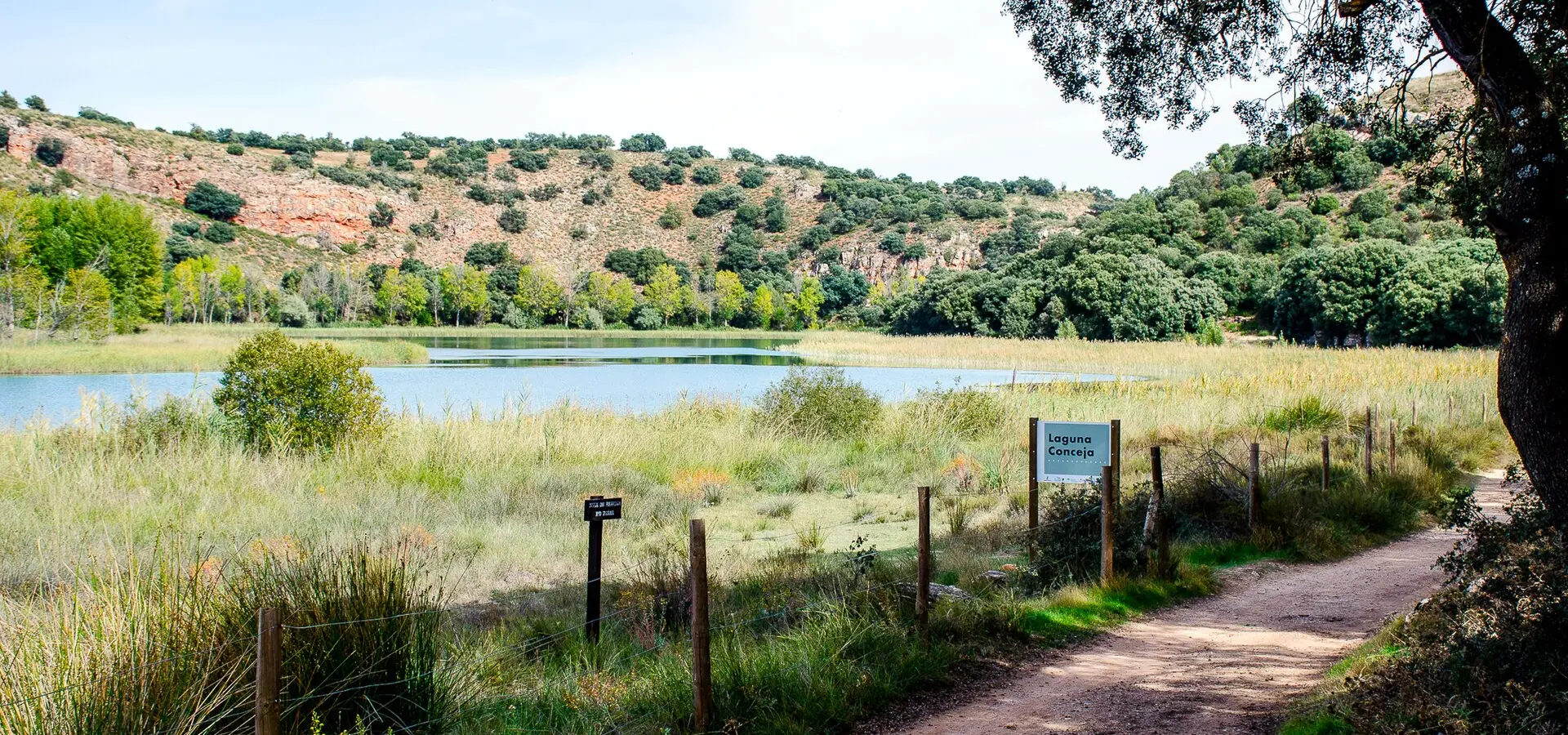
The Lagunas de Ruidera, linked by cascading waterfalls, are an oasis in the heart of La Mancha. The route combines Manchegan villages with lonely country roads through the Campo de Montiel.
Highlights
- 1Ruidera Lakes (Nature Reserve)
- 2Villanueva de los Infantes: La Mancha Baroque
- 3Waterfalls amongst turquoise lagoons
- 4Empty roads in La Mancha
About this route
The Ruidera Lakes are one of the most astonishing geographical wonders in the whole of Spain. Right in the heart of the arid La Mancha region, where one would normally expect to see dry plains, sparse holm oak groves and parched vineyards, a chain of fifteen turquoise lagoons suddenly appears, linked together by travertine waterfalls, with lush riparian vegetation, herons, coots and ducks. It’s like stumbling upon a slice of Croatia in the middle of Castilla-La Mancha. First-time visitors can hardly believe their eyes, especially in the height of summer when the contrast between the blue water and the parched earth is striking.
The geological explanation for this phenomenon is fascinating. The River Pinilla, which feeds the system, flows over an extremely pure limestone bedrock. The water dissolves the calcium carbonate as it flows, and upon reaching the lagoons, a combination of changes in temperature, pressure and bacterial activity causes the carbonate to precipitate once more, forming natural travertine barriers between the lagoons. These barriers grow slowly — a few millimetres a year — and gradually separate the lagoons further and further apart, eventually creating the terraced system we see today. It is exactly the same process that created the Plitvice Lakes in Croatia, but on a smaller scale.
The fifteen lagoons have curious names —Blanca, Conceja, Tomilla, Tinaja, San Pedro, Redondilla, Lengua, Salvadora, Santos Morcillo, Batana, Colgada, del Rey, Cueva Morenilla, Coladilla, Cenagosa— and each has its own character. Cueva Morenilla, accessible from the CM-3115 road, is probably the most beautiful: a deep lagoon surrounded by vertical walls covered in vegetation, with water so clear that you can see the fish several metres below the surface. La Colgada, another spectacular spot, literally hangs over the next lagoon in a cascade and is one of the most photographed spots in the park.
El Campo de Montiel, the district where the lagoons are situated, is one of the most sparsely populated and neglected regions in the whole of Castilla-La Mancha, yet it holds extraordinary symbolic significance in Spanish culture: it was here, according to Cervantes himself, that the adventures of Don Quixote began (“In a village in La Mancha, the name of which I do not wish to recall…”). Modern Cervantes scholars place that ‘place’ somewhere in the Campo de Montiel, probably Villanueva de los Infantes or Argamasilla de Alba, where Cervantes was imprisoned for months and where, according to tradition, he began to write *Don Quixote*. Villanueva de los Infantes, designated a Historic-Artistic Site, boasts one of the most beautiful Baroque town centres in the entire region of La Mancha.
Motorcycling tip: summers in Ruidera are very hot (temperatures of 40°C are common), but the lagoons attract crowds of people looking to cool off, so it’s best to visit during the week or very early in the morning. Spring and autumn are perfect. Fill up with petrol in Manzanares or Argamasilla. For food, in Ruidera itself there are several beach bars right by the lagoon serving river fish and grilled meats. But the real culinary gem is in Villanueva de los Infantes: Mesón La Morada de Juan Vargas, set in a 17th-century palace, serves traditional La Mancha cuisine (gachas, atascaburras, marinated partridge) at affordable prices. And if you’re visiting in August, don’t miss a dip in one of the lagoons: the water, at 22°C and crystal-clear, makes for one of the best river swims in the whole of Spain.
Route stops
Lagunas de Ruidera
Viewpoint
Natural Park with 15 turquoise lagoons.
Villanueva de los Infantes
Monument
Baroque village in the Campo de Montiel.
Practical information
Weather
Very hot summers. Best in spring and autumn.
Traffic
Low traffic. Slightly busier in Ruidera at weekends.
Fuel stops
Petrol stations in Manzanares and Argamasilla de Alba.
Where to stay on this route
The towns this route passes through — useful for splitting it into stages or sleeping near the start. Book ahead in high season.
- Villanueva de los InfantesSee places to stay
- ManzanaresSee places to stay
Affiliate links: if you book through them, Nomadiq earns a small commission at no extra cost to you.
Related routes
Sierra de Alcaraz and Riópar
Castilla-La Mancha
Sierra de Cazorla, Segura and Las Villas
Andalusia
Serranía de Cuenca: Ciudad Encantada and the Source of the Cuervo
Castilla-La Mancha
Puerto de Canencia and Lozoya
Madrid