Guadalest, Callosa and Tarbena
Best Season
Excellent all year round thanks to the microclimate of the Marina. Avoid August due to mass tourism.
The route of the white villages of Alicante. The spectacular Guadalest castle over the emerald reservoir, the Algar springs in Callosa and the technical ascent to Tárbena.
Highlights
- 1Guadalest Castle overlooking the emerald reservoir
- 2The Algar Fountains in Callosa d'en Sarrià
- 3Tárbena: a village perched in the mountains
- 4Constant views of the Mediterranean
About this route
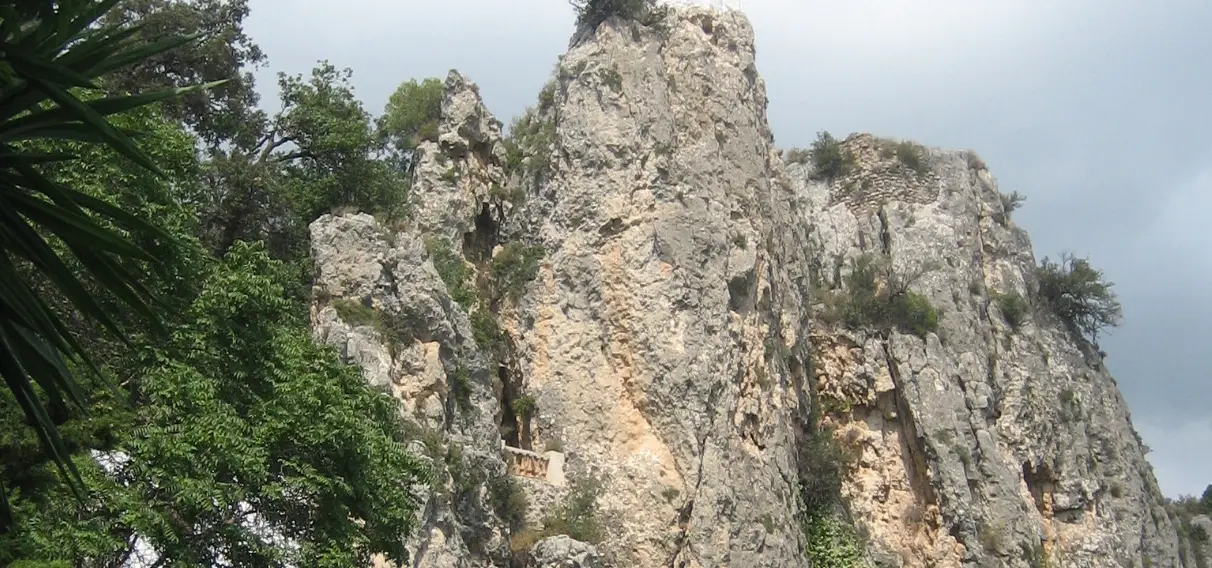
Guadalest Castle is probably one of the most photographed spots in the whole of the Valencian Community and one of the villages most visited by tourists in the whole of Spain. And its fame is entirely justified: the combination of the 12th-century Moorish castle perched on a vertical cliff, the white church bell tower situated in an impossible position next to the castle, the white houses terraced down the hillside, and, in the background, the Guadalest reservoir with its greenish waters, creates one of the most recognisable and striking images of the Alicante hinterland. To reach the old town, you have to pass through a tunnel carved out of the rock itself, which adds an extra touch of drama to the place.
The history of Guadalest Castle is the history of the Kingdom of Valencia itself. Built by the Andalusian Muslims in the 11th century on the most strategic cliff in the entire Marina Baixa region, it was for 200 years one of the most important defensive strongholds of the Valencian taifa. It passed into Christian hands in 1245 following the conquest by James I and remained an active fortress until the 18th century, when a devastating earthquake (1644) and the subsequent administrative closure left it in ruins. Today, visitors can explore the restored complex, with its dungeons, stately halls, church and, above all, the famous bell tower perched atop the cliff, accessible only via a narrow staircase carved into the rock.
The Fonts de l’Algar, in Callosa d’en Sarrià, are the other unmissable stop on the route. These are a series of natural waterfalls on the River Algar, formed by the difference in erosion between hard and soft limestone layers, creating a succession of cascades and turquoise pools in a narrow, vegetated gorge. In summer, the pools are a popular spot for swimming (the water, at 16°C, is refreshing even in August) and it’s worth going early to avoid the crowds. The visit follows a footpath that runs the length of the waterfall, and the modest entrance provides access to one of the most beautiful watery spots in the Alicante hinterland.
Tárbena, at the top of the climb up the CV-715, boasts a fascinating historical curiosity: it is one of the few villages in the Kingdom of Valencia where, following the final expulsion of the Moriscos in 1609, the Christian settlers came from Mallorca rather than Castile or Aragon. This has left the village with a unique cultural heritage: the local Valencian dialect still retains Mallorcan words and expressions, the houses feature architectural elements typical of the islands (such as semi-enclosed porches), and some culinary traditions — particularly ‘sobrasadas tarbeneras’, the local version of the Mallorcan sausage — are unique throughout the eastern part of the peninsula. Tárbena is practically a slice of Mallorca perched on the mountains of Alicante.
Motorcycling tip: the area gets incredibly crowded in July and August, especially Guadalest. It’s best to visit on a weekday or in spring or autumn. The CV-715 road between Callosa and Tárbena is narrow, challenging and absolutely spectacular, but it requires your full attention: there are bicycles, cyclists and curious tourists stopping anywhere. Fill up with petrol in Benidorm or Callosa at the start of the journey. For lunch in Guadalest, avoid all the restaurants in the walled old town (expensive, tourist traps) and head down to one of the roadside eateries on the CV-70: Restaurante Casa Pino serves traditional cuisine with views of the reservoir at reasonable prices. And a tip: if you want to see Guadalest without the crowds, arrive at 8 am before the tourist buses start running. The dawn light on the bell tower and the cliff face makes for one of the best photographs you can take in the whole of the Valencian Community.
Route stops
Callosa d'en Sarrià
Village
A village famous for the Fonts de l'Algar.
Guadalest
Monument
Medieval castle perched above an emerald reservoir.
Tárbena
Village
A village of Mallorcan origin in the heart of the mountains.
Practical information
Weather
Excellent all year round thanks to the microclimate of the Marina. Avoid August due to mass tourism.
Traffic
High traffic on weekends in Guadalest. Better on weekdays or early in the morning.
Fuel stops
Petrol stations in Benidorm, Callosa and Altea.
Where to stay on this route
The towns this route passes through — useful for splitting it into stages or sleeping near the start. Book ahead in high season.
- Callosa d'en SarriàSee places to stay
- GuadalestSee places to stay
- TárbenaSee places to stay
Affiliate links: if you book through them, Nomadiq earns a small commission at no extra cost to you.
Related routes
Sierra de Aitana: Sella and Confrides
Valencian Community
Coll de Rates from Parcent
Valencian Community
Vall d'Ebo, Vall d'Alcalà and Castell de Castells
Valencian Community
Alcoy, Carrasqueta and Xixona
Valencian Community