Alcoy, Carrasqueta and Xixona
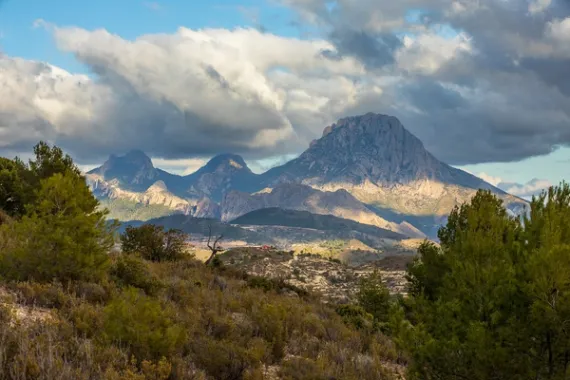
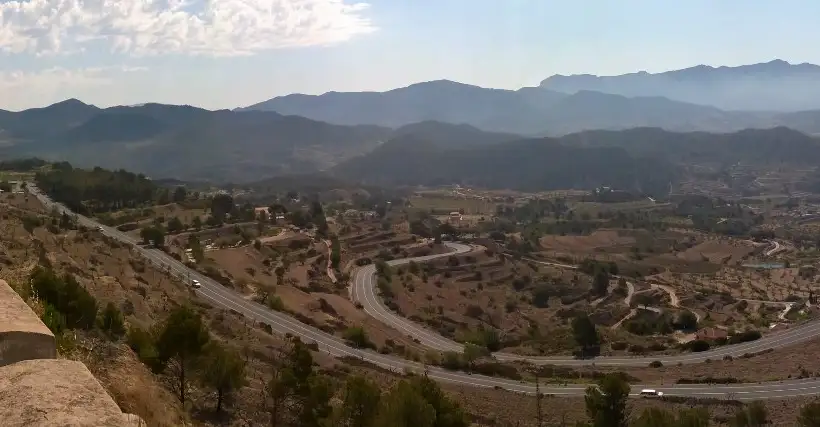
The legendary Port de la Carrasqueta, one of the most beautiful mountain passes in the south-east, linking Alcoy with Xixona, the home of turrón. A succession of bends and views stretching all the way to the Mediterranean.
Checking the route…
Roadbook
4 points- km 0Start
Alcoy
549 m - km 14.8
Port de la Carrasqueta
1,021 mA mountain pass at an altitude of 1,024 metres, overlooking the Mediterranean.
Viewpoint - km 28.2
Xixona
434 mThe world capital of nougat.
Village - km 65.2Finish
Alcoy
549 m
Take the route to Google Maps
- Alcoy
- Port de la Carrasqueta
- Xixona
- Alcoy
We add waypoints from the GPX so Google Maps sticks to the route's roads (they show up as extra stops). To follow the exact track, use the GPX.
Profile
420 → 1,021 mRoadbook distances and heights come from the route GPX.
Highlights
- 01Port de la Carrasqueta (1,024 m)
- 02Viewpoint overlooking the Mediterranean
- 03Xixona: the birthplace of turrón
- 04CV-800: perfect tarmac and continuous bends
About this route
The Port de la Carrasqueta (1,024 m) is one of the most famous and technically challenging tarmac mountain passes in the whole of the Valencian Community, and an absolute favourite amongst motorcyclists in the east of the peninsula. The N-340a, which crosses it – known for decades as one of the ‘roads of a hundred bends’ – offers a continuous series of bends over more than 12 km of ascent, with the tarmac in very good condition, steady gradients and a landscape that changes with every clearing in the forest. It is one of those roads where the motorcyclist enters a state of total flow and doesn’t want to stop until they reach the summit.
The most interesting aspect of the Port de la Carrasqueta is its historical significance: for centuries it has been one of the most important natural passes between the Marina Alta and the Alcoià region, through which goods, travellers and armies passed. On clear days, the viewpoint at the top of the pass offers panoramic views stretching across the entire Mediterranean coast, from Cape Sant Antoni in the north to the peaks of the Serra Mariola in the south. It is one of the most comprehensive yet least well-known viewpoints in the centre of Alicante.
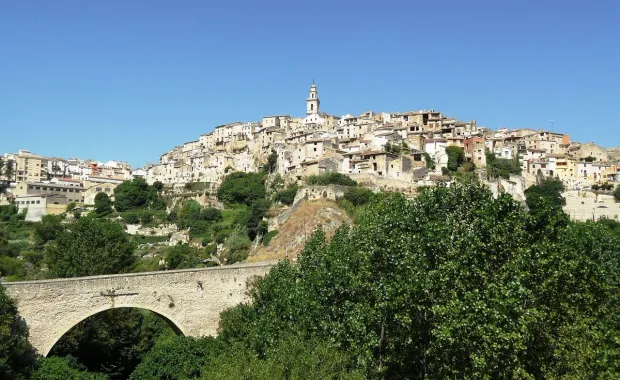
Alcoy, the starting point of the route, is a fascinating industrial and cultural surprise. During the 19th and early 20th centuries, it was one of the most important textile centres in the whole of Spain (known as ‘the Manchester of Valencia’), with textile mills, paper mills and metalworks that made it one of the most prosperous cities in the east of the peninsula. This industrial legacy has left the town with a Modernist architectural heritage that is unique in the entire Valencian Community: factory buildings converted into cultural spaces, bourgeois industrial palaces and, above all, the famous Modernist Industrial Complex, declared a Site of Cultural Interest. But Alcoy is also world-famous for its Moors and Christians festival, the oldest and most spectacular in the whole of Spain: every April, for three days, the city is transformed into an open-air theatre with thousands of participants dressed in historical costumes and parades lasting for hours.
Xixona, at the foot of the mountain pass, is the undisputed capital of turrón. It has been produced here since the 15th century — the first documented reference dates from 1484 — and its two varieties, ‘Jijona’ and ‘Turrón de Alicante’, are protected by their respective Protected Geographical Indications. The traditional method of production – local Marcona almonds mixed with pure orange blossom honey – has remained virtually unchanged for 500 years, and many families in Xixona still run small artisan workshops producing nougat of a quality that industrial brands simply cannot match. Visiting Xixona at the height of the production season (September–December) is a sensory experience: the aroma of toasted almonds and honey permeates the entire streets of the village.
Motorcycling tip: the route is short and challenging (some 65 km with plenty of technical bends), perfect for a focused morning’s ride. You can ride here practically all year round, although in the height of summer it gets very hot in the lower-lying areas. Fill up in Alcoy or Xixona. And a tip: if you’re going in April, try to time your visit to coincide with the Moors and Christians festival in Alcoy (usually held in the last week of the month). It’s a truly unique spectacle in Spain, and combining it with a motorbike trip means you can stay in nearby villages and head down to the festivities without the hassle of finding a parking space in Alcoy town centre.
Practical information
Weather
A good route almost all year round. There may be ice on the pass in the depths of winter.
Traffic
Moderate traffic. Port de la Carrasqueta is popular with motorcyclists at the weekends.
Fuel stops
Petrol stations in Alcoy and Xixona.
Where to stay on this route
The towns this route passes through — useful for splitting it into stages or sleeping near the start. Book ahead in high season.
- XixonaSee places to stay
- AlcoySee places to stay
Affiliate links: if you book through them, Nomadiq earns a small commission at no extra cost to you.
Published on