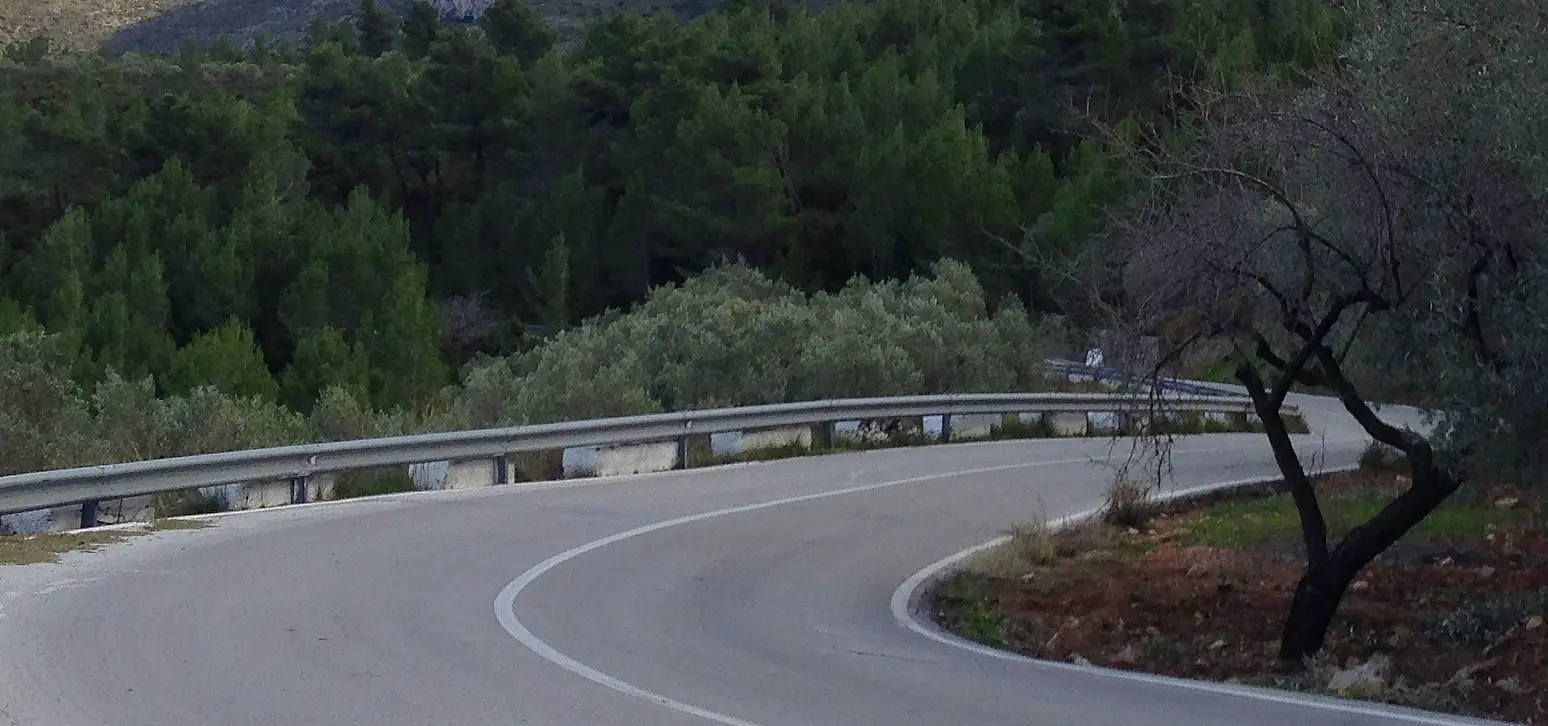
Coll de Rates from Parcent
Best Season
Good route all year round thanks to the coastal microclimate. Avoid summer midday.
The mythical Coll de Rates from Parcent, a mountain pass famous among cyclists and bikers in Northern Europe for its perfect asphalt and continuous curves with views of the Mediterranean.
Highlights
- 1Coll de Rates: the most famous pass for motorcyclists in the north
- 2CV-715: perfect tarmac and continuous curves
- 3Restaurante del Coll: a motorcyclist meeting point
- 4Vall de Pop: vineyards and sea views
About this route
Few roads so modest in altitude have achieved international fame like the Coll de Rates. At barely 626 metres above sea level, this mountain pass in the Marina Alta has become a place of pilgrimage for professional cyclists and motorcyclists from northern Europe, who every winter head down to Calpe, Dénia and Jávea seeking the Mediterranean sun and this perfect tarmac to prepare for the season. World Tour teams like Movistar, Jumbo and Ineos use it for their pre-season training, and on weekends it is common to spot German, Dutch and Belgian number plates on the valley's café terraces.
The climb starts in Parcent, a small village in the Vall de Pop at 290 metres, and it is barely 6.5 km to the summit. But in those 6.5 km the engineer who designed it allowed himself the luxury of fitting in more than forty bends with a mathematically regular layout: an average gradient of 5%, constant radii, intelligent cambers and tarmac that the Generalitat resurfaces with unusual frequency. The result is a road that practically rides itself, perfect for linking throttle and footpegs without surprises, where a well-set-up bike can enter and exit each corner at the exact same point.
The scenery is no less impressive. The Vall de Pop, nestled between the Carrascal and Migdia mountain ranges, was for centuries Moorish territory until the expulsion of 1609, which emptied entire villages overnight. The Mallorcan settlers who arrived afterwards brought their language and the cultivation of muscat grapes, which are still sun-dried today in the riu-raus — the open porches typical of Jalón, Llíber and Alcalalí — to produce the famous Dénia raisins, exported as far as England in the 19th century. The observant visitor will spot these riu-raus scattered throughout the valley on the way up from the coast.
At the summit awaits the Restaurante Coll de Rates, an institution for European motorcycling. It was opened in the 1970s by a Belgian couple who fell in love with the pass, and since then its walls have filled up with pennants, signed photos and cycling jerseys. The menu is simple — omelettes, sandwiches, strong coffee — but the real dish of the day is the conversation in five languages that flows across the terrace, with views of the Sierra de Bernia and, on clear days, the Peñón de Ifach jutting out above the sea.
A trick few tourists know: the north face of the pass, descending towards Castell de Castells along the CV-720, is even more spectacular than the climb from Parcent. Tighter bends, less traffic, views over an almost untouched inland valley, and the possibility of linking up with the Vall d'Ebo route without touching the coast again. If you go on a winter Sunday, set off early: from eleven onwards the main climb fills up with cycling pelotons and it pays to ride with patience. On weekdays, however, the pass can be literally all yours.
One last note for the historically curious: before it became a postcard road, this was a trade route between the agricultural interior and the fishing ports on the coast. Muleteers carried salted fish and raisins up to the valley villages and brought back wine, olive oil and, in times of hardship, contraband. The cobbled paths still visible alongside the tarmac in some stretches are traces of that activity. The Coll de Rates, before it was legendary, was simply what connects the mountains to the sea — and that, thinks the rider who stops halfway up to take a photo, is still the best thing about the pass.
Route stops
Jalón / Xaló
Village
A village in the Vall de Pop, famous for its wine cellars.
Parcent
Village
Base of the mythical Coll de Rates.
Coll de Rates
Viewpoint
Pass at 626 m, mythical among bikers and cyclists.
Practical information
Weather
Good route all year round thanks to the coastal microclimate. Avoid summer midday.
Traffic
Moderate traffic. Many cyclists and motorbikes from Northern Europe all year round.
Fuel stops
Petrol stations in Calpe, Benissa and Jalón.
Where to stay on this route
The towns this route passes through — useful for splitting it into stages or sleeping near the start. Book ahead in high season.
- Jalón / XalóSee places to stay
- ParcentSee places to stay
- CalpeSee places to stay
Affiliate links: if you book through them, Nomadiq earns a small commission at no extra cost to you.
Related routes
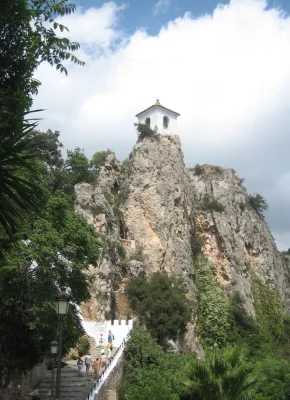
Guadalest, Callosa and Tarbena
Valencian Community
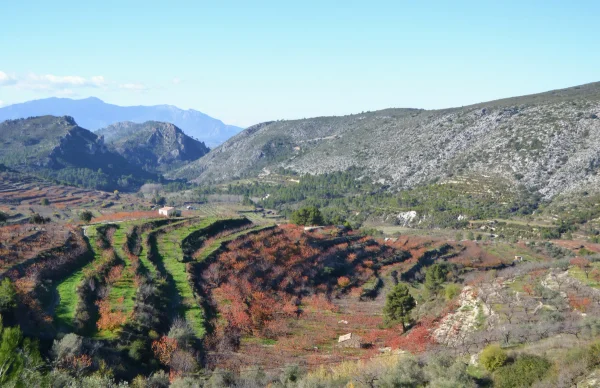
Vall de Gallinera - Moorish Villages
Valencian Community
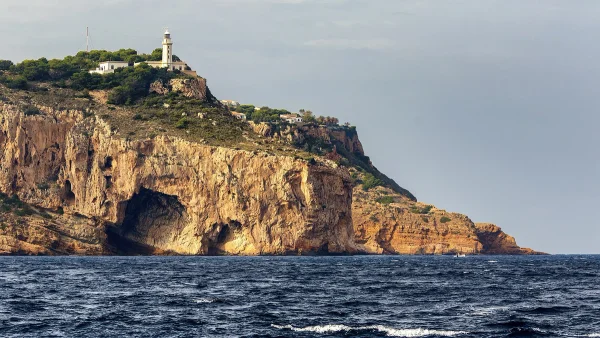
Cabo de la Nao: Jávea and Moraira
Valencian Community
Vall d'Ebo, Vall d'Alcalà and Castell de Castells
Valencian Community