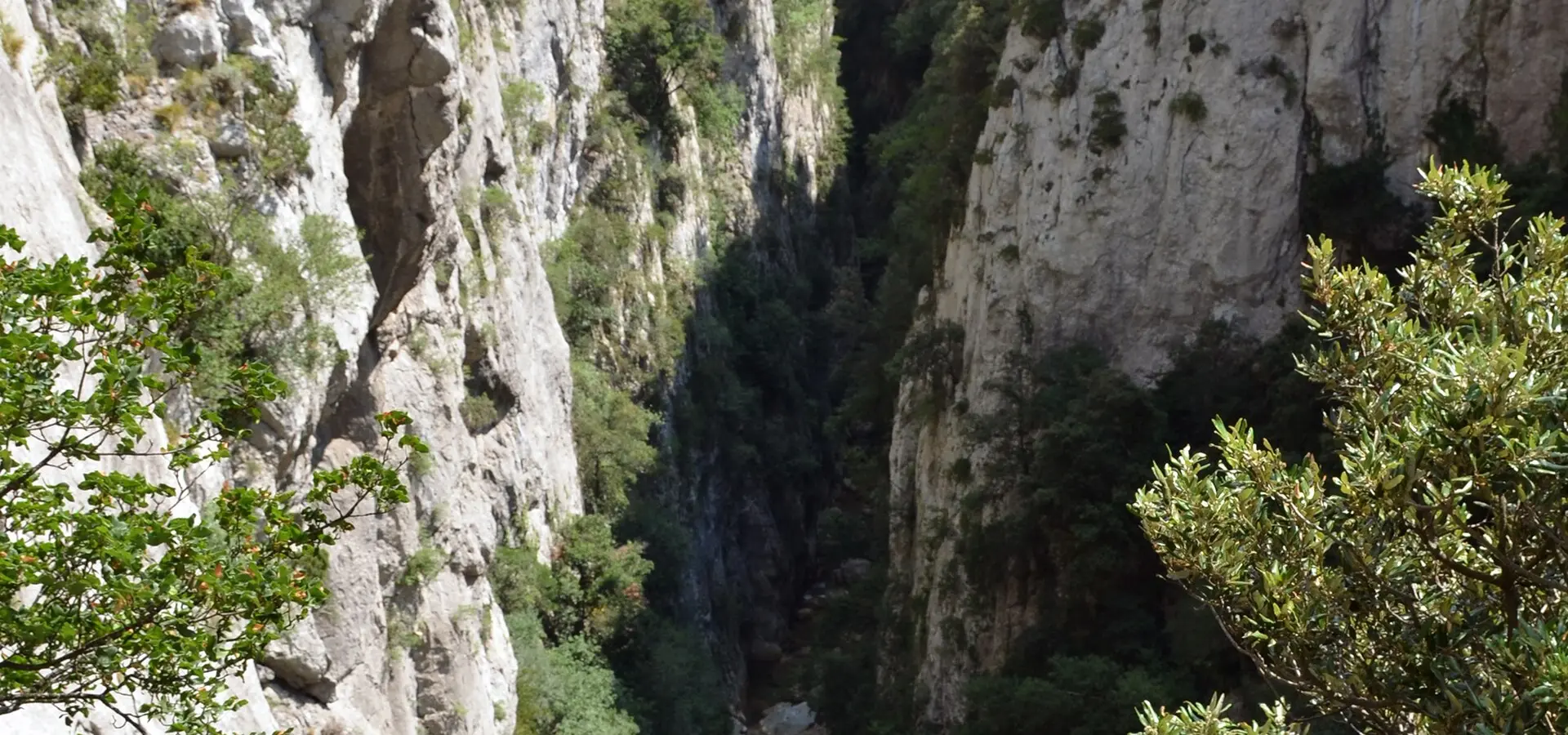
Gorges de Galamus and Pays Cathare hinterland
Best Season
Mediterranean. Beware of autumn rains which can make the canyon road slippery.
The Gorges de Galamus, a narrow canyon with a hermitage hanging on the wall, and a technical route through the inner Pays Cathare with empty roads and wild garrigue landscapes.
Highlights
- 1Gorges de Galamus: a canyon with a road carved into the rock
- 2Ermitage de Saint-Antoine: a chapel clinging to the cliff face
- 3Technical roads in the inland Cathar region
- 4A landscape of wild garrigue
About this route
The Gorges de Galamus are probably the most spectacular and, at the same time, most accessible canyon in the whole of southern France. Over millions of years, the River Agly has carved out a narrow gorge barely 500 metres long but with vertical walls over 200 metres high, so narrow in places that sunlight barely reaches the bottom. The D7 road that runs through it is a real adventure: carved into the very wall of the gorge, with hairpin bends, narrow tunnels and natural vantage points where you can stop (there’s little space, but enough for a motorbike) to look down into the abyss below.
In the heart of the gorge, literally clinging to the vertical cliff face, lies the Ermitage de Saint-Antoine de Galamus, a rock-hewn hermitage built in the 7th century inside a natural cave halfway up the cliff. It is accessed via a staircase carved into the rock and admission is free. The interior is a tiny chapel with a medieval altar and views of the gorge that are arguably the most breathtaking in the whole of Languedoc. It is one of those places that seems impossible until you are actually inside.
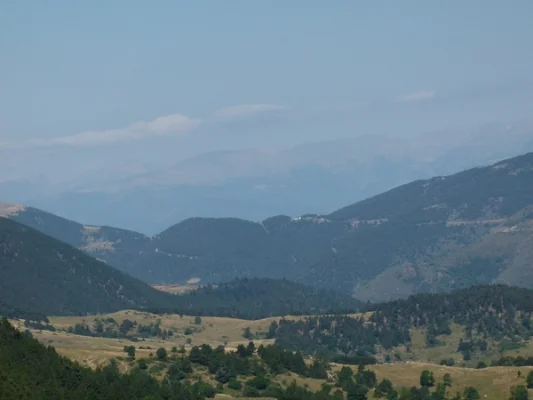
The inland Cathar country surrounding the Gorges de Galamus is a rugged and desolate landscape: limestone hills covered in garrigue (thyme, rosemary, rockrose, stunted holm oaks), steep-sided valleys with crystal-clear rivers, and tiny stone villages that have remained unchanged for five centuries. The population density is so low that many inland villages have fewer residents than houses, and the departmental roads linking them are a motorcyclist’s paradise: well-maintained tarmac, constant technical bends, and the almost absolute guarantee that you won’t come across another vehicle for kilometres on end.
The route takes in villages such as Saint-Paul-de-Fenouillet (a natural base for exploring the Gorges), Caudiès-de-Fenouillèdes (with its ruined castle perched on a cliff), and the detour to the Gorges de l’Agly further south, which are less well-known but equally impressive. The landscape bears a striking resemblance to the mountain ranges in the interior of the Valencian Community or Alicante: the same light, the same garrigue vegetation, the same Mediterranean aridity – all of which makes Spanish motorcyclists feel, curiously enough, ‘at home’ as they ride through these French countryside roads.
Riding tips: the D7 through the Gorges de Galamus is narrow and technical; passing a car coming in the opposite direction can be tricky. It’s best to go early or outside the peak season. Season: March–November. Fill up at Saint-Paul-de-Fenouillet or Quillan. For a bite to eat, the Relais des Corbières in Saint-Paul-de-Fenouillet serves simple but hearty Languedoc cuisine. And a tip: the Saint-Antoine chapel closes at sunset, so plan your stop for mid-morning or early afternoon so you can head down and have a leisurely look around.
Route stops
Gorges de Galamus
Viewpoint
Narrow canyon with a hanging hermitage.
Ermitage Saint-Antoine
Monument
Cave hermitage from the 7th century.
Caudiès-de-Fenouillèdes
Village
Village with ruined castle.
Practical information
Weather
Mediterranean. Beware of autumn rains which can make the canyon road slippery.
Traffic
Very low traffic. Gorges de Galamus: narrow road, caution.
Fuel stops
Petrol stations in Saint-Paul-de-Fenouillet and Quillan.
Where to stay on this route
The towns this route passes through — useful for splitting it into stages or sleeping near the start. Book ahead in high season.
- Ermitage Saint-AntoineSee places to stay
- Caudiès-de-FenouillèdesSee places to stay
- Saint-Paul-de-FenouilletSee places to stay
Affiliate links: if you book through them, Nomadiq earns a small commission at no extra cost to you.
Related routes
Châteaux Cathares: Peyrepertuse, Quéribus and Puilaurens
Languedoc and Cathar Country
Carcassonne and Corbières
Languedoc and Cathar Country
Volcanic Garrotxa: Olot and Santa Pau
Catalonia
Vall de Núria, Toses and Ribes de Freser
Catalonia