Carcassonne and Corbières
Best Season
Mediterranean climate. Hot in summer. Better spring and autumn.
The Cité de Carcassonne, the largest medieval citadel in Europe, and a tour of the Corbières: wild vineyards, garrigues, abbeys and empty roads in deep Languedoc.
Highlights
- 1Cité de Carcassonne (UNESCO): largest medieval citadel in Europe
- 2Fontfroide Abbey: Cistercian masterpiece
- 3Lagrasse: one of the most beautiful villages in France
- 4Wild vineyards of the Corbières
About this route
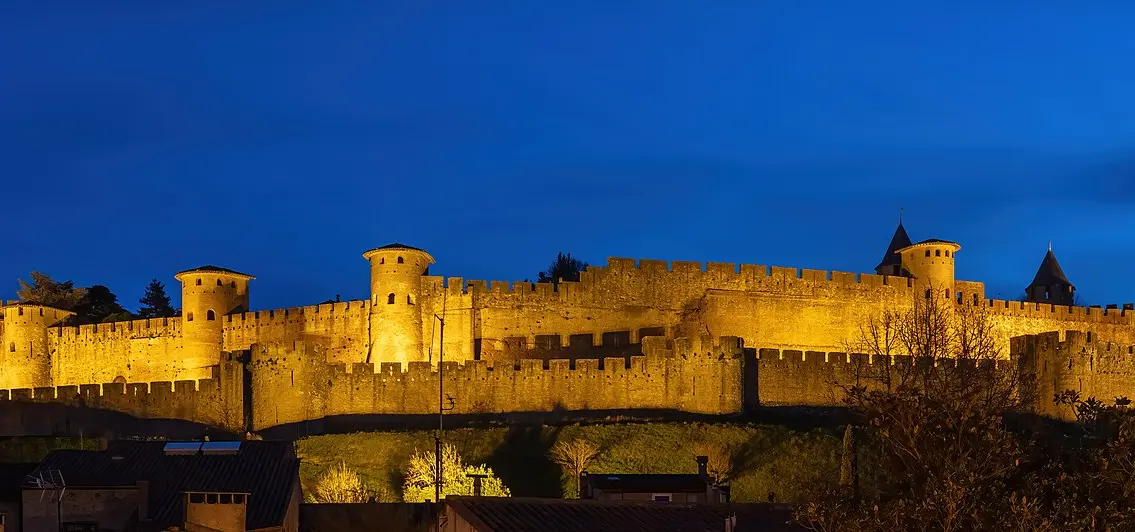
The Cité de Carcassonne is the largest fortified medieval citadel in all of Europe: 52 towers, 3 km of double walls, a 12th-century comital castle at its heart, and a state of preservation (thanks to Viollet-le-Duc's 19th-century restoration) that makes every visitor feel as though they have stepped into the 13th century. It was inscribed as a UNESCO World Heritage Site in 1997 and draws over 4 million visitors a year. For the biker, the first sight of the citadel from the approach road — especially at sunset, when the golden stone glows against the sky — is one of those moments that make the entire trip worthwhile.
But the Cité is merely the starting point. The true motorcycling gem of this route is the Corbières, a region of hills and garrigues (aromatic Mediterranean scrubland) between Carcassonne and the sea, home to some of the wildest vineyards and emptiest roads in all of France. The Corbières produce red wines of character (A.O.C. Corbières, one of the largest appellations in France) from varieties like carignan, grenache, and syrah, grown on arid limestone and schist soils that recall Catalonia's Priorat more than Provence. The roads threading through the area are narrow, winding, and utterly deserted.
The itinerary takes in a series of stunning medieval abbeys: Fontfroide, one of the most beautiful Cistercian abbeys in southern France, nestled in a valley among cypresses and vineyards; Lagrasse, ranked among the most beautiful villages in France, with its 8th-century Benedictine abbey on the banks of the River Orbieu; and the castles of Termes and Villerouge-Termenès — less famous than the great Cathar fortresses to the north but equally spectacular in their positions atop isolated crags.
The roads of the Corbières are among the finest in southern France for riding. The D611, D613, and the smaller departmental roads linking the villages and abbeys are perfect: well-maintained tarmac, continuous but gentle curves, no traffic outside August, and a landscape alternating between vineyards, aromatic garrigues, and limestone hills. The scent of the garrigue in summer — rosemary, thyme, wild lavender heated by the Mediterranean sun — fills the air and creates a truly sensory riding experience.
Practical tips for riders: the Corbières are accessible year-round thanks to the Mediterranean climate. Summer gets very hot (35-40 C); spring and autumn are preferable. Fuel up in Carcassonne or Narbonne. For dining, the Restaurante Le Moulin in Lagrasse serves Languedoc cuisine featuring cassoulet (the flagship regional dish) paired with local Corbières wines. A useful tip: entry to the Cité de Carcassonne is free (only the ramparts and castle require a ticket), so you can stroll the medieval streets at any time. Arriving at dawn, before 9 AM, lets you experience the citadel almost entirely to yourself.
Route stops
Cité de Carcassonne
Monument
Europe's largest medieval citadel.
Abadía de Fontfroide
Monument
12th century Cistercian abbey.
Lagrasse
Village
Medieval village with Benedictine abbey.
Practical information
Weather
Mediterranean climate. Hot in summer. Better spring and autumn.
Traffic
Carcassonne overcrowded in summer. Corbières almost empty.
Fuel stops
Petrol stations in Carcassonne, Lézignan-Corbières and Narbonne.
Where to stay on this route
The towns this route passes through — useful for splitting it into stages or sleeping near the start. Book ahead in high season.
- Cité de CarcassonneSee places to stay
- Abadía de FontfroideSee places to stay
- LagrasseSee places to stay
Affiliate links: if you book through them, Nomadiq earns a small commission at no extra cost to you.
Related routes
Châteaux Cathares: Peyrepertuse, Quéribus and Puilaurens
Languedoc and Cathar Country
Gorges de Galamus and Pays Cathare hinterland
Languedoc and Cathar Country
Foix, Montségur and the Cathar castles of Ariège
French Pyrenees
Canal du Midi: Toulouse to Béziers
Languedoc and Cathar Country