
Val Gardena and Alpe di Siusi: the Infinite Meadow
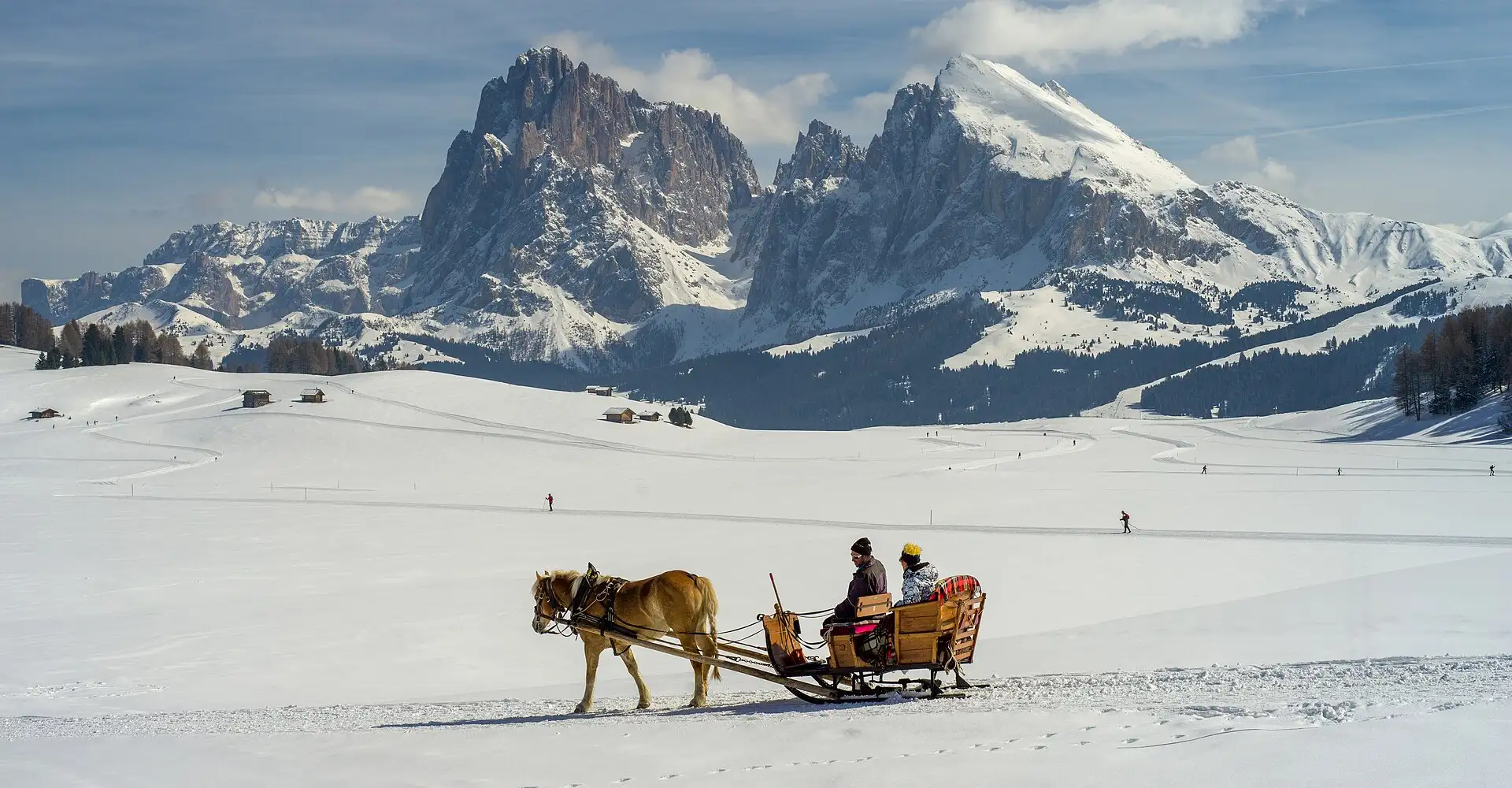
The Alpe di Siusi is Europe's largest alpine meadow (56 km2), a green sea of grass with the Dolomite spires as backdrop. Val Gardena adds Ladin villages, woodcarving and Tyrolean gastronomy.
Checking the route…
Roadbook
5 points- Start
Ortisei
Ortisei (St. Ulrich)
Capital of Val Gardena, centre of Ladin woodcarving.
VillageCompatsch (Alpe di Siusi)
Access to Europe's largest alpine meadow.
ViewpointSelva di Val Gardena
Ladin village at the foot of the Gardena Pass and Sella Ronda.
Village- Finish
Ortisei
Take the route to Google Maps
- Ortisei
- Compatsch (Alpe di Siusi)
- Selva di Val Gardena
- Ortisei
We add waypoints from the GPX so Google Maps sticks to the route's roads (they show up as extra stops). To follow the exact track, use the GPX.
Highlights
- 01Alpe di Siusi: Europe's largest alpine meadow (56 km²)
- 02Val Gardena: Ladin culture and woodcarving
- 03The Sassolungo and Sciliar towers as a backdrop
- 04Ladin food: turtres, cajincí and Alto Adige wines
About this route
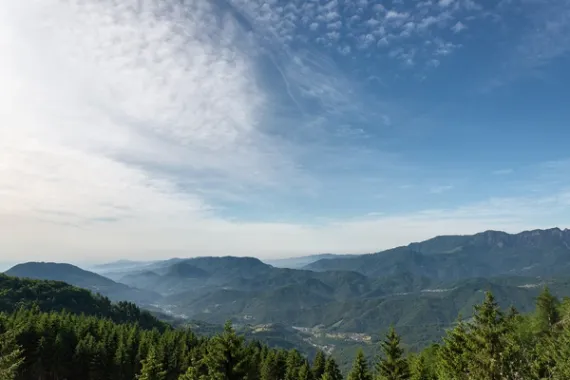
The Alpe di Siusi (Seiser Alm in German) is a natural phenomenon with no equivalent in the Alps: a 56 km² grass meadow — the largest in Europe — suspended at 1,800 metres between the Dolomite massifs of the Sassolungo and the Sciliar. Seen from above it looks like an enormous green table laid out among the rock towers, with isolated farms, winding paths and grazing cattle like tiny specks on an impossibly green canvas. It is one of the most photographed landscapes in the Dolomites and, for many travellers, the image that defines what an "alpine meadow" means.
The geology of the Alpe di Siusi is an anomaly: the plateau is formed on a platform of Permian (260 million years old) sandstones and marls, relatively soft rocks that erosion has levelled, creating an almost flat surface surrounded by towers of much harder dolomite. It is literally an island of soft rock in a sea of hard rock, and it is this difference in resistance to erosion that has created this unique landscape: a green plateau surrounded by vertical cliffs.
Val Gardena (Gherdeina in Ladin) is one of the three Ladin valleys in the Dolomites, where Dolomite Ladin (a Rhaeto-Romance language directly descended from Vulgar Latin) is spoken. The villages of Ortisei, Santa Cristina and Selva di Val Gardena are centres of the woodcarving tradition dating back to the 17th century: religious sculptures, nativity figures, masks and decorative objects carved from Swiss stone pine using craftsmanship passed down from generation to generation.
Val Gardena's food is the most distinctly Ladin in the Dolomites: turtres (fried pastries filled with spinach, sauerkraut or curd cheese), cajincí (Ladin ravioli filled with spinach and curd cheese), crafuncins (Ladin dumplings with various fillings), and buckwheat cake with lingonberry jam. All washed down with Alto Adige wines (Gewürztraminer, Lagrein, Schiava), among the most aromatic whites and most elegant reds in all of Italy.
Practical notes: access to the Alpe di Siusi by private vehicle is restricted (permitted only before 09:00 and after 17:00 in summer). The alternative is to park at Compatsch and go up by cable car, leaving the bike in the car park. The valley road (SS242) linking Ortisei with the Passo Gardena and the Passo Sella is excellent and is the natural way into the Sella Ronda. Fuel in Ortisei and Selva. The route works perfectly as a rest day between hard days of passes.
Practical information
Weather
Accessible May-October. Pleasant summer (15-25C). Afternoon storms July-August.
Traffic
Alpe access restricted by schedule. Valley with moderate traffic. Frequent cyclists.
Fuel stops
Petrol stations in Ortisei and Selva di Val Gardena.
Where to stay on this route
The towns this route passes through — useful for splitting it into stages or sleeping near the start. Book ahead in high season.
- Ortisei (St. Ulrich)See places to stay
- Selva di Val GardenaSee places to stay
- OrtiseiSee places to stay
Affiliate links: if you book through them, Nomadiq earns a small commission at no extra cost to you.
Published on
Related routes
Dolomites and Italian Alps
Sella Ronda: the 4 Dolomite Passes
Dolomites and Italian Alps
Tre Cime di Lavaredo: Icons of the Dolomites
Dolomites and Italian Alps
Gavia Pass: the Wild Pass
Dolomites and Italian Alps