Gavia Pass: the Wild Pass
Best Season
Open mid-June to mid-October. Rapid weather changes. Storm possible at summit with sunshine below. Intense cold at summit.
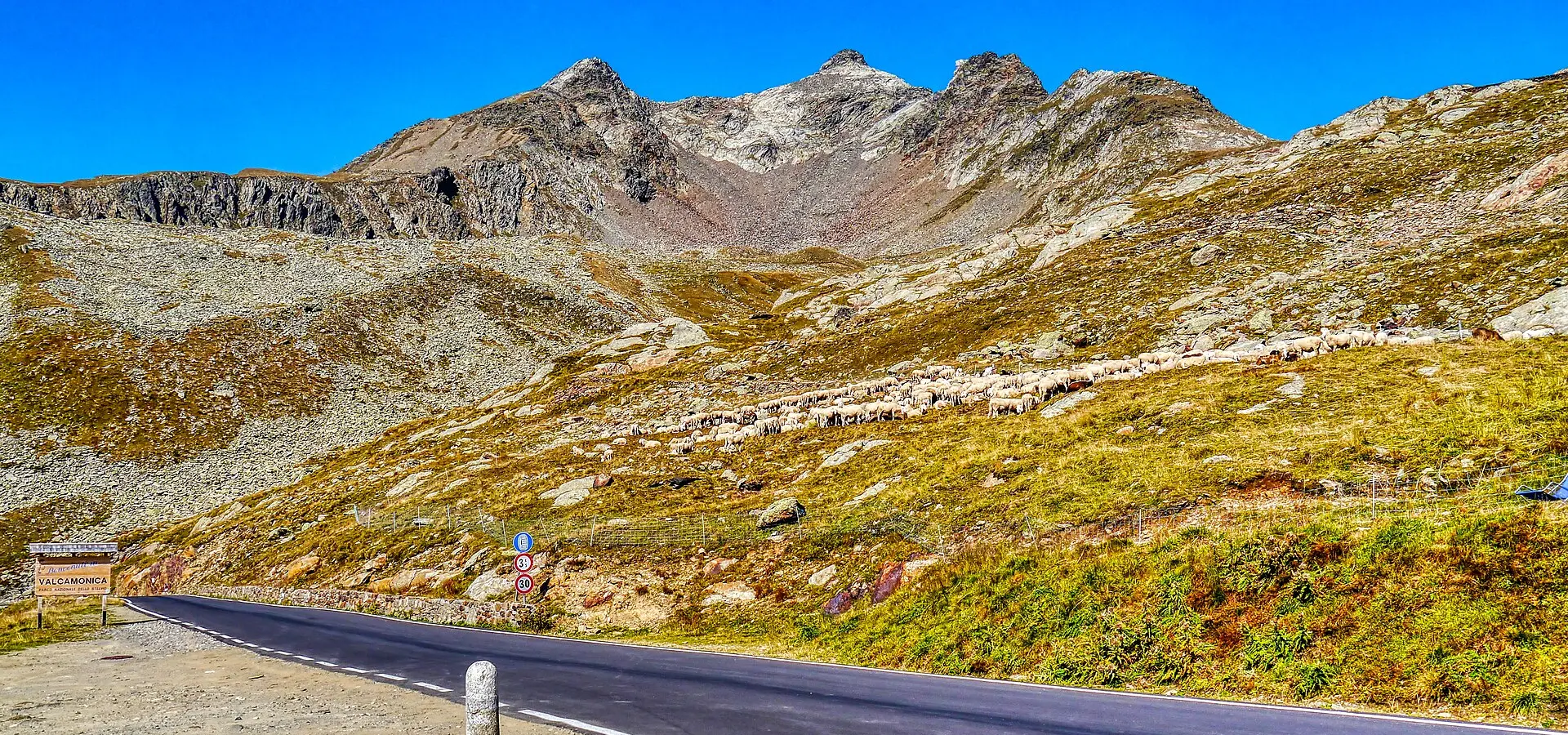
The Gavia Pass (2,621 m) is the wildest and loneliest pass in the Italian Alps. A narrow road without guardrails, climbing between glaciers and scree to a summit where silence is absolute.
Highlights
- 1Gavia (2,621 m): the wildest pass in the Italian Alps
- 2Narrow road with no crash barriers: pure Alpine experience
- 3Lago Bianco: glacial lake at the summit
- 4Cycling history: the epic 1988 Giro stage
About this route
The Passo del Gavia is the perfect antidote to the mass tourism of the Stelvio. Located just 30 km south of its famous neighbour, the Gavia reaches 2,621 metres via a road that retains the character of a mountain track that the Stelvio lost decades ago: narrow (barely room for two cars in many stretches), with no crash barriers on the most exposed sections, and asphalt that sometimes gives way to concrete or even gravel in the final metres before the summit. This is a pass for experienced riders seeking the raw Alpine experience, with no tourist infrastructure, no souvenir shops, no coaches.
The geology of the Gavia is the most complex in the Lombard Alps: the road crosses three different geological units on its ascent, from the Mesozoic limestones on the valley floor to the mica schists and gneiss of the Alpine crystalline core at the top. The glaciers of the Ortler-Cevedale group, visible from the road on the northern side, are among the last Alpine glaciers that still retain a significant volume of ice, although their retreat is visible year after year. At the summit, a small glacial lake (Lago Bianco) mirrors the surrounding peaks.
The Gavia is famous in cycling history for the epic stage of the 1988 Giro d'Italia, when a snowstorm at the summit forced riders to descend virtually frozen, with sub-zero temperatures and zero visibility. Andy Hampsten, the only American ever to win the Giro, seized the lead on that legendary stage. For the motorcyclist, the anecdote is a reminder that the Gavia is a pass where weather can change radically within minutes: blazing sunshine in Ponte di Legno (the southern base) and a hailstorm at the summit, just 20 km away.
Ponte di Legno, the gateway town on the southern side, is a skiing and mountain centre with a tourist tradition spanning more than a century. Its position at the confluence of three valleys makes it a perfect crossroads: from Ponte di Legno you can climb the Gavia (north), the Tonale (east) and the Mortirolo (southeast) in a single epic day. The cuisine of the Val Camonica (Ponte di Legno's valley) includes casoncelli (ravioli stuffed with meat and breadcrumbs in butter and sage), polenta taragna (polenta with mountain cheese) and spiedo bresciano (mixed meats roasted on a spit).
Practical tips for riders: the Gavia is normally open from mid-June to mid-October. The road is narrow with blind corners — always sound your horn on tight bends. There is no fuel station between Ponte di Legno and Bormio (the northern side), a 40 km stretch of mountain road. Traffic is far lighter than on the Stelvio, but on August weekends there can be queues on the narrowest sections. The best time is morning, when the southern side is lit by the sun.
Route stops
Ponte di Legno
Village
Alpine centre and base for three great passes.
Passo del Gavia (2.621 m)
Viewpoint
Wild summit with glacial lake and views of the Ortler group.
Lago Bianco
Viewpoint
Glacial lake at the Gavia summit, reflecting the peaks.
Practical information
Weather
Open mid-June to mid-October. Rapid weather changes. Storm possible at summit with sunshine below. Intense cold at summit.
Traffic
Low traffic compared to Stelvio. Blind corners: use horn. Narrow sections with waiting.
Fuel stops
Petrol stations in Ponte di Legno and Bormio. Nothing for 40 km between them.
Where to stay on this route
The towns this route passes through — useful for splitting it into stages or sleeping near the start. Book ahead in high season.
- Ponte di LegnoSee places to stay
Affiliate links: if you book through them, Nomadiq earns a small commission at no extra cost to you.
Related routes
Mortirolo Pass: Cycling's Steepest Ramp
Dolomites and Italian Alps
Stelvio Pass: the Legendary 48 Hairpins
Dolomites and Italian Alps
Lake Garda: the Gardesana Occidentale
Dolomites and Italian Alps
Splugen Pass: the Historic Italo-Swiss Route
Dolomites and Italian Alps