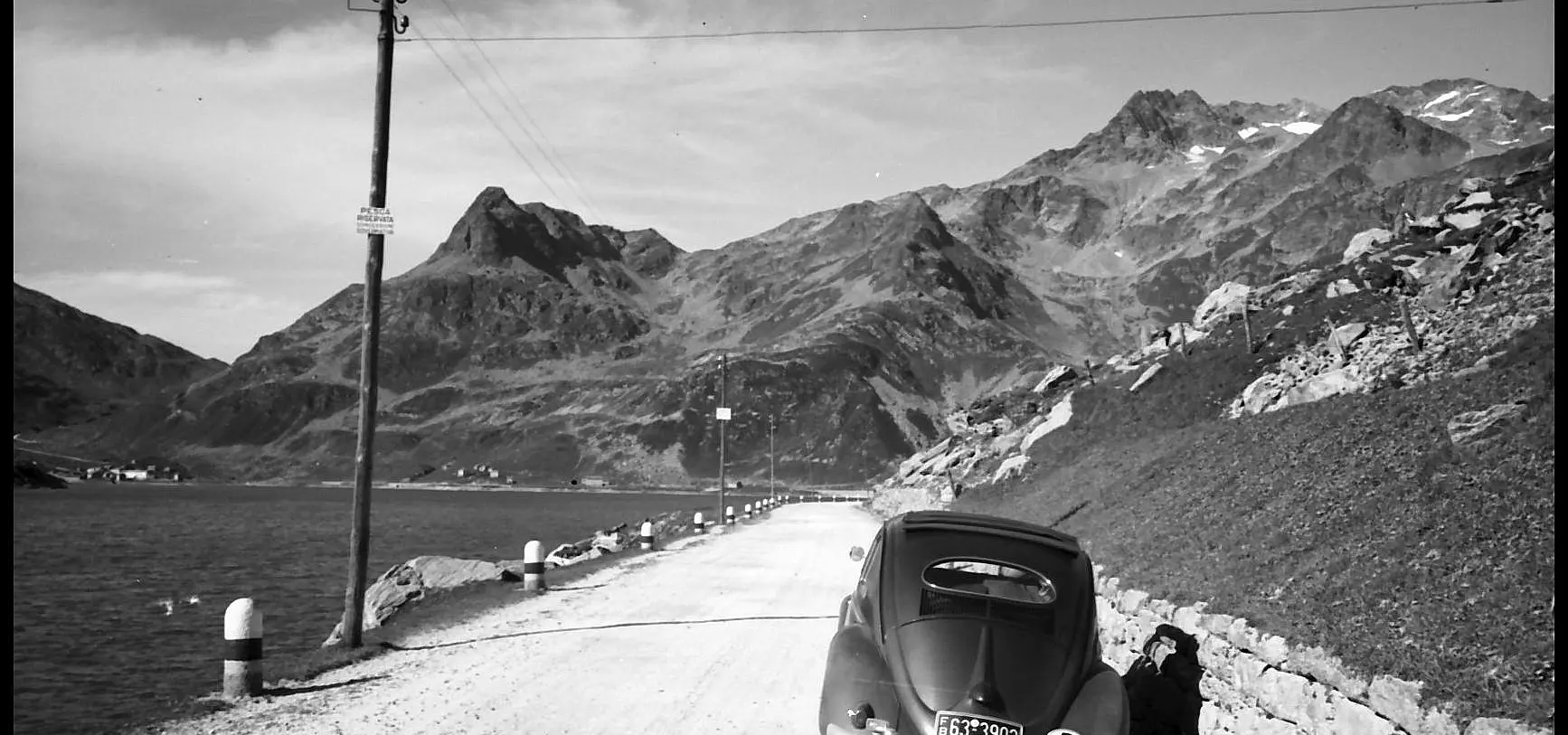
Splugen Pass: the Historic Italo-Swiss Route
Best Season
Open June-October. Cobblestones slippery when wet: caution. Cool at summit.
The Splugen Pass (2,113 m) is an Italian-Swiss border pass with historic cobblestone sections, extremely tight bends and an anachronistic charm that makes it a favourite of riders seeking alpine authenticity.
Highlights
- 1Preserved 19th-century cobblestones
- 2Via Spluga: a gorge with waterfalls sketched by Leonardo
- 3Crotti di Chiavenna: unique cave restaurants in the Alps
- 4The Italian-Swiss border at the top of the mountain pass
About this route
The Spluga Pass is one of those Alpine roads that seem to have been frozen in time. Whilst its more famous neighbours (Stelvio, Gotthard, San Bernardino) have been modernised, widened and resurfaced to motorway standards, the Spluga retains sections of original 19th-century cobblestones, tight bends that demand precise motorcycling manoeuvres, and a width that, in some places, barely allows a single vehicle to pass. It is the perfect mountain pass for the motorcyclist who values authenticity over comfort.
The history of the Spluga as a transalpine route dates back to Roman times: it was one of the passes used to link Lombardy with Rhaetia (now the Swiss canton of Graubünden). In the Middle Ages, it was an important trade route, and the present-day road was built between 1818 and 1823 by the engineer Carlo Donegani, the same man who designed the Stelvio Pass. The surviving sections of cobblestones form part of Donegani’s original carriageway, an engineering heritage that Italy and Switzerland have decided to preserve rather than asphalt.
The Italian (southern) side is the most spectacular: the road descends from Montespluga (the highest village on the pass) to Chiavenna via the Via Spluga, a narrow gorge where the River Liro has carved a deep canyon between walls of gneiss. The Cascate dell’Acquafraggia, near Chiavenna, are a double waterfall with a drop of 170 metres, visible from the road, which Leonardo da Vinci sketched in his notebooks during his journey through the Alps. The Swiss side is more open and pastoral, with alpine meadows and the charming village of Splügen.
Chiavenna, the base town on the Italian side, is a gastronomic delight: its crotti (natural caves with constant-temperature ventilation, used as cellars since Roman times) are now restaurants serving bresaola with olive oil and lemon, pizzoccheri, violini di capra (air-dried goat jerky) and a selection of mountain cheeses, washed down with wines from Valtellina. Dining in a crotto in Chiavenna is a unique experience in the Alps.
Motorcycling tip: the Spluga Pass is open from June to October. The cobbled sections require caution (reduce your speed, especially in wet conditions). The Italian-Swiss border at the summit is unmanned (Schengen area), but the Swiss vignette (electronic toll sticker) is compulsory for driving on motorways in Switzerland. Petrol stations are available in Chiavenna (Italy) and Thusis (Switzerland). Traffic is light compared with other Alpine passes, making the Spluga a well-kept secret.
Route stops
Chiavenna
Village
Alpine town with crotti (cave restaurants) and waterfalls.
Montespluga
Village
Highest village on the pass with artificial lake and historic cobblestones.
Splügen (Suiza)
Village
Charming Swiss village on the northern side of the pass.
Practical information
Weather
Open June-October. Cobblestones slippery when wet: caution. Cool at summit.
Traffic
Low traffic. Very narrow sections with no overtaking.
Fuel stops
Petrol stations in Chiavenna and Thusis. Nothing on the pass.
Where to stay on this route
The towns this route passes through — useful for splitting it into stages or sleeping near the start. Book ahead in high season.
- ChiavennaSee places to stay
- MontesplugaSee places to stay
- Splügen (Suiza)See places to stay
Affiliate links: if you book through them, Nomadiq earns a small commission at no extra cost to you.
Related routes
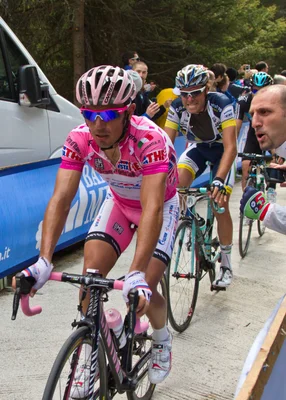
Mortirolo Pass: Cycling's Steepest Ramp
Dolomites and Italian Alps
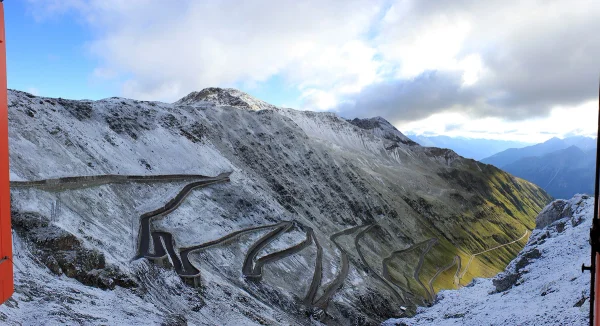
Stelvio Pass: the Legendary 48 Hairpins
Dolomites and Italian Alps
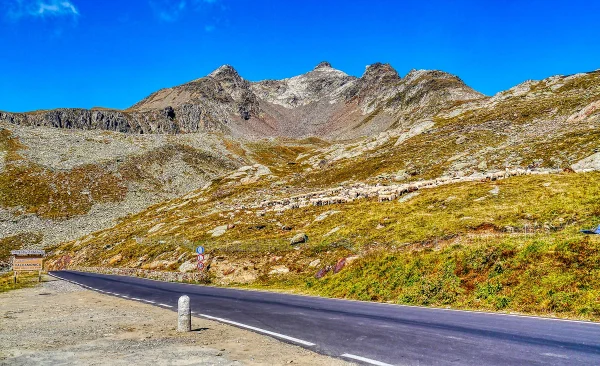
Gavia Pass: the Wild Pass
Dolomites and Italian Alps
Lake Garda: the Gardesana Occidentale
Dolomites and Italian Alps