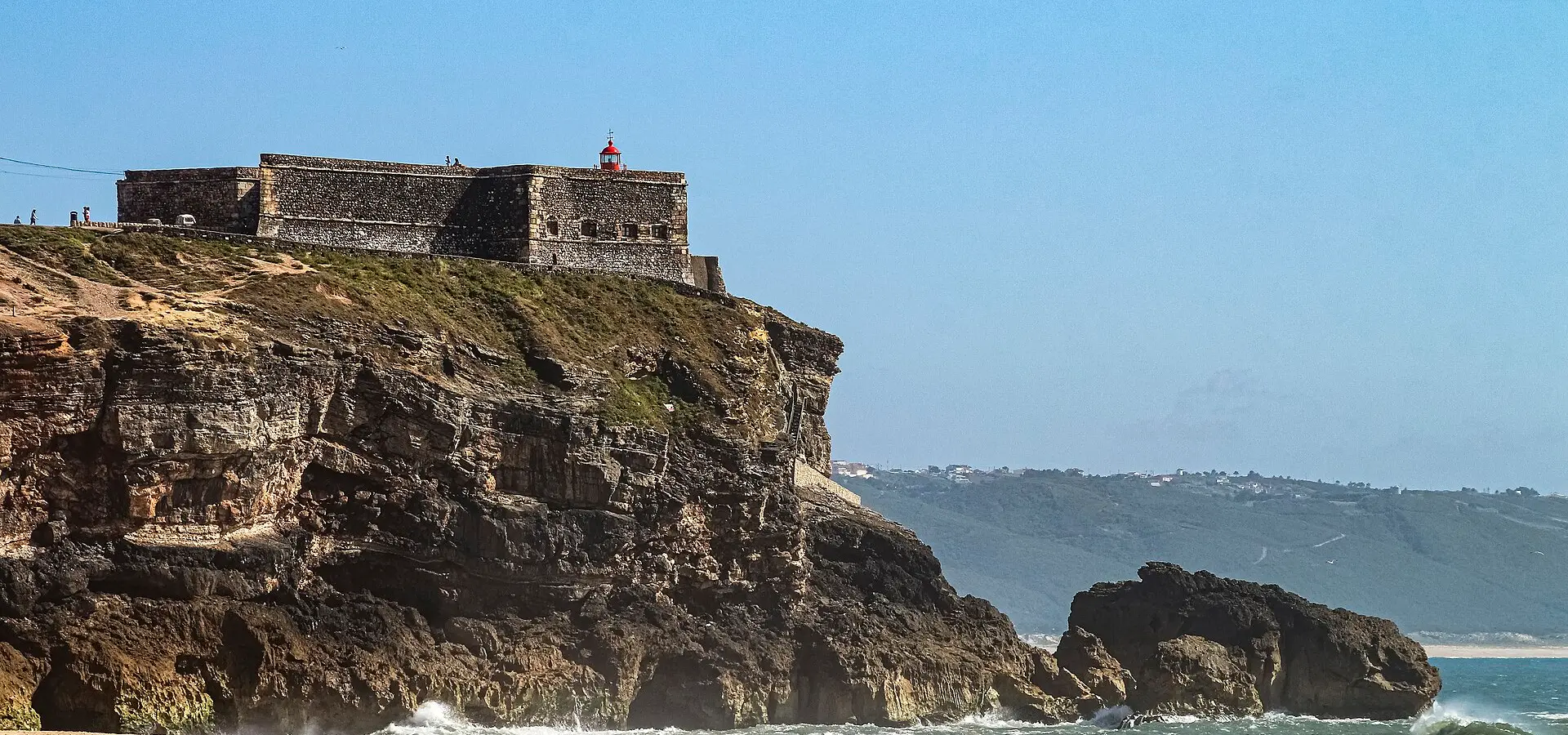
Nazaré and the Silver Coast
Best Season
Atlantic: rain possible. Big waves November-February. Accessible all year.
Nazaré (the world's biggest waves), Óbidos (walled medieval town), Batalha (Gothic monastery UNESCO) and the Portuguese Silver Coast. Surf, history and Atlantic.
Highlights
- 1Nazaré: the world’s biggest waves (26 m)
- 2Óbidos: the perfect walled medieval town
- 3Batalha Monastery (UNESCO)
- 4Ginjinha from Óbidos in a chocolate glass
About this route
In recent years, Nazaré has become the world’s most famous surfing spot thanks to the Nazaré Canyon, an underwater fault 5,000 metres deep that channels the Atlantic waves and amplifies them to absolutely colossal heights: the current record stands at over 26 metres – the height of an eight-storey building. In winter (November–February), when storms from the North Atlantic send their waves towards the Portuguese coast, surfers from all over the world gather at the São Miguel Arcanjo lighthouse (accessible by motorbike) to surf or simply watch these monstrous waves. It is a natural spectacle that is absolutely unique in Europe.
But Nazaré is also a fishing village with its own fascinating culture. The women of Nazaré still wear (some, especially the older ones) the ‘sete saias’ (seven skirts), a traditional costume consisting of layers of colourful fabric, the exact origin of which is unknown but which dates back at least to the 18th century. The Sítio neighbourhood, perched atop the cliff and accessible by funicular, offers the best panoramic view of the beach and the Canyon, and the chapel of Nossa Senhora da Nazaré houses an image of the Virgin Mary which, according to tradition, was brought from the Holy Land in the 4th century.
Óbidos, just 30 km to the south, is one of the finest medieval towns in the whole of the Iberian Peninsula. It is completely walled, with 14th-century ramparts still intact, cobbled streets, white houses adorned with bougainvillea, churches, and a monumental gateway decorated with 18th-century tiles. Óbidos Castle is now a pousada (historic hotel) and the whole town has the feel of a perfectly preserved medieval miniature. Óbidos is famous for its ginjinha, a sour cherry liqueur served in little cups made of edible chocolate.
The Monastery of Batalha (UNESCO), 40 km north of Óbidos, is one of the absolute masterpieces of late European Gothic architecture. It was built on the orders of King John I to commemorate the Portuguese victory over Castile at the Battle of Aljubarrota (1385), and its Manueline style (Portuguese late Gothic with maritime motifs) is of a splendour and complexity that rival the finest cathedrals of France and England.
Motorcycling tips: the Silver Coast is accessible all year round, with an Atlantic climate. The coastal roads (N242, N8) are easy to ride on. To see the big waves at Nazaré, go between November and February and check the wave forecast beforehand. When it comes to eating out in Nazaré, the fresh, charcoal-grilled fish at the harbour restaurants is spectacular and inexpensive. And here’s the ultimate tip: if you’re heading to Óbidos, buy a ginjinha served in a chocolate cup from any stall at the entrance – it’s the most iconic culinary experience on the entire Silver Coast.
Route stops
Faro de São Miguel Arcanjo
Viewpoint
Viewpoint for the giant waves of the Nazaré Canyon.
Óbidos
Monument
Walled medieval town with ginjinha liqueur.
Monasterio de Batalha
Monument
Masterpiece of Manueline Gothic (UNESCO).
Practical information
Weather
Atlantic: rain possible. Big waves November-February. Accessible all year.
Traffic
Moderate traffic. Óbidos crowded in summer.
Fuel stops
Frequent petrol stations on the coast.
Where to stay on this route
The towns this route passes through — useful for splitting it into stages or sleeping near the start. Book ahead in high season.
- ÓbidosSee places to stay
- Monasterio de BatalhaSee places to stay
- NazaréSee places to stay
Affiliate links: if you book through them, Nomadiq earns a small commission at no extra cost to you.