Piódão and the Historic Villages
Best Season
Cold winters inland. Best spring and autumn.
Piódão, the "nativity village" of blue schist hidden in Serra do Açor, and a tour of Portugal's Historic Villages: forgotten medieval hamlets with technical roads.
Highlights
- 1Piódão: "aldeia presépio" of blue schist
- 2Monsanto: houses among granite boulders
- 3Sortelha: intact medieval wall
- 4Technical roads through the forgotten interior
About this route
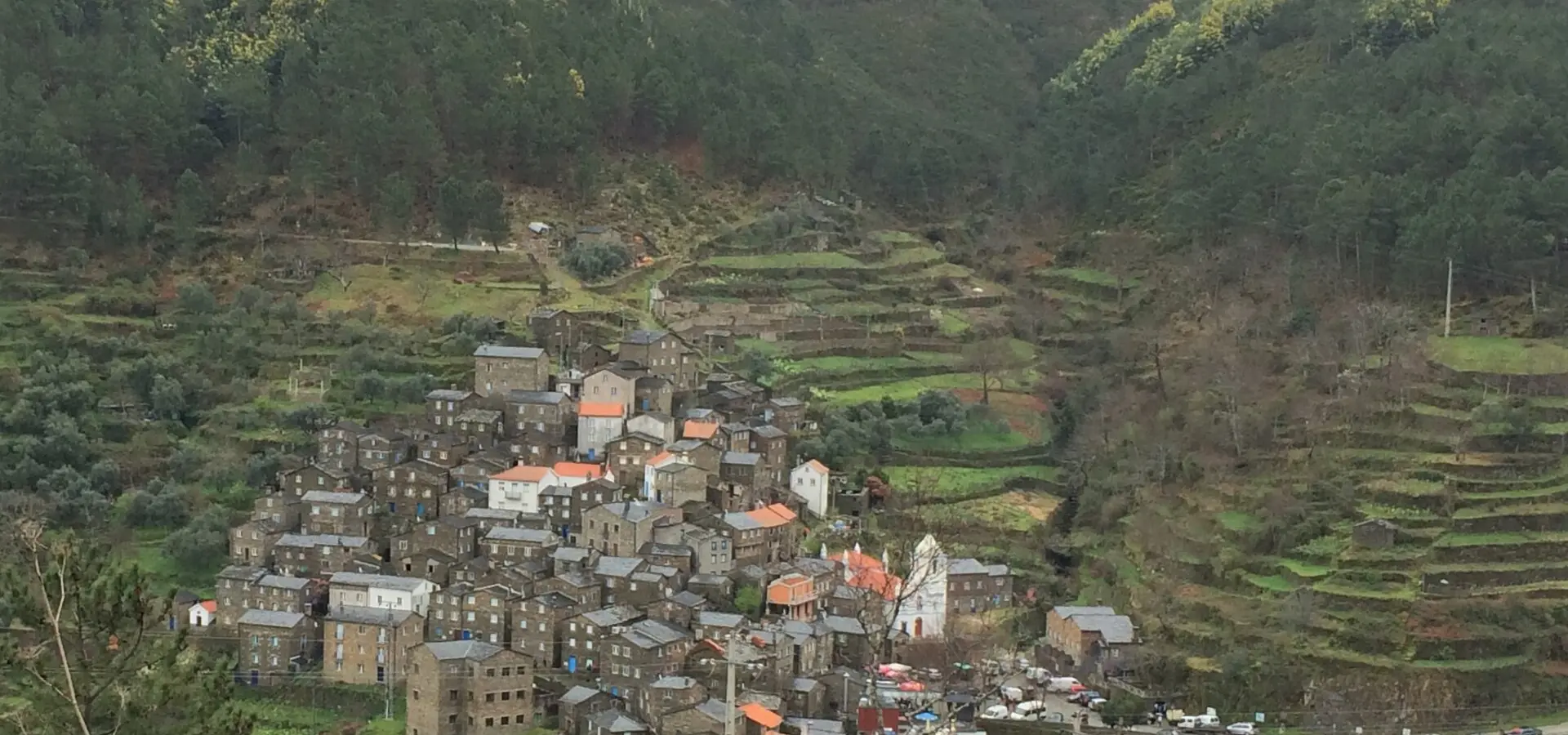
Piódão is probably the most hidden and at the same time most photogenic village in all of Portugal. Wedged into an almost vertical hillside of the Serra do Açor at over 700 metres altitude, it is a village built entirely from xisto (local blue-grey schist/slate) that gleams like silver on sunny days. Its nickname — "aldeia presépio" (nativity village) — comes from its shape: the houses are arranged in concentric tiers descending from the white church at the top down to the bottom of the ravine, creating a silhouette that from a distance resembles a Christmas nativity scene.
Reaching Piódão by motorcycle is an adventure in itself. The CM-1234 road descending from the N17 into the valley floor is narrow, steep and absolutely technical: over 15 km of continuous descent with extremely tight bends, no guardrails, and schist walls on both sides. It is one of those roads where every corner demands total focus and where the experienced rider grins like a child, while the beginner should think twice.
The Aldeias Históricas de Portugal are a network of 12 medieval villages in the central interior (Beira Interior) that were restored in the 1990s and 2000s as part of a government programme to combat depopulation and recover heritage. Each village has its own character: Monsanto is famous for its houses built among enormous granite boulders (huge rounded rocks that sometimes serve as roof or wall); Sortelha preserves an intact medieval wall with views towards the Serra da Estrela; Castelo Rodrigo has a Renaissance palace mysteriously burned by its own inhabitants in 1640.
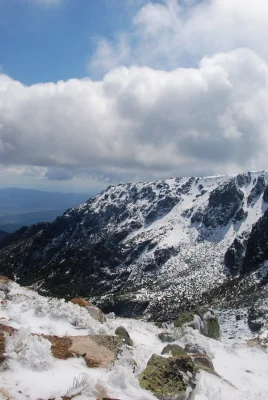
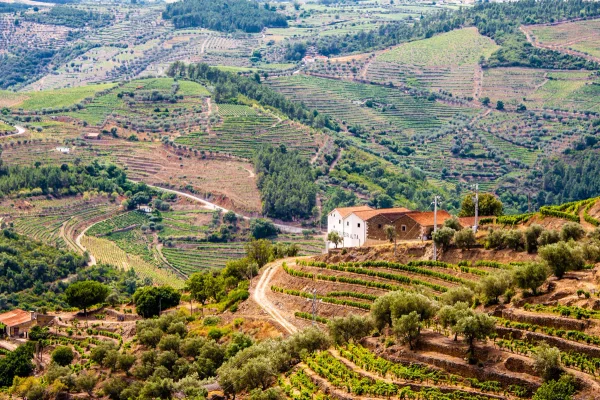
The route connecting the Aldeias Históricas is an exceptional motorcycle road through Portugal's deep interior: near-empty secondary roads, granite and schist landscapes, centuries-old chestnut forests, deep valleys and the constant sensation of being in a land forgotten by time. The population density of the Beira interior is among the lowest in all of Western Europe.
Practical rider info: the roads of central inland Portugal are technical and sometimes in poor condition. Refuel in Coimbra, Arganil or Fundão. For accommodation, in Piódão the Casa da Padaria is a restored schist house with valley views. For eating, chanfana (kid goat or lamb slow-cooked in red wine in a clay pot for hours) is the signature dish of the region and is served in virtually every restaurant in the Aldeias.
Route stops
Piódão
Village
Blue schist village in the Serra do Açor.
Monsanto
Village
Houses among enormous granite boulders.
Sortelha
Monument
Medieval wall with views of Serra da Estrela.
Practical information
Weather
Cold winters inland. Best spring and autumn.
Traffic
Almost zero traffic. Narrow and technical roads.
Fuel stops
Petrol stations in Arganil and Fundão. Scarce inland.
Where to stay on this route
The towns this route passes through — useful for splitting it into stages or sleeping near the start. Book ahead in high season.
- PiódãoSee places to stay
- MonsantoSee places to stay
- SortelhaSee places to stay
Affiliate links: if you book through them, Nomadiq earns a small commission at no extra cost to you.